




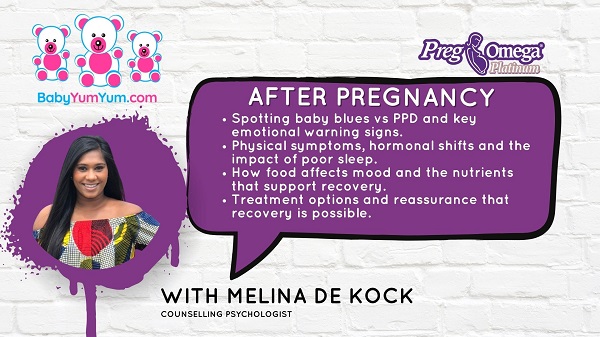
In episode 3 of our video series sponsored by PregOmega Platinum with BabyYumYum, counselling psychologist Melina de Kock (known as Mel) speaks openly about baby blues, postpartum depression and what meaningful support looks like for moms in South Africa.
Mel brings both professional expertise and lived experience as a mom of two who has faced baby blues and postpartum depression. Her message is simple and powerful: struggling does not mean you are failing; it means you are human and help is available.
Why this conversation matters
Mel shares that many mothers are undereducated about what the postpartum period really looks like. That gap leaves women feeling guilty or ashamed when their reality does not match what they expected. This matters because postpartum mental health affects the mother, the baby, the family and the wider community. When moms are supported, everyone benefits.
Baby blues vs postpartum depression: what is the difference
Many new mothers experience baby blues. It sits on a spectrum of normal emotional adjustment to motherhood.
Baby blues
Baby blues often start around day two or three after birth and can include:
- Feeling down or tearful
- Feeling anxious and worried
- Feeling emotionally sensitive
- Feeling overwhelmed by the newness of everything
Mel explains that baby blues usually resolve within one to two weeks.
Postpartum depression
Postpartum depression can happen at any point in the first year after birth. It tends to be more severe and it lasts longer than baby blues.
Signs can include:
- Persistent low mood that does not lift
- Hopelessness or emotional emptiness
- Emotional numbness or feeling disconnected
- Crying often and feeling overwhelmed most days
- Guilt or shame, especially when bonding feels difficult
If symptoms last beyond two weeks or feel intense, it is time to reach out for professional support.
When it is time to seek help
A key takeaway from Mel is that mothers do not need to “wait until it gets worse” before getting help. If you feel something is not right, that is enough reason to speak to a professional. Postpartum depression is not a character flaw. It is a real mental health condition that can affect anyone, even mothers who seem confident and prepared.
Emotional signs partners, family and employers should look out for
Many mothers become experts at masking. You can get dressed, go back to work and appear fine, while internally you feel like you are barely holding it together.





Mel highlights emotional signs that may not be spoken about enough, including:
- A big change in behaviour that feels uncharacteristic
- No interest in things that used to matter
- Feeling numb or emotionally flat
- Feeling disconnected from the baby or from yourself
- Persistent anxiety and feeling overwhelmed
If a mother is having scary thoughts about harm, treat it as urgent and seek professional support immediately. The safest step is to speak to a doctor or mental health professional as soon as possible.
How postpartum depression can affect bonding with your baby
Bonding is not always instant and postpartum depression can make it harder. Mel explains that when a mother feels emotionally numb or severely low, she may not respond to the baby in the usual way. That can lead to guilt, which can create a painful cycle of “I am not connecting, so I must be a bad mom.” Her reassurance is important: this can improve with support and time.
Practical ways to support bonding when you feel flat
Mel suggests gentle bonding practices that do not require you to feel “perfect” emotionally.
- Skin to skin can be a powerful starting point
- If it is cold, keep the baby close under a jersey to stay warm
- Warm water can be soothing and some moms find calm in bathing with their baby when it is safe and supported
- Bonding often feels easier once the baby starts responding with smiles and connection in the early months
The goal is closeness, not performance.
Stigma, social media and the pressure to be the perfect mom
Mel explains that stigma is often rooted in a lack of education. When mothers do not understand how common postpartum struggles are, they assume something is wrong with them. Social media can make it worse. You may see unrealistic images of postpartum life and believe you are the only one finding it hard. Mel encourages families and communities to normalise honest postpartum conversations, including baby blues and postpartum depression. In South Africa, many moms also lack a strong support network, which can intensify isolation. That is why education and community support matter so much.
How partners and family can support recovery in the fourth trimester
Mel calls support crucial. She highlights the idea of the “fourth trimester,” which is the period right after birth when mothers are healing, learning and often running on very little sleep.
Support can look like:
- Listening without judgement
- Normalising how hard this season can be
- Asking, “What do you need right now?”
- Helping with meals and household tasks
- Taking over bath time or a baby shift so mom can shower and breathe
She also challenges loved ones to be more practical. Instead of saying “Call me if you need something,” offer real help like dropping off food or collecting groceries. Moms also need permission to accept help. Accepting help is not a weakness; it allows your village to show up and protects your mental wellbeing.
Physical signs that can show up with postpartum depression
Mel notes that postpartum depression can affect the body, too. Physical signs may include:
- Changes in appetite
- Extreme fatigue that goes beyond newborn tiredness
- Headaches
- Changes in hygiene or self-care due to loss of interest
- Heart palpitations linked to anxiety
Sleep deprivation, hormones and health conditions that can worsen mood
Sleep disruption can lead to irritability and mood shifts. Many moms also notice increased anger or emotional reactivity when sleep is broken for weeks. Hormonal changes after birth can also play a role. Estrogen and progesterone drop sharply after delivery. Thyroid changes and cortisol shifts may affect energy, mood and fatigue.
Mel also highlights medical issues that can mimic or worsen postpartum depression, including:
- Thyroid problems
- Anaemia or low iron
- Vitamin deficiencies
- Chronic pain
If a mother feels persistently unwell, medical checks can be a helpful part of the bigger picture.
Movement and nutrition: small supports that matter
Gentle movement can support mood, anxiety reduction and sleep. It can also reduce isolation when done in a group, like a walk, yoga class or mom group activity.
Nutrition also matters because many moms forget to eat or rely on quick snacks. Mel highlights:
- Omega-3 for brain health and mood support
- Complex carbs for steady energy
- Lean protein for recovery and hormone support
- Folate and B vitamins for energy
- Iron to reduce fatigue and support healing
She also debunks common myths: carbs are not automatically bad and spicy food is not automatically harmful for breastfeeding.
Treatment options that actually help
Mel explains that postpartum depression often responds well to professional care.
Support may include:
- Seeing your doctor or gynaecologist, especially at the six-week check-up
- Therapy to process the emotional load, build coping tools and set boundaries
- Medication when needed, with breastfeeding safe options available
She also mentions that some South African medical aids may cover postpartum therapy under maternity benefits and it is worth checking your plan.
A message every new parent should hear
Postpartum depression can happen to anyone. You are not alone. It is not your fault and it does not make you a bad mom. Support exists and recovery is possible.
FAQs
What are baby blues after pregnancy?
Baby blues are common mood changes after birth, often starting around day two or three and usually improving within one to two weeks.
How do I know if it is postpartum depression?
If symptoms last longer than two weeks, feel severe or affect daily functioning and bonding, speak to a doctor or mental health professional.
Can postpartum depression happen later, not just right after birth?
Yes. Postpartum depression can appear at any time in the first year after birth.
Can low iron or thyroid problems feel like postpartum depression?
Yes. Anaemia, thyroid changes and vitamin deficiencies can worsen fatigue and mood, so medical checks can be important.
What can partners do to support a mom with postpartum depression?
Offer practical help, listen without judgement, ask what she needs right now and support her in getting professional care.