





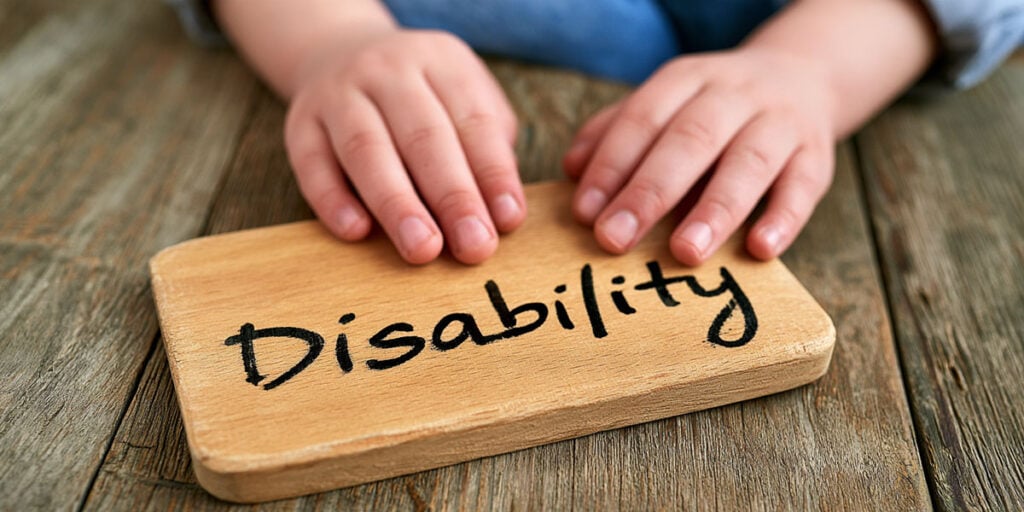
Every year, Disability Awareness Month invites us to pause and look more carefully at a word we use often and understand rarely. "Disability" appears on forms, in policies, in school reports and in medical files. It is stamped onto lives in a single line. Yet the people who carry that word are as varied, capable and complex as anyone else.
This month is not about pity and it is not about ticking a box. It is about learning to see the whole person – and, if we are honest, learning to see ourselves more clearly too.
What is a disability, really?
At its simplest, a disability is a difference in how a person’s body or mind works that affects the way they do certain things. It may be physical, sensory, intellectual, developmental or psychological. It may be visible, like a wheelchair or a hearing aid, or entirely invisible, like dyslexia, autism, ADHD or chronic pain. It may be present from birth or arrive later through illness, injury or age.
But that definition, while accurate, misses something important. A disability is never only about the person. It is about the meeting point between a person and the world they live in. A staircase is only a barrier if there is no ramp. A lecture is only inaccessible if there is no transcript. A child who cannot sit still is only “a problem” in a classroom that has decided sitting still is the point. This is why so many people now describe disability as something that lives partly in the environment, not solely in the individual.
The view from the inside
Ask someone living with a disability what it means, and you will rarely hear a textbook answer. You will hear about the daily logistics: the extra planning, the energy it takes to navigate spaces built for other bodies, the small humiliations of being spoken over or spoken about. You will also hear about joy, pride, community and the sharp humour that comes from having to think creatively about things most people never think about at all.
For many, disability is not a tragedy to be overcome but a lens through which the world is experienced. It shapes identity without swallowing it. Some embrace the word fiercely as a mark of belonging. Others use it only when they need a door to open. Both are valid. The one thing nearly everyone agrees on is this: they want to be asked, not assumed about.
The view from the law
The law defines disability for a practical reason: to decide who is entitled to protection, accommodation and support. Legal definitions tend to focus on an impairment and its effect on daily activities, work or learning. In South Africa, the Constitution and the Employment Equity Act prohibit unfair discrimination on the grounds of disability, and the White Paper on the Rights of Persons with Disabilities frames the issue in terms of dignity and full inclusion.
This lens matters enormously. It is what turns a wish for fairness into an enforceable expectation. It is why a school must consider reasonable accommodation and why a public building must have an accessible entrance. But the law must draw lines, and lines are blunt. A person can fall just outside a definition and still face very real barriers. The law tells us who qualifies. It cannot tell us who someone is.
The view from society
Society’s definition is the messiest of all, because it is made of assumptions. Historically, disability was understood as a deficit, something to be fixed, hidden or endured. That view lingers in our language – in the way we say someone “suffers from” a condition, or is “confined to” a wheelchair, or is “special”, a word that so often means “separate”.
A different understanding has been gaining ground. It says that disability is a natural part of human diversity, that the barriers are largely of our own making, and that removing them benefits everyone. Curb cuts designed for wheelchairs are used by parents with prams. Captions designed for the deaf are used by millions watching videos on mute. When we design for the margins, we make life easier at the centre.
A symbol that moves
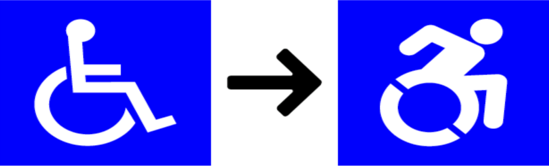
A powerful example of this shift comes from Ontario, Canada. A Toronto-based advocacy group called The Forward Movement set out to replace the familiar wheelchair icon – a static, upright figure that looks almost like a piece of furniture – with what is known as the Dynamic Symbol of Access. In the new image, the figure leans forward, arm back, clearly propelling itself. The wheelchair is no longer the subject of the picture; the person is.
Hospitals, municipalities and businesses across Ontario began adopting the symbol, and advocates took the campaign to the provincial legislature. A symbol on a parking sign may not change the law, but it changes something in the mind of the person looking at it. It says: this is someone going somewhere. It reframes disability as motion, agency and intent rather than stillness and dependence.
For the parents who are grieving
There is one perspective that often goes unspoken during awareness campaigns, and it deserves tenderness. When a child is diagnosed with a disability, many parents experience something very close to grief. They grieve the future they had imagined, the ease they had hoped for, the milestones they had assumed were guaranteed. They may feel guilt, fear, anger and a fierce protectiveness all at once. Sometimes they feel ashamed of feeling any of it.

Those feelings are not a failure of love. They are love, doing the hard work of adjusting. The child in front of you has not changed because of a word on a report. What has changed is the map, and maps can be redrawn. Many parents will tell you that, in time, the diagnosis became less of a verdict and more of a key – an explanation that unlocked support, understanding and a far more honest relationship with their child. The grief is real. So is what grows after it.
Strength is not cancelled by difficulty
A disability in one area does not overshadow strength in another. The child who struggles to read may see patterns in numbers that others miss. The adult who cannot walk may have a mind that runs faster than anyone in the room. The person who finds social cues baffling may bring a precision and honesty that a team desperately needs. Difficulty and brilliance live side by side in every human being. Disability simply makes that fact harder to ignore.
Our disabilities do not define us as human beings. They do not decide whether we are capable or not capable. They are one part of a life, and lives are large.
What awareness asks of us
Disability Awareness Month does not ask us to feel sorry. It asks us to notice the stairs. To ask before assuming. To use the words a person chooses for themselves. To design, teach, build and lead as though everyone is coming. And to remember that the figure on the sign is not sitting still. It is moving forward – and so, if we choose, are we.

YOU MAY ALSO LIKE
Oral health care for children with physical and mental disabilities explained with practical, compassionate tips for everyday routines.