







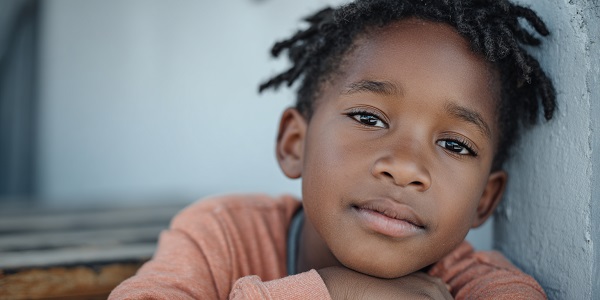
One in five South African children and teenagers suffers from a mental health condition. Still, only 10% of them can access the care they need[i] – a growing crisis that is not only a failure of the healthcare system, but a violation of their human rights.
Globally, 50% of lifetime mental health disorders begin by the age of 14[ii], highlighting the lifelong impact that the failure of mental healthcare in childhood and adolescence can have on an individual, realising their full potential and having a quality of life in adulthood.
As South Africa commemorates Human Rights Day on 21 March, the South African Society of Psychiatrists (SASOP) warns that chronic under-funding and neglect of mental healthcare represents a failure to protect the Constitutional rights, dignity and well-being of children and adolescents.
SASOP is advocating that, for South Africa to meet its Constitutional and international obligations (including its status as a signatory to the United Nations Convention on the Rights of People with Disabilities), the state adopt a rights-based approach to mental health.
This would entail shifting from a medicalised approach and psychiatric institutions as the main delivery mode of mental healthcare for children and adolescents, to the primary healthcare level, SASOP member and psychiatrist Prof Renata Schoeman said.
This should be integrated with social services and leverage schools as a primary setting for screening and early intervention, along with action to address social determinants of mental health, such as poverty and violence.
SASOP also called for the urgent implementation of the National Mental Health Policy Framework and Strategic Plan 2023─2030.
“The rights of children and adolescents to safety, education, dignity, equality, and protection from maltreatment, neglect and abuse cannot be realised while their right of access to appropriate, quality healthcare, including mental healthcare, continues to be neglected.
“Children have a right to not only physical health, but mental health too, and a right to not only physical safety but also emotional safety. Yet physical health continues to be prioritised over mental health, despite the scale of the need and the long-term social and economic costs of not securing the mental health of our future generation.
“Children’s lack of access to mental healthcare represents a gross violation of their human rights, robbing them of their quality of life now and into adulthood and increasing the risk of tragic loss of lives,” Prof Schoeman said.
Given that the peak age of onset for mental health disorders is 14, early intervention and psychosocial support for both child and family are key, and in many cases can prevent mental struggles or distress in children and adolescents from developing into a diagnosed mental illness or disorder that persists into adulthood.


The most common mental health conditions in children and adolescents are neuro-developmental disorders, anxiety/fear-related disorders, obsessive-compulsive/related disorders, problems with feeding/eating, stress- and trauma-related disorders, and depressive disorders.[iii]
“Securing the mental health of children and adolescents, with a proactive, preventative approach, is vital to addressing South Africa’s overall mental health crisis. It is an investment in inter-generational health that will contribute to breaking the cycle of violence, poverty, food insecurity, social exclusion and discrimination, which are all contributing socio-economic determinants of mental health,” Prof Schoeman said.
She highlighted that the country has fewer than 40[iv] registered specialist child and adolescent psychiatrists across both the public sector and private practice, the majority concentrated in Gauteng and the Western Cape, with some provinces having none.
Facilities for mental healthcare for children and adolescents are also extremely limited, with very few beds in the public sector allocated to psychiatric care for adolescents and “close to zero for under-13s”, she said.
The lack of specialists and facilities is partly due to under-funding, with only 1% of the budget for mental health directed specifically to serving children and adolescents, the SA Human Rights Commission previously found.[v]
The result is children and adolescents being accommodated in adult wards or juvenile detention centres[vi], where they are exposed to further risks.
“Even in the Western Cape and Gauteng, there are nowhere near sufficient facilities for what is required to render age-appropriate and effective treatment immediately or for those requiring long-term care.
“The burden is heaviest where services are weakest, particularly in rural areas where there are few to no specialists, too few beds, if any, and inadequate psychosocial support. This leaves families without support and children without care at the stage of their lives where early intervention can make the greatest, long-term difference,” Prof Schoeman said.



Prof Schoeman, who is a member of Health Minister Aaron Motsoaledi’s Ministerial Advisory Council on Mental Health, said that shifting to a rights-based approach to mental healthcare for children and adolescents would require greater cooperation across the departments of Health, Education and Social Development, which currently operate in silos.
Collaboration between government and NGOs/PBOs working in child and adolescent mental health was currently minimal, she said, and the government should be actively supporting and funding sustainable organisations that complement and supplement its work.
Inter-disciplinary collaboration amongst healthcare professionals in disciplines such as psychiatry, paediatrics, neurology and nursing was also required, as well as collaboration between the healthcare professions, government and NGOs.
“Given that schooling is compulsory to age 15 or Grade 9, schools can be a cost-effective way to reach almost all children as a setting for screening, early detection, intervention and support. However, this will require resourcing in training for teachers and school health services, and in creating capacity for schools to deliver such services rather than loading them onto teachers already overworked and lacking the appropriate training,” she said.
Prof Schoeman also called for urgent implementation of policy, particularly the National Mental Health Policy Framework and Strategic Plan 2023─2030, which “provides a roadmap for integrated, community-based care, but is failing in its implementation, which remains unequal across provinces”.
ALSO READ: AI Psychosis: Can Chatbots Really Trigger a Mental Health Crisis?
REFERENCES
[i] Simelane S, Bantjes J, Kleintjes S, et al. Putting child and adolescent mental health at the centre: building an ecosystem of support. SOUTH AFRICAN HEALTH REVIEW. 2025;27:131-143.
[ii] Simelane S, Bantjes J, Kleintjes S, et al. Putting child and adolescent mental health at the centre: building an ecosystem of support. SOUTH AFRICAN HEALTH REVIEW. 2025;27:131-143.
[iii] Simelane S, Bantjes J, Kleintjes S, et al. Putting child and adolescent mental health at the centre: building an ecosystem of support. SOUTH AFRICAN HEALTH REVIEW. 2025;27:131-143.
[iv] SASOP data.
[v] South African Human Rights Commission. (2019). Report of the national investigative hearing into the status of mental health care in South Africa. https://www.sahrc.org.za/home/21/files/SAHRC%20Mental%20Health%20Report%20Final%2025032019.pdf
[vi] South African Human Rights Commission. (2019). Report of the national investigative hearing into the status of mental health care in South Africa. https://www.sahrc.org.za/home/21/files/SAHRC%20Mental%20Health%20Report%20Final%2025032019.pdf
