







As the Easter weekend approaches and many people head out on the roads for beautiful adventures, family time and celebrations, it’s important to make sure your vehicle is road-trip ready. Here’s a look at a few must-do checks to ensure a safe journey, not only for you and your family, but for everyone else on the road, too. Regular vehicle maintenance can save you time, money and, most importantly, keep you safe.
TYRES
Your tyres are the only contact your vehicle has with the road. They can literally be the difference between life and death when driving with your family.
Tyre Tread
Checking your tyre tread is extremely important. South African legislation requires tyres to be replaced when only 1mm of tread remains. However, I recommend replacing them at no less than 1.6mm to ensure safety.
1mm is a minimal tread and can be very dangerous, especially in wet conditions.
You can use the tyre wear indicator as a guide, but do not allow your tyres to wear down until they are completely flush with your tyre wear indicator or until they are smooth. Tread on tyres has many benefits, like grip, dispersing of water and traction on the road.
Tyre Maintenance
Regular tyre maintenance, including rotation, balancing and wheel alignment, will significantly improve the lifespan of your tyres and ensure even wear.
SPARE TYRE
When last did you check or pump your spare tyre? This is something you should do before any trip (and ideally regularly). Some vehicles nowadays do not come with a spare tyre, which could leave you stranded if you are in a remote area.
Make sure you have a backup plan to keep yourself and your family safe. Some vehicles have run-flat tyres, which allow you to drive a short distance after a puncture, but this is not always practical or safe for long distances.
Know your vehicle and understand your specific situation of what tyres your vehicle runs on.
Changing a Spare Tyre
Ensure you have all the necessary tools in your vehicle to change a tyre. One of the most important items is your wheel lock nut key. Most cars have one lock nut per wheel for security reasons. Without the correct lock nut (which is specific to your vehicle), you will not be able to remove the wheel.
Tools Needed:
- Spare wheel and tyre (inflated to correct pressures)
- Jack
- Wheel spanner
- Lock nut
- Warning triangle
- Safety vest
- Compressor with sealant (for modern vehicles with run-flats or repair kits)
Helpful optional Extras:



- Gloves
- Mat to kneel on
- Compressor
- Torch
- Wheel chocks
Tyre Pressures
Ensure your tyres are inflated to the correct pressure. Tyre pressures change depending on how heavily loaded your vehicle is. The correct pressure can usually be found:
- Inside the driver’s door frame
- In your vehicle manual
- On the manufacturer’s website
Typically, the heavier your car gets, the more air pressure you will need in your tyres to support the weight. The optimum tyre pressures are there to ensure you have the correct contact with the road as designed by the car manufacturer and tyre manufacturer.
In some cases, particularly when off-roading or going on dirt roads, it is advisable to let some of the pressure out of your tyres. This will allow for more traction on roads with very little natural grip. It is very important to research beforehand what the limitations of your tyres will be and in which conditions to let the air out. It is also hugely important that you do not travel for long distances at pressures that are not optimal for your car or tyres. This could lead to premature wear on your tyre and the tyre could lose its sidewall integrity, which is very dangerous. If you know that you will be travelling on a lot of dirt roads or plan to do some off-roading, it is advisable to keep a portable tyre inflator in your vehicle. These can be purchased at Tiger Wheel and Tyre stores around the country.
Between pesky thorns and random garbage lying around, slow punctures are an unfortunate reality. It is always advisable to get a puncture fixed immediately. Even if the tyre does take a long time to deflate, it is a weak point in the tyre and going over big humps, bumps, or sharp obstacles could lead the tyre to burst. Always get a slow puncture fixed the minute it is possible to do so.
Also, always be on the lookout for bubbles in your tyres. Bubbles are caused by hitting sharp obstacles in the road. These are also very serious, very weak points in your tyres.
KNOW YOUR VEHICLE
We highly recommend practising changing a tyre on your vehicle before going on a long trip.
This allows you to:
- Confirm you have all the necessary tools
- Learn how to position the jack correctly (to avoid bending / damaging body panels or parts of your vehicle)
- Understand how your tools work
- Avoid being stranded due to a lack of preparation
My advice would be to visit a reputable tyre store, such as Tiger Wheel & Tyre, for a safety check before a long journey. They can inspect for punctures, damage, worn tread, balancing and alignment issues. You will not regret this safety check, as tyres are one of the most critical safety components of your vehicle.



Checking Your Fluids
Regular servicing is essential. Your vehicle should generally be serviced:
- Annually, or
- Every 10,000km – 20,000km (depending on manufacturer guidelines and driving habits)
The more often you change your oil and filters, the better it is for your car. I recommend never exceeding 10 000km intervals regardless of the manufacturer’s guidelines.
Servicing includes oil checks and oil changes, which prevent contamination and additive depletion. Engine oil is not the only oil that needs changing; check your manufacturer’s recommendations for when other fluids would require attention or to be changed (e.g., transmission, diff, etc.). Older vehicles may require more frequent oil top-ups.
If your vehicle is still under warranty, it is best to service it at your OEM dealership. Using alternative workshops or self-service may affect your warranty or service plan.
Common Vehicle Fluids:
- Engine oil
- Automatic Transmission/Power steering fluid
- Coolant
- Brake fluid
- Gearbox Oil
- Differential Oil
If you are unsure about checking these, rather have them inspected by a qualified workshop.
Radiator & Coolant – VERY IMPORTANT
Your radiator water level must always be correct. Insufficient coolant can cause severe engine damage.
NEVER open a radiator cap while the engine is hot.
There is extreme pressure inside the radiator, and hot coolant can spray out, causing serious burns. Always allow the engine to cool completely before opening the cap. Also, never add cold water to a hot radiator; sudden temperature changes can crack components and cause costly damage.
Oil & Lubricants
Use reputable oil brands such as Castrol, for example and ensure you are using the correct grade recommended by your manufacturer. Using the wrong oil can result in serious engine damage.
FUEL
Always know what fuel your vehicle requires and use reputable fuel brands, such as BP.
- Diesel vehicles must use diesel
- Petrol vehicles must use petrol
- Petrol comes in different octane grades
Using the wrong fuel can cause severe and expensive damage. Avoid running your tank empty, as this can damage components over time.
Fuel Tips:
- Avoid running your tank to empty
- Check your fuel cap for fuel type
- Avoid spilling fuel on your paint (and if they do, ensure you clean it straight away)
- Avoid letting fuel sit for extended periods if the vehicle is unused, as this can cause contamination
Batteries
Car batteries have a limited lifespan and will eventually need replacing. To maintain battery health:
- Ensure headlights and interior lights are off when the vehicle is parked
- Avoid leaving the ignition on
- Use a trickle charger if the vehicle will stand unused for weeks at a time
Carrying jumper leads or a battery booster pack is an essential safety tool that can help both you and others.
Ensure you know how to safely jump-start a vehicle before attempting it. You need to avoid any electronic damage to your vehicle. Please refer to the previous article on batteries for more extensive information: https://babyyumyum.com/5-tips-on-battery-and-car-maintenance-for-women/
Windscreens
Your windscreen contributes up to 30% of your vehicle’s structural strength. The passenger airbag relies on the windscreen for support during deployment. Repair chips with reputable brands like PG Glass as soon as possible to prevent them from spreading due to heat or contamination.
Ensure:
- Your washer fluid is topped up
- Wiper blades are in good condition
- Rubber on blades is not cracked or worn
Driving in heavy rain with poor visibility is extremely dangerous.
Brakes
Your brakes are one of the most important safety systems in your vehicle. Brake pads are fitted with a ‘wear indicator’. The wear indicator is a small metal tab within the brake pads. When your brakes reach the point at which they should be changed, the metal tab or wear indicator will be exposed to the brake rotor and will make an audible screeching sound when the brakes are applied. Before going on long trips, it is always a good idea to have your brakes checked by a professional.
Ensure:
- Brake pads have sufficient padding remaining
- Brakes are checked during annual servicing
- You address any unusual noises or vibrations immediately
Final Thoughts
Proper preparation and preventative maintenance can make all the difference during busy holiday travel periods. Take the time to check your vehicle; your safety and the safety of your loved ones depend on it. Take the time to do the service and vehicle checks needed. Take the time to know your vehicle and ensure you have all the tools needed. Most importantly, travel safely this Easter weekend.
TIPS:
- Look into this battery jump starter powerbank – It is a LIFESAVER: https://twt.co.za/product/jump12s/?srsltid=AfmBOooiT5Sl37cgGJGbj75Grrs3aPVVE1R-ch8rMxFjV-CLWlduom4v
- Watch this video on vehicle servicing suggestions: https://youtu.be/R_BpTFvU5dQ?si=oDv1rN1WMklcYhud
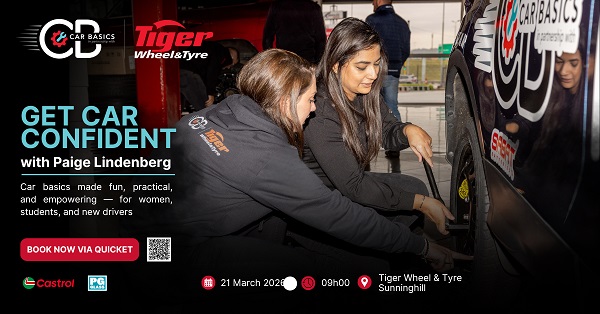
- Join our next Car Basics Course to learn more about your vehicle and these necessities: https://www.quicket.co.za/events/360211-car-basics-tiger-wheel-tyre-sunninghill/#/