








This Father’s Day, we want to celebrate every dad, the ones at home, the ones in hospital corridors, and the ones lying awake at 03:00 wondering if they’re doing this right. Because here’s what we know for certain: your touch matters more than you realise.
The Bond Gap Nobody Talks About
When a new baby arrives, mums often experience that rush of bonding almost immediately through feeding, through skin contact, through the sheer volume of time spent together. For dads, it can feel like trying to catch a bus that’s already left the stop.
Many fathers describe feeling like a spectator in the early weeks. They want to connect. They ache to connect. But they’re not always sure how. And in that uncertainty, something quietly painful can take root.
Let’s be honest about something South Africa doesn’t talk about nearly enough: Paternal Postnatal Depression (PPND) is real. Research shows that 1 in 10 new fathers experiences depression or anxiety in the postnatal period — and that number is likely higher, because most men simply don’t say a word. They push through. They provide. They put on a brave face while quietly struggling inside.
PPND can look like withdrawal, irritability, feeling disconnected from your baby or partner, or a creeping sense that you’re failing at the most important job of your life. If that sounds familiar to you or someone you love, please know: you are not alone, and asking for help is the strongest thing a father can do.
The Science of a Father’s Hands
Here’s where the good news comes in — and it genuinely is good news.
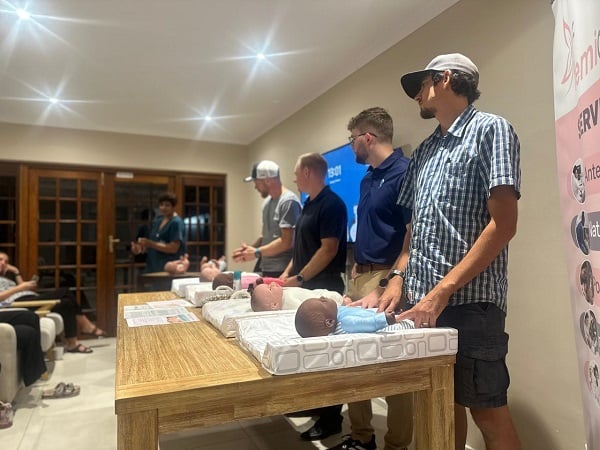
According to the Infant Massage Information Service (IMIS), one of the most effective ways for fathers to close that bonding gap, ease their anxiety, and find their footing as a parent is beautifully simple: learn to massage your baby.
Studies show that fathers who practise regular infant massage report feeling more confident, less stressed, and more closely bonded with their babies. They also show improved interaction with their infants over time. That’s not just a feel-good statistic; that’s a measurable shift in a father’s mental health and parenting journey.
Daily, dedicated, one-on-one time with your baby — just you, your hands, and your little one creates a rhythm. A language between father and child that doesn’t need words.
What Infant Massage Does for Your Baby
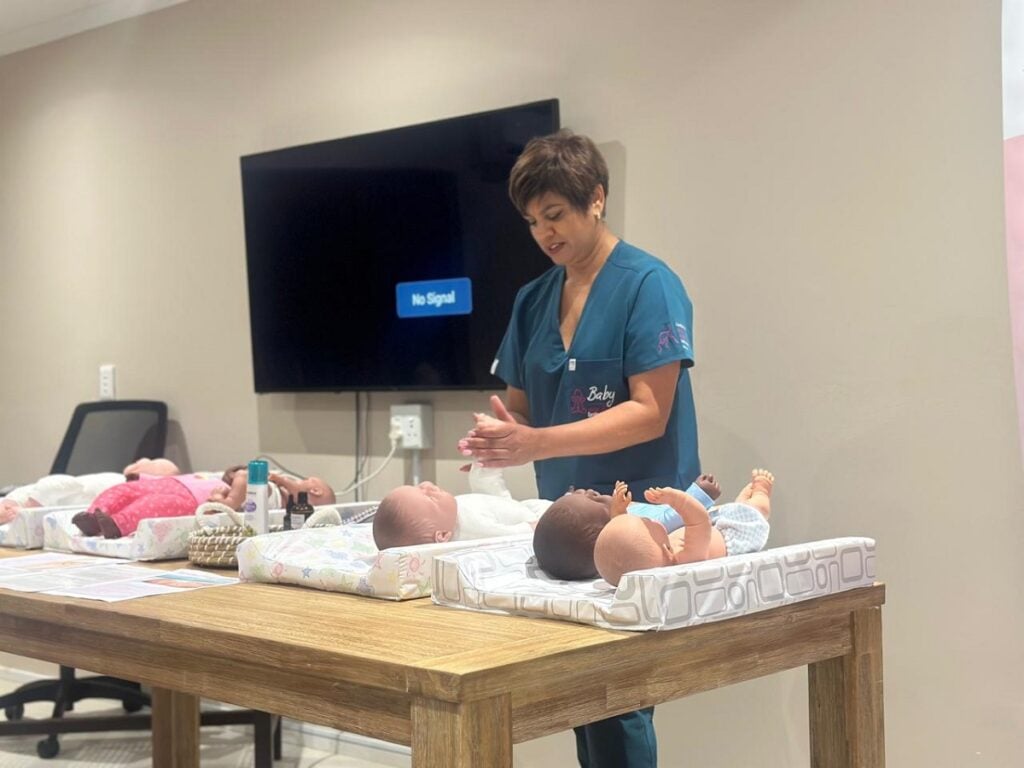
The benefits of infant massage extend well beyond bonding. As a CIMI-Aus Certified Instructor trained through IMIS and the principles behind Thula Touch Infant Massage Therapy, I’ve seen firsthand how consistent, loving massage supports babies to:


- Sleep better and regulate their sleep patterns
- Cry less and self-soothe more effectively
- Ease discomfort from wind, colic, reflux, and constipation
- Boost neurological development and immune function
- Reduce cortisol (stress hormone) levels in both baby & caregiver
When a father learns to read his baby’s cues, when to continue, when to pause, when baby is saying yes, more please vs I need a break, he is developing something profoundly valuable: attunement, the foundation of secure attachment, which research links to better emotional regulation, social confidence, and resilience throughout your child’s entire life.
A Special Word for NICU Dads
If you are spending this Father’s Day by a hospital cot rather than at home, this message is especially for you. Kangaroo Care skin-to-skin contact where your baby, dressed only in a nappy, rests on your bare chest beneath a warm blanket is one of the most powerful things you can offer your premature or hospitalised newborn. NICU nurses are your greatest allies here; ask them to guide you through it.
The warmth of your chest regulates your baby’s temperature. The sound of your heartbeat is familiar and calming. Your scent, your breathing, your steady presence — it all communicates safety to that tiny person. You are not helpless in that ward. You are essential. Kangaroo Care is, in every sense, the beginning of infant massage and the beginning of your story together.
Where to Begin?
You don’t need to be an expert. You just need to show up, be present, and let your hands do what they were made to do: love your child.
To learn more about certified infant massage classes in South Africa, visit www.thulatouch.co.za.
To every dad reading this, whether you’re exhausted, uncertain, overjoyed, or quietly struggling — you are seen, you matter and your baby needs exactly you.**
Happy Father’s Day.