







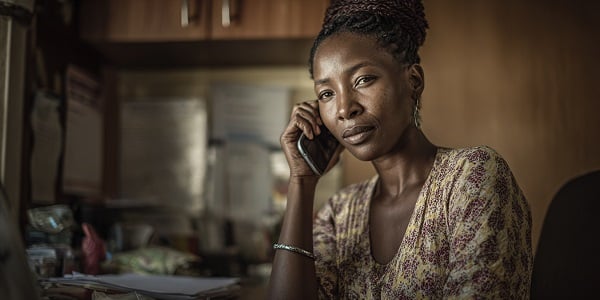
Workers’ Day in South Africa has always been framed around labour, rights and economic participation, yet for many mothers, the meaning of work stretches far beyond what is recognised in policy or reflected in pay slips. On 1 May 2026, while the country pauses to acknowledge workers, countless women will move through the day much as they do every other, balancing responsibilities that rarely fit neatly into the categories of formal employment or measurable productivity.
The reality is that motherhood has never existed outside the labour conversation. It has simply been undervalued within it. From early morning routines that begin long before the first meeting of the day, to the invisible coordination of school schedules, meals and emotional support, the work carried by mothers forms the quiet infrastructure that allows households, and by extension economies, to function.
The Definition of Work Has Always Been Too Narrow
Traditional labour frameworks tend to prioritise paid employment, structured hours and visible output, which immediately places a large portion of maternal work outside the scope of what is formally acknowledged. This narrow definition does not reflect lived experience. For many mothers, the end of the workday does not signal rest but transition, shifting from professional roles into caregiving, planning and emotional management without pause.
The consequence of this is not merely philosophical. When work is not recognised, it is not protected, and when it is not protected, it becomes easier to overlook the strain it places on individuals who are expected to carry both paid and unpaid responsibilities without structural support.
Economic Participation Looks Different for Mothers
In South Africa’s current economic climate, where unemployment remains high and job security is often uncertain, mothers frequently navigate complex decisions about how to remain economically active while meeting the demands of caregiving. For some, this means stepping out of formal employment altogether. For others, it involves turning to informal work, freelance opportunities or flexible roles that offer adaptability but limited stability.
These choices are rarely framed as labour issues, yet they sit at the centre of the Workers Day conversation. The question is no longer only about fair wages and working hours, but about how economic systems accommodate the realities of caregiving without forcing women into compromise at every stage of their careers.
Flexibility Is Not a Benefit; It Is Structural Support
There is a tendency to describe flexible work arrangements as progressive perks, yet for mothers, flexibility often determines whether participation in the workforce is sustainable at all. School schedules, childcare availability, unexpected illness and the sheer unpredictability of family life require a level of responsiveness that rigid work structures struggle to accommodate.
When flexibility is absent, the burden does not disappear. It shifts. It is absorbed by the individual, often at the cost of rest, mental wellbeing or career progression. Workers’ Day invites a reconsideration of how workplaces are designed and whether they reflect the realities of the people who sustain them.
ALSO READ: Understanding Barriers for Women in the Workplace and How to Overcome Them

The Mental Load Remains Largely Unseen
Beyond physical tasks lies another layer of labour that is far more difficult to quantify yet equally demanding. The mental load carried by mothers includes planning, anticipating, remembering and managing the countless details that keep a household functioning. It is the quiet, constant calculation that rarely switches off, even during moments that appear restful from the outside.



This cognitive labour is seldom included in discussions about work, yet it contributes significantly to fatigue and burnout. Recognising it does not require complex policy shifts as a starting point. It requires acknowledgement, both within households and within broader societal conversations about labour and value.
Workplace Dignity Must Include Motherhood
Dignity in the workplace is often discussed in terms of fairness, safety and respect, but for mothers, it also involves the ability to exist fully as both workers and caregivers without penalty. This includes being able to attend to family responsibilities without fear of professional consequences, to return to work after maternity leave without being sidelined and to be viewed as capable rather than compromised.
When workplaces acknowledge the realities of motherhood, they do not dilute productivity. They strengthen it. Retention improves, loyalty deepens and performance becomes more sustainable because it is no longer built on constant compromise.
Why Workers’ Day Still Matters for South African Moms in 2026
What makes Workers’ Day particularly relevant in 2026 is not only the persistence of traditional labour challenges but the growing recognition that those challenges intersect with caregiving in ways that cannot be ignored. The conversation is no longer limited to factory floors or formal offices. It extends into homes, schools and communities where much of the work that sustains society actually takes place.
For mothers, this day is not simply about reflection. It is about visibility. It is about ensuring that the full scope of work, both paid and unpaid, is recognised as part of the broader labour landscape.
TAKE A LOOK AT: The Motherload: the invisible mental load of women
Frequently Asked Questions
When is Workers’ Day observed in South Africa?
Workers’ Day is observed on 1 May 2026 and is a public holiday.
Why does Workers’ Day matter specifically for mothers?
It highlights the intersection between paid employment and unpaid caregiving, drawing attention to the realities many mothers navigate daily.



Does unpaid care work have economic value?
Yes, even though it is not formally compensated, it plays a critical role in sustaining households and enabling broader economic participation.
What is the biggest challenge working mothers face in South Africa?
Balancing economic participation with caregiving responsibilities in systems that are not always designed to support both effectively.
How can workplaces better support mothers?
By implementing flexible work structures, supportive leave policies and cultures that recognise caregiving as a normal part of life rather than an exception.
Conclusion: Expanding the Conversation Around Work
Workers’ Day offers an opportunity to expand the conversation beyond traditional definitions of labour and to acknowledge the full spectrum of work that sustains families and communities. For mothers, this means moving from invisibility to recognition, from expectation to support.
The question is no longer whether this work exists. It always has. The question is whether systems, workplaces and societies are prepared to value it accordingly.
