


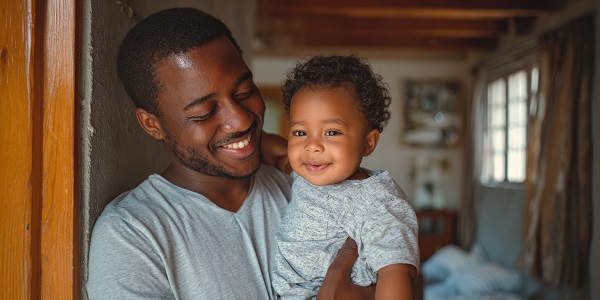
South Africa’s family landscape is evolving. The 2024 State of South Africa’s Fathers report reveals that only 35.6% of children live with their biological fathers, while an increasing 40.3% reside with a social father, a caring adult male figure other than the biological parent. Shockingly, 24% of households feature no adult male at all, and 64.5% of children do not co-reside with their biological father. These numbers reflect both challenges and possibilities: for all the fathers who are absent, many are stepping into caregiving roles. At the forefront of this change are stay‑at‑home dads, the men who choose to lead parenting at home, redefining fatherhood in modern South Africa.
Why Fathers Are Staying Home
Economic Realities and Practical Choices
South Africa’s economic reality, marked by slow growth, widespread unemployment, and childcare costs, forces families to rethink traditional breadwinner roles. In households where fathers earn less or hold unsteady jobs, choosing to stay home becomes financially and emotionally logical. This decision often results in more cohesive daily routines, reduced stress and improved family well‑being. In many cases, couples discover that the familial cost of daycare can equal or exceed a second income. Choosing a father to stay at home simply becomes the more sound financial option.
Changing Gender Norms and Values
Attitudes toward parenting roles are shifting. Increasingly, fathers place a higher value on time spent with their children than on climbing the corporate ladder. They prize emotional presence as much as financial provision. This cultural shift is particularly strong among younger, more progressive urban families. For many, the simple reality of children growing too quickly becomes a deciding factor, not ambition or conventional expectations. Fathers now talk openly about wanting to experience bedtime stories, school drop‑offs, and afternoon playtime. Parenthood has become a lifestyle choice, not just a duty.
Policy Developments: Paternity Leave
Since 2019, South African fathers have been entitled to ten days of paid parental leave. Though modest, this policy indicated societal acknowledgement of fathers’ essential role in early childcare. In October 2025, a Constitutional Court ruling expanded this recognition by temporarily replacing the Basic Conditions of Employment Act’s parental leave provisions, allowing all parents to share four months and ten days of leave, regardless of gender or role. However, the Unemployment Insurance Act has not yet been updated, meaning non-birthing parents may not be able to claim full UIF benefits. Progressive employers are beginning to respond with greater flexibility. This growing recognition helps fathers justify their choice to step into daily caregiving without forfeiting career identity.
Benefits of Stay‑at‑Home Fatherhood
Enhanced Emotional Bonds
When fathers take on caregiving, children benefit cognitively, emotionally and socially. Studies consistently show that active caregiving by dads accelerates emotional intelligence, language development and social confidence in children. Fathers who engage in everyday routines, be it storytelling, cooking or soothing tears, establish deeper trust and resilience in their children. Emotional bonds created during early years often yield long-term cognitive and behavioural benefits.
More Balanced Family Life
When fathers take up caregiving and domestic tasks, mothers are relieved of the traditional double shift of work and home. A father who manages school runs, laundry, and mealtime gives the household more balance. This fairer sharing of duties reduces maternal stress and creates more respectful partnerships. When roles are flexible, both parents can pursue careers, hobbies, and self-care without guilt or imbalance.
Reimagining Masculine Identity
Stay‑at‑home dads challenge narrow stereotypes of masculinity. By demonstrating that nurturing and emotional expression aren’t confined to mothers, these fathers foster healthier masculine identities in their children. Their visibility in toddler groups, school break duty, or community bake sales shifts cultural perceptions. Boys learn that emotional availability is masculine; girls see men capable of tenderness and caregiving.
Challenges Those Fathers Face
Identity and Economic Pressures
Shifting from breadwinner to carer can bring emotional turbulence. Busy at home, isolated from the paid workforce and sometimes questioned by others, many stay‑at‑home dads report feelings of guilt or diminished identity. Phrases like “not contributing financially” echo cultural expectations. Some fathers describe subtle pressure to justify their choice when family or friends ask, “Are you going back to work soon?” It takes motivation and personal clarity to embrace caregiving as a valuable contribution.
Social Isolation
Parenting spaces are often dominated by mothers, leaving fathers feeling like outsiders. Whether at baby clinics, playgroup classes, or parent-teacher meetings, stay‑at‑home dads can face unfamiliarity and minimal peer camaraderie. Until recently, few community structures or support groups catered to fathers. Thankfully, some local parenting networks and online father forums are emerging, helping dads connect, share experiences and feel less alone.
Structural and Institutional Gaps
Despite paternity leave availability, men still lack broader gender-neutral policies such as extended leave, shared benefits, or accessible caregiving support. State and workplace structures remain inadequately aligned with the needs of caregiving fathers. Without inclusive family policies, their role remains informal even if emotionally central.
The Emergence of Social Fathers
Social fathers, for example, stepfathers, grandfathers, uncles, mentors or community leaders, care for 40.3% of children in South Africa. These figures demonstrate that fatherhood extends beyond biology. Social fathers provide emotional support, structure, and continuity. Studies highlight that a stable, caring adult male figure can yield similar developmental gains to those observed with biological fathers. This supports the principle that quality of presence, not genetics, determines positive parenting outcomes.





Social fatherhood is particularly vital in South Africa, where many children grow up absent their biological fathers. Social caregivers often fill gaps left by historical disruption, unemployment, migration, or fractured family structures. Their presence offers predictability and emotional guidance, increasingly matching or exceeding the impact once reserved for biological parenthood.
Strategies to Support Stay‑at‑Home and Social Fathers
Policy Reforms
We advocate for expanded parental leave policies that apply to all caregivers, regardless of gender or biological relation. Tax credits or subsidies for families where one parent becomes a full-time caregiver would provide much-needed support. Legal recognition and institutional backing of non-traditional caregiving roles validate their importance.
- Expand parental leave duration for all primary caregivers
- Introduce caregiving-based tax credits
- Promote gender-inclusive workplace policies to normalise paternal involvement
Employer Actions
- Offer flexible and remote working options
- Create inclusive parental support programmes
- Celebrate caregiving contributions regardless of gender
By normalising caregiving fathers in the workplace, businesses promote gender equality and stronger family engagement.
Community & Social Structures
- Ensure parenting groups are inclusive of all caregivers
- Build peer networks for stay‑at‑home dads
- Promote awareness of mental health and parenting resources specifically for fathers
Community validation and structured father networks reduce isolation, build knowledge and foster peer support.

ALSO READ: How Does Fatherhood Change a Person? The Truth About Becoming a Dad
Looking to the Future: A New Normal for Fatherhood
By 2030, South Africa is poised for further paternal transformation:
- Wider uptake of paternity leave and parental-flexible policies
- Recognition of caregiving fathers in legal, educational, and health systems
- Changing social norms, making male caregiving as common as female caregiving
- Family planning that centres the child’s emotional security over tradition
Generation after generation perceiving fathers’ caregiving as ordinary, not exceptional

This is more than a cultural trend as it is a structural shift. Fathers who remain home, partner in parenting, and challenge stereotypes are rebuilding the conception of strong family life: where presence, commitment, and care matter most.
Conclusion
South Africa’s rising generation of stay‑at‑home dads and active social fathers offers a compelling shift in family dynamics. With 64.5% of children not living with their biological fathers and 40.3% being raised by social father figures, the importance of caring male presence is abundantly clear (SOSAF 2024; The Citizen). These dads are redefining fatherhood: parenting through love, empathy, and day‑to‑day involvement.
To further this positive movement, focused support from policymakers, employers and communities is essential. Encouraging fathers to share caregiving roles nurtures stronger family relationships and sets new foundations for gender equality. The future of fatherhood in South Africa is not about who earns more, but about who is present, who cares and who helps raise the next generation.
References
- SOSAF 2024 – State of South Africa’s Fathers (2024) https://www.mencare.org/wp-content/uploads/2025/02/State-of-South-Africas-Fathers-2024.pdf
- Stellenbosch University – New report sheds light on current realities of fatherhood in SA
https://www.sun.ac.za/english/Lists/news/DispForm.aspx?ID=11095 - The Citizen – Father absence in SA: 24% of children live in homes without any adult men present https://www.citizen.co.za/news/south-africa/dads-missing-for-40-of-kids/
- Fedhealth – Stay at Home Dads: a growing trend https://www.fedhealth.co.za/articles/stay-at-home-dads/
- AHRI – Realities of Fatherhood in South Africa Today https://www.ahri.org/realities-of-fatherhood-in-south-africa-today/
- IOL Cape Times – The impact of absent fathers on South African children https://iol.co.za/news/south-africa/2025-06-17-the-impact-of-absent-fathers-on-south-african-children/
- Good Things Guy – Fatherhood redefined in South Africa https://www.goodthingsguy.com/opinion/fatherhood-redefined-opinion/
