


Sleep Divorce: Can Sleeping Apart Actually Save Your Relationship?

by The Conversation
Published: Updated:
Sleep Divorce: Can Sleeping Apart Actually Save Your Relationship?

Sleep divorce may sound dramatic, but more and more couples are realising that snoring, tossing, and different sleep schedules can quietly chip away at quality rest and patience. Choosing a sleep divorce doesn’t mean love is lost; it means both partners prioritise health and harmony. With better sleep often comes better moods, better communication, and ironically, a stronger bond, writes Alix Mellor, Monash University.

READ THIS ARTICLE FOR FREE!

Let’s be honest! Parenting isn’t all cuddles and cupcakes. It’s also chaos, coffee, and Googling “is it normal if my toddler eats crayons?” at 2 a.m.

That’s why we built a BabyYumYum Subscription – your smart, supportive sidekick for the messy, magical ride of parenting.
When you join, you unlock:
🚀 Expert advice without the boring bits
💡 Real stories, real laughs, real connection
📘 Downloads, checklists & life-saving tips
💝 Exclusive discounts and benefits for you and your family

Because raising tiny humans is hard work but with the right team (that’s us!), it gets a whole lot easier.

Hundreds of years ago, it was common for married couples among the European upper classes to have separate bedrooms. Sleeping separately was a symbol of luxury and status historically reserved for royalty and the very wealthy.

Nowadays, it’s common for married couples and other couples in relationships to sleep in the same bed. But sometimes – for reasons from conflicting schedules to snoring to sleep talking – couples might choose to sleep separately in pursuit of a better night’s sleep.

This is known as “sleep divorce”. Though I prefer the term “sleep separation”, as this doesn’t have to be a permanent arrangement – but more on that later.

So why might couples choose to sleep separately? And what does the evidence say about the effects on sleep quality if you sleep alone versus with a partner?
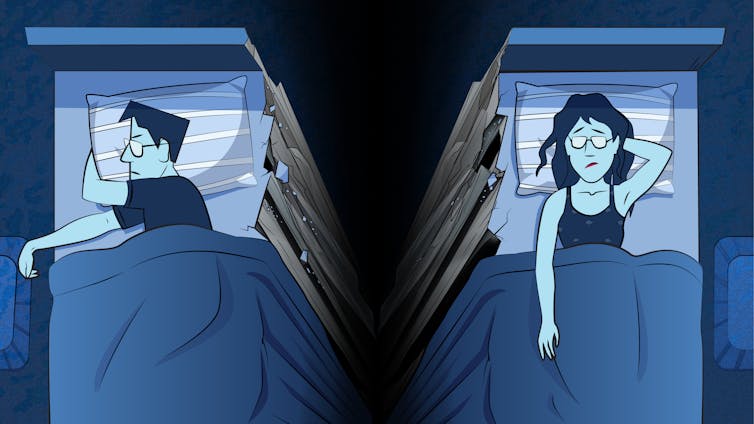
file 20250707 56 frroke.jpg?ixlib=rb 4.1 - BabyYumYum

Cemile Bingol/Getty Images

Why do couples opt for a sleep separation?

Couples may choose to sleep apart if one partner’s sleep is disturbing the other’s, or both are disrupting one another. This can happen for a variety of reasons.

These include waking up frequently in the night, mismatched body clocks (for example, one person coming to bed later than the other), conflicting schedules (for example, shift workers), snoring, twitching legs or sleep talking.

Parents with babies and young children may choose to sleep separately to avoid both partners’ sleep being disturbed.

Those with conflicting preferences for sleeping environments, such as one partner liking a cool room with a fan and the other preferring warmth, may also decide to sleep apart.


The Lily Rose Collection
BabyYumYum Premium Membership
BYY Premium Bennetts Hamper Givaway
PregOmega Platinum Launch

What are the benefits of sleeping alone?

Many couples say they prefer to sleep – and sleep better – next to their partner.

But when scientists measure sleep objectively, such as via an electroencephalogram (EEG) to assess brain waves, the data actually shows poorer sleep quality when co-sleeping. So sleeping alone may, in fact, mean better quality and longer sleep.

Research also shows when one member of the couple has a sleep disorder, such as insomnia or sleep apnoea (where breathing is frequently interrupted during sleep), these people often inadvertently wake up their partner when they wake in the night. So sleeping alone could be a good idea if your bed partner has a sleep disorder.

What’s more, studies have found sleep disturbances are linked to reduced relationship satisfaction. So sleeping apart could actually mean happier couples.

Finally, anyone who has struggled with their sleep will know anxiety around sleep is common. Many clients I have seen who experience insomnia report sleeping alone can alleviate some of their anxiety because at least they know they won’t disturb, or be disturbed by, their partner.
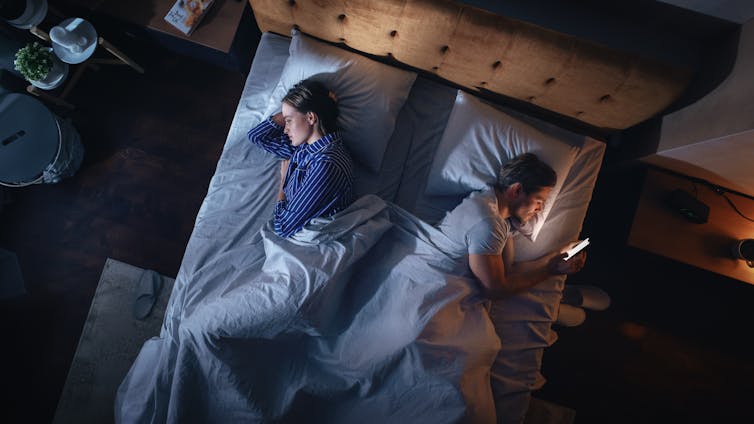
A birds-eye-view of a couple turned away from each other in bed.
Disturbed sleep has been linked to lower relationship satisfaction.
Gorodenkoff/Shutterstock

Are there any downsides to separate sleeping arrangements?

Some people dislike sleeping alone, reporting comfort, and feelings of safety and protection when sleeping alongside their partner – and loneliness when they don’t.

Sleeping separately also requires two rooms, or at least two beds. Many couples may not have these options available to them in their home.

Sleeping separately is often stigmatised, with some people seeing it as the death of a couple’s sex life. But while sleeping in separate beds may provide fewer opportunities for sex, this doesn’t necessarily mean the end of intimacy.

BYY Premium Bennetts Hamper Givaway
BabyYumYum Premium Membership
The Lily Rose Collection
PregOmega Platinum Launch

Sleeping apart could mean some couples actually have more sex. We know better sleep is linked to more positive feelings about relationships, so it’s possible the desire to be intimate could increase after a good night’s sleep in separate beds. Sleeping apart may even mean some couples have more energy to be intimate.

Nonetheless, if you choose to sleep separately from your partner, it’s important to have an open discussion and prioritise opportunities for connection and intimacy. One client I worked with referred to “visiting rights” where her partner came into her bed for a short period before sleep or in the morning.

Who should potentially consider a sleep separation?

You may wish to think about a “sleep separation” if you are disturbing each other’s sleep, have young children, or have different preferences in terms of temperature, light and noise, which are causing issues.

Ultimately, if sleeping in the same bed is leading to poor sleep then sleeping apart, if it’s possible, could help.

If you can’t sleep separately there may be other ways to reduce disturbance from a partner such as using an eye mask, white noise or earplugs.

If you decide to try a sleep separation, remember this can be a flexible arrangement or “re-set” and doesn’t have to be permanent, or every night. Some couples find sleeping separately during the working week but sharing a bed on the weekend works well for them.

Lastly, it’s important to talk to your GP about any persistent sleep problems, such as snoring, insomnia, or unusual behaviour during sleep (for example, shouting or walking around), as there may be an underlying sleep disorder which needs treating.The Conversation

Alix Mellor, Research Fellow, Psychology, Monash University

This article is republished from The Conversation under a Creative Commons license. Read the original article.

BabyYumYum FAQs: Sleep Divorce: Can Sleeping Apart Actually Save Your Relationship?

What is a “sleep divorce”?

A sleep divorce means couples choose to sleep in separate beds or bedrooms to improve sleep quality and reduce tension caused by disrupted rest. It’s not about ending intimacy, it’s about getting better sleep and protecting the relationship.

Why are more couples choosing to sleep separately?

Many couples struggle with snoring, different bedtimes, restlessness or temperature preferences. Constant sleep disruptions can lead to irritability and conflict, so sleeping apart can actually help restore calm and connection.

Does sleeping separately mean the relationship is in trouble?

Not necessarily. In many cases, it’s a sign of maturity and self-awareness. Couples who prioritise good rest often find they communicate better, argue less and enjoy their time together more when awake.

How can poor sleep affect a relationship?

Lack of sleep increases stress, irritability and emotional distance. Studies show sleep-deprived partners are more likely to argue, struggle with empathy and feel less satisfied in their relationship.

How can couples make a sleep divorce work?

Communication is key. Agree on boundaries and explain that it’s about sleep health, not separation. Keep intimacy alive through shared bedtime rituals, morning check-ins or weekend cuddles.

Is sleeping separately common in South Africa?

Yes, though many couples don’t talk openly about it. Cultural expectations can make it seem unusual, but it’s becoming more common among South African couples prioritising health, work performance and emotional wellbeing.

Can a sleep divorce improve intimacy?

Yes. When both partners are well-rested, they’re often more affectionate, patient and emotionally available. Separate sleep doesn’t mean separate lives and it can enhance closeness during waking hours.

What are signs that a sleep divorce might help?

  • You regularly argue about snoring or movement

  • One partner stays awake while the other sleeps

  • You feel exhausted or resentful every morning

  • Sleep deprivation is affecting mood, work, or parenting

Are there alternatives to sleeping in separate rooms?

Yes. Try white noise machines, earplugs, larger beds, sleep apps, or mattress toppers. Adjusting temperature, lighting, and bedtime routines can also make a big difference.

Could sleeping apart lead to emotional distance?

Only if it’s done without clear communication. Couples who discuss it openly and still prioritise time together such as morning coffee or evening chats rarely lose emotional connection.

When should couples seek help?

If sleep issues stem from deeper problems like avoidance, conflict, or emotional disconnection, couples therapy can help address the underlying causes while exploring healthy sleep habits.


Disclaimer: This information is for general relationship and wellbeing guidance. It is not a substitute for professional medical or psychological advice. If sleep or relationship issues persist, consult a healthcare provider, sleep specialist, or couples counsellor.

Get trusted, parent-approved advice at your fingertips. Premium gives you expert guidance, real world tips and member only downloads. Try it out for unlimited access, exclusive content and helpful parenting tools.

Premium Content Membership

You may select only one level from this group.

Level Price Action
Trial Premium Membership

R 1.00 now and then R 29.00 per Month.

Select
Monthly Premium Membership

R 29.00 per Month.

Select
Annual Premium Membership

R 300.00 per Year.

Select
Sign up now to the BabyYumYum Premium Membership

Related Articles

Leave a Comment