




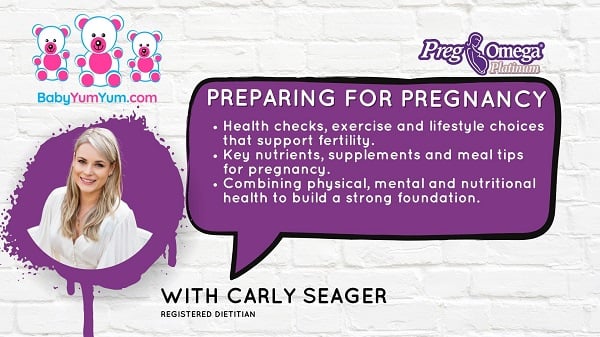
Preparing for pregnancy can feel exciting and stressful at the same time. There is a lot of advice online and it is easy to feel like you need to do everything at once.
In episode 1 of our video series sponsored by PregOmega Platinum with BabyYumYum, Rianette Leibowitz speaks to Carly Seager, a private-practising dietitian in Johannesburg with more than 10 years of experience in women’s health, fertility, pregnancy and postpartum nutrition.
Her key message is reassuring and practical: preconception health is about creating a solid foundation, step by step. It is progress over perfection and small habits can make a big difference to fertility, conception and pregnancy outcomes.
Why Preconception Health Matters More Than Most People Realise
Many couples only start thinking about nutrition and lifestyle after a positive pregnancy test. The challenge is that pregnancy changes begin early, often before you even know you are pregnant.
Carly explains two important reasons to start preparing early:
- Egg development takes time. Egg quality does not change overnight. The body needs around three to four months to develop healthier eggs, which is why preparation ideally starts before you begin trying.
- The first trimester can be tough. Nausea, fatigue and food aversions can make healthy habits harder once pregnancy begins. Building routines beforehand makes it easier to cope.
There is also a major biological reason: early organ development happens soon after conception. The neural tube closes within 21 to 28 days after conception, often before a woman realises she is pregnant. This is why nutrient stores, especially folate, matter before pregnancy starts.
ALSO READ: 21 Early Signs of Pregnancy You Should Know
Physical Health Checks to Consider Before Trying to Conceive
A strong preparation plan includes a medical check-in and targeted nutrition screening.
Medical checks through your GP or gynaecologist
Carly recommends booking a preconception appointment for baseline testing and peace of mind. This often includes:
- Antenatal-style blood tests
- Thyroid function screening
- Blood group testing for both partners
- Rubella immunity checks
- A Pap smear and pelvic exam if due
One point many couples overlook is blood group compatibility. Carly shares a personal example: if the mother is rhesus negative and the partner is rhesus positive, it can affect pregnancy care and future pregnancies, so it is worth knowing early.
Nutrition-related blood tests
From a dietitian’s perspective, screening for deficiencies helps you correct problems before pregnancy. Useful tests may include:





- Iron profile
- Vitamin D levels
- Blood sugar and HbA1c (glycated haemoglobin), which is a blood test measuring average blood glucose levels over the past 2-3 months
Testing frequency depends on the results and the severity of any deficiency. Your healthcare provider will guide retesting and supplement dosages.
Why Weight, Blood Pressure and Blood Sugar Support Fertility
Maintaining a healthy weight is not about chasing a perfect body. It is about supporting hormone balance and regular ovulation.
Carly explains that both being underweight and overweight can affect cycle regularity:
- A BMI (body max index) above 25 or below 18.5 can disrupt menstrual cycles and ovulation
- If you are overweight, a 5 to 10% weight loss can improve fertility outcomes
The important detail is timing. If weight changes are needed, they should ideally start a few months before trying because the body needs time to respond.
Exercise and Fertility: What Helps Most?
Movement supports fertility in several ways. General guidance is 150 minutes a week, which works out to about 30 minutes five times a week.
The best type of exercise depends on your current fitness level:
- If you already exercise regularly, you can usually continue with adjustments
- If you are new to exercise, start gradually with safer options like brisk walking, yoga or swimming
- Avoid contact sports or high-risk, high-impact activities when trying to conceive and in early pregnancy
Exercise also supports stress regulation through the hypothalamic-pituitary-adrenal (HPA) axis, which affects how the brain, ovaries and adrenal glands communicate. It improves circulation to reproductive organs and helps strengthen pelvic floor muscles, which support pregnancy and birth.
Preconception Is a Team Effort: What Partners Can Do
One of the strongest messages in this episode is that fertility is not only the woman’s responsibility. You need healthy eggs and healthy sperm to create an embryo.
Carly encourages partners to prepare physically, too, by:
- Limiting alcohol
- Stopping smoking
- Improving diet quality, especially antioxidants from fruit and vegetables
- Including zinc and selenium-rich foods
- Avoiding hot baths, jacuzzis and saunas (heat can affect sperm quality)
- Prioritising sleep and stress management
Male factor infertility plays a real role in conception challenges, but it is often avoided due to stigma. Screening and shared lifestyle changes can reduce pressure on the woman and strengthen the partnership.
Key Lifestyle Habits to Adjust Before Pregnancy
Stop smoking and reduce vaping
Smoking lowers fertility, reduces egg quality and increases risks during pregnancy, including miscarriage, birth defects and fetal growth restriction. If stopping is difficult, seek support early.
Reduce alcohol
It is easier to build the habit of choosing non-alcoholic options before pregnancy begins.
Decrease caffeine gradually
Many women drink far more caffeine than they realise. Carly recommends reducing caffeine to about 200 mg per day, which is roughly one filter coffee daily. Cutting from five or six cups a day is hard, so start reducing before trying.
Prioritise sleep as a fertility tool
Sleep regulates circadian rhythm, which influences reproductive hormones and ovulation. Aim for 7 to 9 hours and consistent sleep and wake times.
Sleep also supports fertility through melatonin. Melatonin helps with sleep and acts as an antioxidant that may protect egg and sperm cells from oxidative stress.
Reducing screen time at night helps too, because blue light can interfere with melatonin production and sleep quality.
Nutrition Before Conception: What to Focus On
Carly highlights a simple foundation first: balanced meals, enough protein and fibre.
Key nutrients to prioritise
Iron: supports energy, cognition, mood and rising blood volume in pregnancy
A gentler supplement form is iron bisglycinate, which may reduce constipation side effects
Folate (vitamin B9): essential for neural tube development and reducing the risk of neural tube defects
Folic acid is synthetic; folate is the natural form
Some women have genetic variations that reduce folic acid conversion, so folate may be better tolerated and absorbed
When to start prenatal supplements
Ideally, start prenatal supplements three months before trying to conceive. One month before is still helpful, but three months supports egg development.
Supplements do not replace diet. Carly describes them as an insurance policy or top-up, while diet remains the foundation.
Practical Meal Planning When Time or Budget Is Tight
If meal planning feels overwhelming, Carly recommends:
- Batch cooking and freezing meals like soups packed with vegetables and legumes
- Stocking shelf-stable staples like dried or tinned lentils, beans, peas and chickpeas
- Using tinned fish such as sardines, pilchards or mackerel for omega-3
- Using frozen vegetables without guilt, as they are often frozen at peak freshness
The goal is consistency, not perfect fresh produce every day.
Myths to Ignore About Fertility Foods and Supplements
There is no single superfood that guarantees fertility. Fertility support comes from overall dietary patterns across days and weeks. Carly also cautions against unregulated herbal supplements that promise quick fixes. They do not replace evidence-based nutrients like folate, iron, omega-3 and calcium. She references research suggesting that much of online nutrition advice is inaccurate, so it is safer to rely on trusted medical professionals.
A Realistic Starting Plan for Couples
If you want to start today, Carly suggests focusing on one small habit at a time:
- Start planning meals and eating three balanced meals daily
- Begin a prenatal vitamin three months before trying
- Reduce caffeine and alcohol gradually
- Seek support to stop smoking if needed
- Improve sleep routines
- Add gentle exercise consistently
Once one habit feels natural, add the next. This approach supports nervous system regulation, which matters because chronic stress and high cortisol can negatively affect fertility.
Encouragement for Anyone Feeling Overwhelmed
If you feel flooded by advice, you are not alone. Carly’s reassurance is clear: do not carry this alone. Lean on your partner, family and community. Book appointments with your GP or gynaecologist and a dietitian for personalised guidance. Preparation is not about being perfect. It is about building a healthier foundation so you can enter pregnancy feeling confident, supported and ready.