




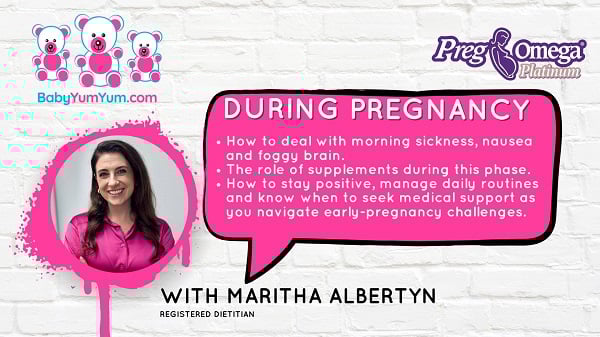
Pregnancy is exciting, emotional and sometimes physically overwhelming. Many women feel thrilled about the baby on the way while quietly battling nausea, vomiting, exhaustion and that frustrating “pregnancy brain” mental fog. In episode 2 of our video series sponsored by PregOmega Platinum with BabyYumYum, Rianette Leibowitz speaks with Maritha Albertyn, a dietitian at Nutritional Solutions, about why these symptoms happen and what you can do day to day to cope better.
This conversation focuses on practical nutrition strategies, hydration tips, gentle movement and supplement support, with a realistic reminder that there is no perfect pregnancy diet. The goal is to feel better, not to chase impossible rules.
Why ‘Morning Sickness’ Happens and Why It Is Not Only in the Morning
The term “morning sickness” is misleading because nausea can show up at any time and for many women, it lasts all day. According to Maritha, hormones are the biggest driver of pregnancy nausea and vomiting.
Several hormones are involved, including:
- Human chorionic gonadotropin (hCG), the hormone detected in pregnancy tests
- Progesterone, which can slow digestion
- Oestrogen, which can increase sensitivity to smells
- Serotonin and cortisol, which also play a role in nausea signalling in the brain
Progesterone can slow the movement of the stomach and gut, which can make nausea worse. Oestrogen can heighten smell sensitivity, which is why everyday odours suddenly feel unbearable. Maritha notes that nausea and vomiting affect most women in pregnancy, with roughly 85% experiencing some level of symptoms. A helpful timeline to remember: nausea often peaks between weeks 9 and 12, when hCG levels tend to be highest.
Pregnancy Brain and Mental Fog: What Causes It?
Many women describe pregnancy brain as forgetfulness, poor concentration and mental fog. Maritha explains that hormones play a role here too, especially elevated oestrogen and progesterone. These changes can affect how brain cells communicate.
Another big driver is blood sugar control. When blood sugar swings up and down throughout the day, brain fog tends to worsen. Add low energy intake, disrupted sleep and general fatigue and mental clarity takes a knock.
The reassurance matters: pregnancy brain is common, it is not a personal failure and it does not last forever.
When Is It Time to Get Medical Help?
Symptoms vary widely, so there is no single rule that fits everyone. However, there is a severe form of pregnancy vomiting called hyperemesis gravidarum (HG). HG can involve relentless vomiting, dehydration and even hospital admission.
Maritha’s advice is simple: trust your instincts. If you feel something is off, seek help. From a nutrition perspective, consider reaching out if:
- You can only manage one small meal a day
- You cannot keep food down consistently
- You feel weak, dizzy, or unable to function normally
- You suspect dehydration or rapid weight loss
Seeing a doctor or dietitian can provide reassurance, practical options and relief. Sometimes you sleep better just knowing your symptoms are normal and monitored.





Practical Daily Strategies to Manage Nausea and Fatigue
1. Eat smaller meals more often
Instead of three large meals, aim for about five smaller meals a day. Smaller portions are often easier to tolerate and help keep blood sugar steadier.
2. Eat well when you feel well
There will be moments in the day when you feel better. Use those windows to eat more nutrient-dense foods. If you feel awful later, it is okay to scale back and focus on what you can tolerate.
3. Prioritise hydration and time it well
Hydration helps with nausea, energy and overall wellbeing. Maritha recommends avoiding fluids during meals, especially if reflux or heartburn is an issue. Sip water between meals instead.
One key warning: sugary drinks can worsen nausea. Maritha notes research suggesting that frequent sugary beverages may increase the risk of developing severe vomiting symptoms.
4. Keep protein snacks nearby
Protein supports steadier digestion and can reduce nausea triggers. If chicken and eggs are unbearable, choose other protein options that feel easier in the moment.
5. Avoid smell-heavy food environments
Greasy, spicy or strongly scented places can trigger nausea fast. If possible, avoid restaurants or cooking smells that make symptoms worse.
6. Gentle movement helps
Movement supports gut function and digestion and may ease nausea by improving gastric emptying. It also supports mental health as a natural mood booster. Even a walk or light activity can make a difference.
How Partners and Family Can Support Pregnant Women in Meaningful Ways
Support is not only emotional. It can be practical and powerful. Maritha’s top suggestion is meal planning. A weekly meal plan on the fridge removes the daily stress of deciding what to cook when you feel nauseous.
Other helpful ideas:
- Prepare a few freezer meals for the week
- Help with cooking, school runs, laundry and bedtime routines
- Create space for rest without guilt
- Encourage the pregnant mom to accept help without feeling weak
Pregnancy is not a solo project. It is okay to lean on your people.
What to Eat for Energy, Stable Blood Sugar and Less Nausea
Maritha focuses on three key building blocks: protein, fibre-rich carbohydrates and healthy fats.
Protein
Protein can help regulate nausea and support stable energy. If typical protein foods feel impossible, try alternatives, including dairy (if tolerated), legumes, fish and different preparations that smell less intense.
Complex carbohydrates
Choose fibre-rich carbs such as oats, whole grains, fruit and vegetables. These help stabilise blood sugar, which can reduce nausea, fatigue and brain fog.
Healthy fats
Too much saturated fat or deep-fried food can slow digestion and make nausea worse. Aim for healthier fats such as avocado, nuts, seeds and olive oil. A realistic reminder from the discussion: you do not need perfection. If you need the chocolate sometimes, it is okay. Balance matters more than rigid rules.
Pregnancy Supplements: Which Nutrients Matter Most for Nausea?
Food is the foundation, but pregnancy increases nutrient needs. If nausea limits intake or vomiting causes losses, supplements can help fill the gaps. Maritha highlights these nutrients for nausea support:
- Vitamin B6
- Folate (Vitamin B9)
- Vitamin D
She notes that women with vitamin D deficiency may have a higher risk of developing severe vomiting symptoms. Beyond nausea, pregnancy nutrition commonly includes support for iron, calcium, omega-3, vitamin C, vitamin B12 and choline (found in eggs, linked to the baby’s brain development).
Important: supplement choices and dosages should be guided by a healthcare professional. Blood tests can help confirm what you actually need.
Myths to Stop Believing About Food Aversions
A common fear is that food aversions in early pregnancy will last the whole pregnancy. Maritha clears this up: aversions are not fixed. Keep gently trying foods again later. If chicken was impossible in week 7, it does not mean it will be impossible in week 30.
There is also a key emotional message: there is nothing wrong with you and nothing wrong with your baby because you feel nauseous or cannot eat perfectly.
A Final Encouraging Message for Moms Who Feel Discouraged
If nausea, vomiting and brain fog are wearing you down, remember this:
You are not alone. It is okay to ask for help. There is no single “right” way to eat during pregnancy. Do what you can, when you can. Rest in ways that work for you, whether that is a nap, a walk, or quiet time. Plan where possible and lean on support.
Pregnancy is not forever, but support and practical strategies can make the day-to-day feel far more manageable.