


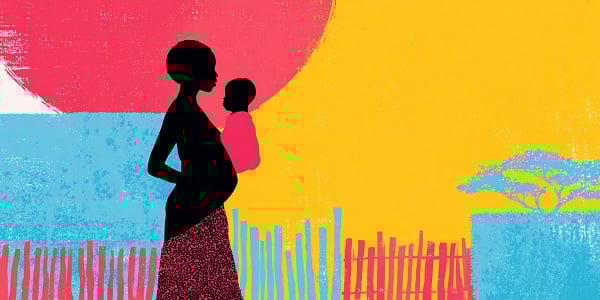
For decades, the idea of HIV-positive parents raising HIV-negative children was clouded by stigma and fear. HIV was once seen as a barrier to safe parenthood, with many believing transmission to a baby was inevitable. Today, thanks to antiretroviral therapy (ART) and prevention programmes, the narrative has shifted. Parenthood is not only possible for HIV-positive parents, but it can be safe, affirming and empowering.
Globally, more than a million women living with HIV become pregnant each year. Without treatment, the risk of mother-to-child transmission ranges from 15% to 45% during pregnancy, childbirth, or breastfeeding, according to the World Health Organization. With proper treatment, that risk drops to below 1%.
How HIV Can Be Transmitted to a Baby
HIV can pass from mother to child in three main ways:
- During pregnancy, when the virus crosses the placenta
- During childbirth, through exposure to maternal blood and fluids
- During breastfeeding, since HIV can be present in breast milk
It is important to note that the father’s HIV status does not directly affect the unborn baby. The critical factor is the mother’s viral load. If she is on effective ART and virally suppressed, the risk of transmission is extremely low.
ALSO READ: 5 Ways How HIV Is Transmitted: What to Know
The Role of Antiretroviral Therapy
ART is the cornerstone of prevention. When taken consistently, ART reduces the amount of HIV in the blood to undetectable levels. This protects the mother’s health and dramatically lowers the chance of passing HIV to the baby. The National Institutes of Health confirms that with proper ART throughout pregnancy, childbirth and breastfeeding, transmission risk is less than 1%.
In South Africa, the Vertical Transmission Prevention programme ensures that pregnant women living with HIV are started on ART immediately. Babies are tested at birth using polymerase chain reaction (PCR), allowing early detection and treatment if needed. This program has been central to reducing transmission rates nationwide.
South Africa’s Progress and Challenges
South Africa has made remarkable progress in reducing mother-to-child transmission. According to Spotlight, the number of babies born with HIV has dropped dramatically over the past two decades. Yet about 7 000 infants still contract HIV each year, often due to gaps in healthcare access, late diagnosis, or inconsistent treatment.
The South African National AIDS Council emphasises that eliminating vertical transmission by 2030 requires stronger integration of services, community education, and support for young women. This is not just a medical challenge but a social one, requiring communities to stand behind HIV-positive parents with dignity and support.





What HIV-Positive Parents Need to Know
For couples where both partners are HIV‑positive, the path to parenthood involves careful planning and medical guidance:
- Preconception planning: Both parents should be on ART and virally suppressed before conception
- Prenatal care: Regular monitoring of the mother’s viral load and adherence to treatment
- Delivery planning: Vaginal delivery is safe if viral load is low; otherwise, cesarean may be recommended
- Infant care: Babies receive prophylactic ART and undergo multiple HIV tests in the first two years
- Feeding choices: Exclusive breastfeeding is recommended in South Africa if the mother is on ART, as mixed feeding increases risk
These steps ensure that HIV-positive parents can give their child the best chance of being born HIV‑negative.
Emotional and Social Dimensions
Beyond the science, the issue touches on stigma. Many HIV-positive parents still face judgment when choosing to have children. Yet the reality is clear: with treatment, HIV does not have to define parenthood. Couples can raise HIV‑negative children, breaking cycles of fear and misinformation.
This is especially important for mothers, who often carry the burden of responsibility in discussions about transmission. The shift from “mother‑to‑child transmission” to “vertical transmission” in South Africa’s guidelines reflects a move away from blame and toward shared responsibility. Parenthood is a shared journey, and HIV-positive parents deserve the same dignity and joy as anyone else.
ALSO READ: Helping HIV-positive pregnant women on World AIDS Day

Myths and Facts
Myth: HIV‑positive parents cannot have HIV‑negative children.
Fact: With ART and proper care, transmission risk is less than 1%.
Myth: Fathers can transmit HIV directly to the unborn baby
Fact: Transmission risk is tied to the mother’s viral load, not the father’s status.
Myth: Breastfeeding is unsafe for HIV‑positive mothers
Fact: Exclusive breastfeeding is safe if the mother is on ART, according to Be in the KNOW.
Final Thoughts
So, can HIV-positive parents transmit HIV to their unborn baby? The answer is that they can, but they don’t have to. With consistent ART, proper medical care, and supportive systems, the risk is almost eliminated. Parenthood for HIV-positive parents is not only possible, but it is also safe and affirming.
For HIV-positive parents, the gift of an HIV‑negative baby is a powerful symbol of how far science and society have come and how much further we can go in ensuring dignity and choice for all families.
