







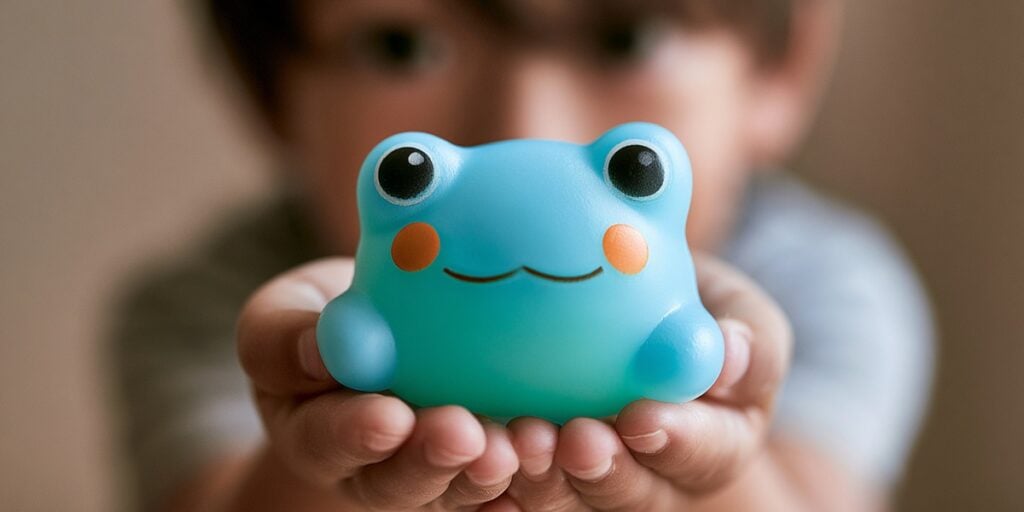
Then There’s the Problem of Fake Squishies
Counterfeit toys can be surprisingly convincing. A familiar-looking character, similar packaging and a bargain price can make a knock-off difficult to spot at first glance.
According to the CPSC, authorities have intercepted hundreds of thousands of non-compliant squishy toys at U.S. ports. While the enforcement figures are American, counterfeit children’s products aren’t uniquely an American problem, particularly in an age when toys can be ordered from third-party sellers almost anywhere in the world.
For parents, the bigger question is whether you know who actually made the toy. Poor printing, spelling mistakes, missing manufacturer information, no age guidance or branding that doesn’t look quite right are all reasons to be cautious. An unusually low price from a seller you’ve never heard of should also warrant a closer look.
Once the toy is home, condition matters just as much as packaging. A squishy that is leaking, torn, sticky, punctured, discoloured or starting to break apart has reached the point where it shouldn’t remain in the toy box.
What’s Inside Matters Too
One of the difficulties with a counterfeit toy is that parents may have little idea what materials are actually inside it. Some squishy products can contain gels, liquids, small components or water beads. If the outer material tears, those contents suddenly become accessible to curious hands and potentially curious mouths.
Water beads are particularly concerning around young children. The tiny beads absorb liquid and become much larger, which means swallowing one can lead to a serious intestinal blockage. That risk is easy to underestimate because an unexpanded bead can be incredibly small.
The Toy-Box Check Worth Doing Tonight
There is no need to panic and throw away every squishy your child owns. There is, however, a good case for spending five minutes checking them. Look at where each toy came from. Check its label and age recommendation. Squeeze it and look for tears, leaks or deterioration. If something smells unusually chemical, feels sticky when it shouldn’t, or has started breaking down, don’t give it back to your child.



Most importantly, talk about the microwave trend. Older children and teens may be perfectly capable of using a microwave themselves, which is precisely why the conversation matters. Tell them that heating a squishy can cause it to rupture and release dangerously hot material. A viral video isn’t evidence that an experiment is safe.
If Something Goes Wrong
If a squishy bursts without being heated, keep children away from the exposed filling and follow the manufacturer’s instructions where available. If a child swallows any unknown material, particularly water beads, seek professional medical or poison-control advice promptly rather than waiting for symptoms to appear.
Burns need immediate attention too. Cool running water is recommended for thermal burns; ice and greasy home remedies should be avoided. Serious burns, burns involving the face or eyes, and significant burns in children require medical attention.
A Popular Toy Doesn’t Automatically Mean a Safe One
That’s perhaps the most useful message to come from the latest warning. Children’s products can become wildly popular before parents have had much opportunity to think about where they came from, what’s inside them or how children are actually using them. Social media can then introduce risks the original manufacturer may never have intended.
For squishy toys, the sensible approach is refreshingly straightforward: buy from sellers you trust, be wary of suspicious knock-offs, regularly check toys for damage and keep them away from heat. And if your child has already seen someone microwave one online, don’t wait for curiosity to win. Have the conversation first.
