







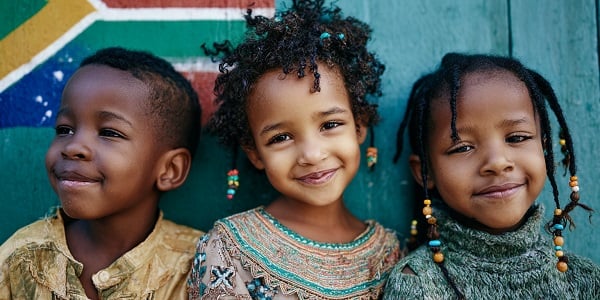
These rich linguistic environments reflect the cultural diversity that makes South Africa unique. During Heritage Month, families often celebrate traditions, food and cultural identity. Language is one of the most powerful parts of that heritage. However, parents raising bilingual or multilingual children sometimes worry about whether hearing more than one language could confuse their child or delay speech development.
Research and clinical experience consistently show that children are capable of learning multiple languages, and bilingualism itself does not cause speech or language delays. Understanding how bilingual development works can help parents feel confident supporting their child’s communication while preserving their cultural identity.
A Multilingual Reality for South African Families
Across South Africa, many children grow up hearing two or more languages. These experiences provide children with access to different communities and cultural traditions. Research has also shown that exposure to multiple languages can support cognitive flexibility and social understanding.
Common Myths About Bilingualism
Despite how common multilingualism is globally, several myths persist.
Myth 1: Learning two languages causes speech delay
Bilingualism does not cause speech or language delays. If a child has a language difficulty, it will usually be present across languages rather than being caused by exposure to multiple languages.
Myth 2: Children will become confused
Young children are very capable of separating languages. They may mix words from different languages in the same sentence while their vocabulary develops.
For example, a child might say:
“Where is my skoene?”
or
“I want more pap.”
This is known as code-switching and is a normal feature of bilingual communication.
Myth 3: Parents should stop speaking their home language
Some parents are advised to switch entirely to English if speech delays are suspected. However, limiting a child’s exposure to their home language can reduce opportunities for meaningful interaction. Children learn language best when caregivers speak the language they are most comfortable expressing emotions, stories and everyday experiences in.
How Bilingual Language Development Works
Bilingual children often distribute vocabulary across their languages; for example, a child may know the word “dog” in English and “inja” in isiZulu. If each language is assessed separately, vocabulary may appear smaller, but when both languages are considered together, the child’s overall vocabulary may be typical. It is true that some bilingual children may appear to speak slightly later than monolingual children. However, this difference is usually small and temporary.


What matters most is that the child is:
- attempting to communicate
• understanding language around them
• using gestures, sounds or words to interact
Communication development should be viewed across all languages the child is exposed to.
When Should Parents Seek Guidance?
Although bilingualism itself does not cause speech or language difficulties, children growing up in multilingual environments can still experience communication delays or disorders for other reasons.
Parents may consider seeking guidance from a speech-language therapist if they notice concerns such as:
- very limited babbling or sound play during infancy
• few or no meaningful words by around 18–24 months across all languages
• difficulty understanding simple instructions in familiar contexts
• minimal attempts to communicate through gestures, sounds or words
• speech that is extremely difficult to understand for age
• frustration or behavioural difficulties related to communication
A helpful way to think about bilingual development is this: a language difference is not the same as a language disorder. A bilingual child may mix languages or use words unevenly across languages. However, if a child struggles to understand or use language in any language they are exposed to, professional guidance may be helpful. Early support can make a meaningful difference in helping children develop communication skills and confidence.

Supporting Bilingual Language Development
Parents can support their child’s communication through everyday interactions.
Speak the language you know best



Children benefit from rich and expressive conversations. Speaking the language you are most comfortable using helps create meaningful communication opportunities.
Encourage conversation during daily routines
Talking during activities such as cooking, shopping or travelling provides natural opportunities for language learning.
Read, sing and tell stories
Books, songs and storytelling support vocabulary and listening skills in any language.
Allow natural language mixing
Code-switching is a normal part of bilingual development and does not need to be corrected.
Celebrate cultural communication
Family stories, humour, songs and traditions all contribute to language development and strengthen cultural identity.
Language as Heritage
Language carries stories, identity and belonging. In a country as linguistically diverse as South Africa, raising bilingual children can help preserve culture while preparing children to connect across communities. During Heritage Month, celebrating the languages spoken at home can be a powerful way to pass culture on to the next generation. When children grow up hearing rich, meaningful language from the people around them, they develop not only communication skills, but also a deeper sense of who they are and where they come from.
