







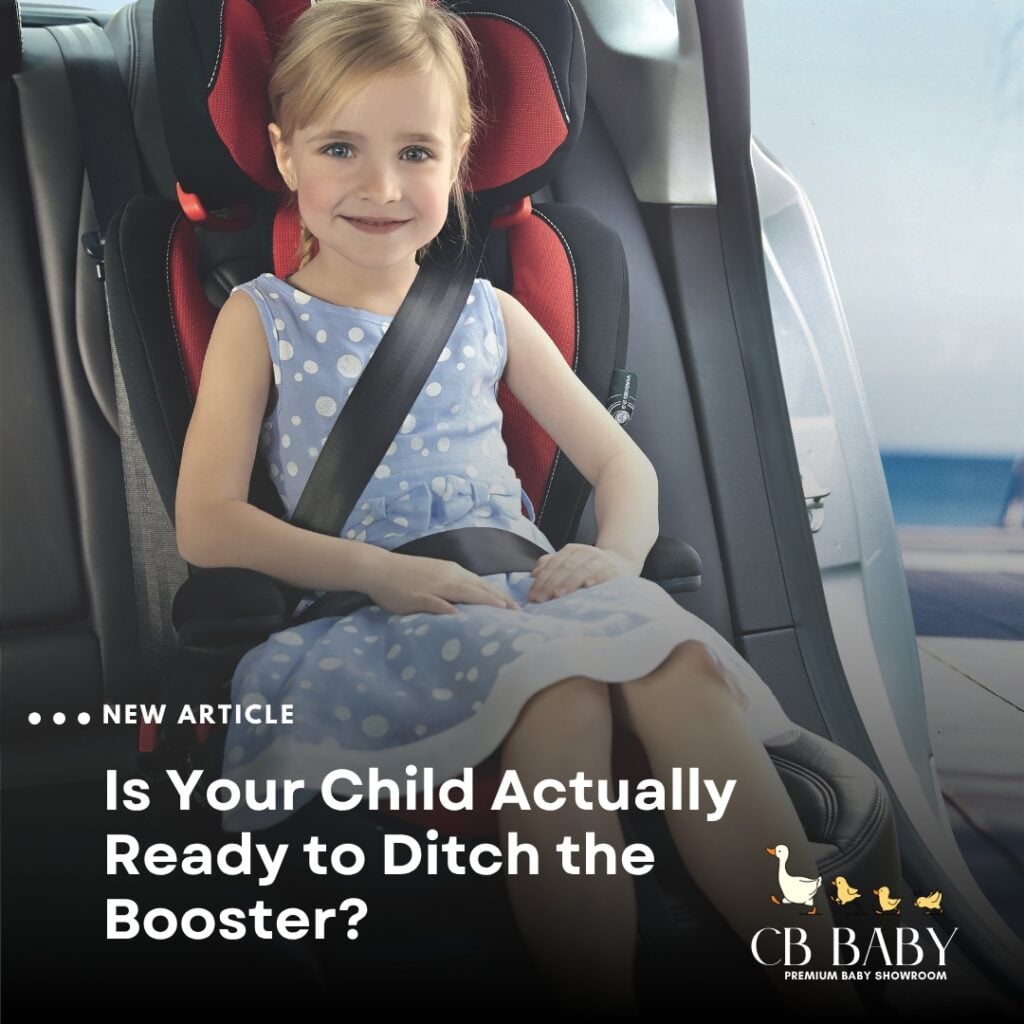
Why This Transition Gets Rushed
Of all the car seat stages, this is the one most likely to be skipped early and it’s easy to understand why. Kids openly campaign against boosters in a way they rarely do against infant or toddler seats, because by this age they’re old enough to notice what their friends are doing and vocal enough to say so. Parents, worn down after years of car seat battles, are often relieved to finally say yes.
However, the booster’s job isn’t cosmetic. It raises a child up so that an adult seatbelt (designed and tested for an adult-sized body) actually sits in the right place on a smaller frame. Move to a seatbelt alone too early, and the belt doesn’t fail loudly or dramatically in everyday driving. It simply sits in the wrong place, quietly, every single trip, until the one time it matters.
The Real Test: It’s Not About Age
Height and weight vary enormously between children of the same age, which is exactly why age alone is an unreliable marker for this transition. A well-known and genuinely useful evidence-based check is the 5-Step Test. A child is ready to use an adult seatbelt without a booster only if all five of the following are true at the same time:
1. Do their feet sit flat on the floor?
With their bottom all the way back against the seat, their feet should reach the floor (or a footrest), rather than dangling. If their legs are hanging in mid-air, they’ll instinctively slouch forward to get comfortable, which immediately misplaces the seatbelt on their body.
2. Do their knees bend naturally at the edge of the seat?
The knee should bend comfortably over the edge of the seat cushion, as an adult’s would. If the seat is too deep for their leg length, this same slouching problem happens.
3. Does the lap belt sit low on their hips, not across their stomach?
This is the single most important check. The lap belt should rest across the top of their thighs and hips, the strongest, most protected part of the body in a crash. If it sits higher, across the soft stomach area, a sudden stop can direct crash force into the abdomen, an injury pattern serious enough that it has its own name in pediatric medicine: “seatbelt syndrome.”
4. Does the shoulder belt cross the chest and shoulder, not the neck or face?
The shoulder belt should sit snugly across the middle of the chest and shoulder. If it crosses the neck or face, most children either move it behind their back or tuck it under their arm to stop it rubbing, both of which remove upper-body protection entirely and can cause serious injury in a crash if the belt is loaded incorrectly.
5. Can they sit like this — properly — for the entire trip, not just the first five minutes?
This is the test most families skip, and the one that matters most in daily reality. A child might pass the first four checks sitting upright and attentive in a driveway, then slouch, lean, or curl up asleep twenty minutes into an actual drive, putting the belt back in the wrong position without anyone noticing. If they can’t consistently hold proper position on a real trip, they’re not ready yet, even if they technically pass the static test.
What the Research Says About Rushing This
Studies consistently show that children moved out of boosters too early are at meaningfully higher risk of abdominal and internal injuries in a crash, specifically because of where the lap belt ends up sitting on their body. This isn’t a small margin; a poorly positioned lap belt is one of the more preventable causes of serious injury in child passengers, precisely because the fix (staying in a booster a little longer) is so simple.
Most children don’t pass all five steps reliably until somewhere between ages 8 and 12, and height matters more here than age. Many kids don’t reach the threshold height (commonly cited around 145cm, though this varies by seatbelt design and vehicle) until well into that range.
Handling the “Nobody Else Uses One” Conversation
This is often the harder part than the physical test itself.
- Name it honestly. Kids respond better to “your body isn’t tall enough yet for the seatbelt to protect you properly” than to a vague “because I said so.”
- Reframe the booster, not just the rule. Some children respond well to picking their own booster design or colour, small ownership over an otherwise unwelcome requirement.
- Check in periodically, not just once. Growth isn’t linear; a child who fails the test in spring might genuinely pass it by the following year. Re-testing (rather than assuming “still too small” forever, or “probably fine now”) keeps the decision evidence-based rather than a one-off argument won or lost.
- Model it yourself. If older kids or other adults in the car aren’t wearing seatbelts properly either, it undercuts the message quickly.
A Few Related Situations Worth Knowing
- Booster type matters too. High-back boosters generally offer better side-impact and head protection than backless boosters, particularly in cars without a head restraint at that seating position (worth factoring in even once a child is booster-ready, not just when they’re ready to leave boosters behind).
- Bulky winter clothing applies here too. A thick jacket can lift the lap belt out of position the same way it affects a harness in a younger child’s seat (worth checking fit again each winter).
- This isn’t a one-time pass/fail. A child who passes the 5-step test in a small hatchback’s back seat may not pass it in a friend’s SUV with a different seat angle. When in doubt, especially for unfamiliar cars, it’s worth doing a quick re-check.
ALSO READ: Toddler Car Seat Safety: When Should Kids Face Forward?



What to Do With the Booster Once They’ve Outgrown It
Once your child confidently passes the 5-step test and moves to a seatbelt alone, don’t let a perfectly good booster sit in the garage or head to landfill. Organisations like Wheel Well, a South African NPO focused on child road safety, run a seat donation programme: outgrown or unused seats are collected, deep-cleaned, safety-checked for defects, and redistributed to families who can’t otherwise afford one — with drop-off points at Supa Quick fitment centres around the country. It’s a simple way to turn a stage your family is finished with into safety for another family that needs it.
If you’re not sure whether your child is ready, or want help choosing a booster that’ll see them through this stage, CB Baby’s team is happy to talk it through — no pressure, just peace of mind.