







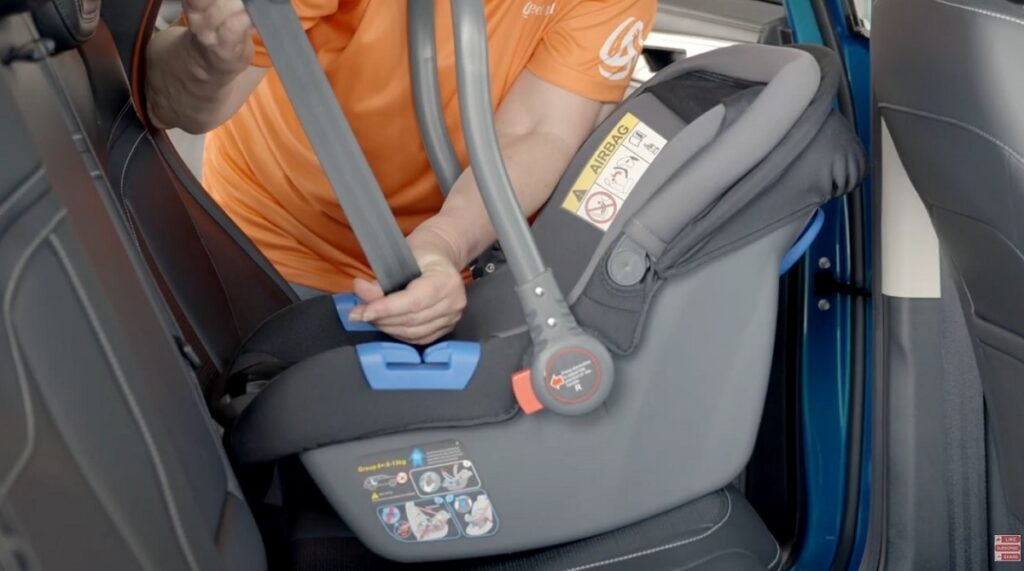
The journey of keeping your child safe in the car starts the day they are born. At birth, a baby’s skull bones have not yet fused. Soft spots, protected only by a membrane, still exist at the top and back of the head. Their neck muscles are weak, their backs cannot properly support their bodies, and even holding up their own head is a challenge.
This is exactly why infant car seats are specially designed for newborns. They are not simply “small seats”. They are carefully engineered safety devices created to protect the brain, neck, and spine during the most vulnerable stage of life.
Rear-Facing Saves Lives
One of the most important features of an infant seat is that it is rear-facing only. This is not a suggestion or a trend. It is critical for safety.
A baby’s head makes up around 25% of their body weight. In a sudden stop or crash, a forward-facing child’s body may be restrained by the harness, but the head is thrown violently forward. That force can cause devastating neck and spinal injuries.
When a baby is rear-facing, the entire shell of the car seat absorbs and spreads the crash forces across the child’s back. Instead of the neck taking the strain, the seat protects the whole body. That difference can save a child from life-altering injuries.
Correct Use Matters
Even the safest seat can only protect your child if it is used correctly.
Harness straps should sit at shoulder level or slightly below the shoulders in a rear-facing seat. The harness must fit snugly, “snug like a hug.” If you can pinch or fold the harness strap, it is too loose.
Parents should also avoid bulky jackets, fluffy onesies, and thick blankets underneath the harness. These create dangerous gaps between the harness and your child’s body. Instead, dress your baby in light clothing, secure the harness properly, and place blankets over the top afterwards.
It is also important not to add aftermarket inserts, cushions, or accessories to the seat. Your infant seat has been crash-tested exactly as it comes. Extra products may interfere with how the seat performs during a collision.
ALSO READ: How long must my child use a rear-facing car seat?
Infant Seats Are Convenient, But They Are Not Beds
Infant seats are incredibly convenient. They can be removed from the vehicle, carried while your baby sleeps, used for quick shopping trips, and even positioned as feeding seats.



But parents must remember one very important thing: an infant car seat is not a bed.
Long naps and overnight sleep should always happen on a flat sleeping surface. When babies sleep sitting upright for extended periods, their heads can slump forward, affecting airflow and oxygen levels.
For newborns, time in the car seat should be limited to 20-minute intervals. As your child grows older and develops stronger muscle control, this can gradually be extended to up to two hours at a time.
Every Detail Matters
From proper installation to side-impact protection, every feature on an infant seat exists for a reason. The deep shell, rear-facing angle, harness position, and protective padding all work together to create a safety zone around your child.
As parents, we cannot prevent every danger on the road. But we can make informed choices that give our children the best possible protection every single trip.
Watch the YouTube video here: YouTube Video
If you found this information helpful, please like, share, and subscribe to help spread awareness and keep more children safe on our roads.
YOU MAY ALSO LIKE
One of the most important decisions you will make when you have a baby is choosing a car seat. With safety of paramount importance and …