







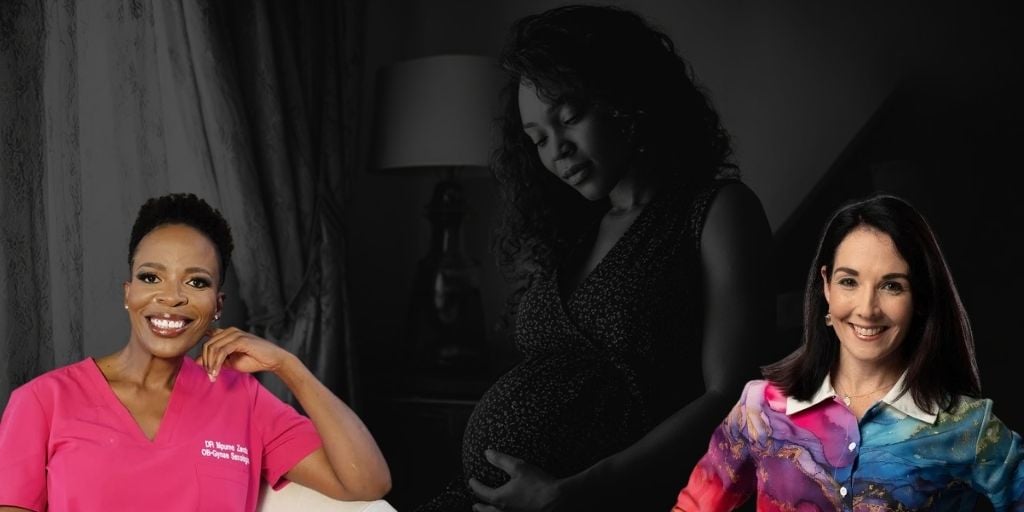
This important topic was explored in a conversation between Amanda Rogaly, host and CEO of BabyYumYum, and Dr Mpume Zenda, an obstetrician, gynaecologist, sexologist and mother. Their conversation challenged the casual way pregnancy care is often discussed and highlighted why it deserves far more respect than it receives.
“Pregnancy is not a disease, but it is one of the most vulnerable states a woman’s body will ever be in,” Dr Zenda said, adding that understanding that vulnerability is central to improving pregnancy care in South Africa.
What Pregnancy Care Really Means
Pregnancy care is not limited to the moment a woman discovers she is pregnant. It begins long before conception and continues well after birth.
“Obstetrics is about the full journey. From preparing the body for pregnancy, to carrying a pregnancy safely, to supporting a woman after delivery,” Dr Zenda explained.
This holistic approach is often overlooked. Many women believe pregnancy care is reactive, something that happens only when problems arise. In reality, effective pregnancy care relies on anticipation, monitoring and early intervention.
Amanda noted that women are rarely given a clear explanation of this scope.
“We’re told what appointments to attend, but not always why they matter,” she said.
ALSO READ: Women’s Health Education in South Africa: Why Understanding Your Body Changes Everything
Why Pregnancy Carries Risk
One of the most confronting aspects of the conversation was the reminder that pregnancy remains dangerous, even in modern healthcare systems.
“Pregnancy is still one of the leading causes of death among young women. That fact alone should change how seriously we take pregnancy care,” Dr Zenda said.
In South Africa, the risks are intensified by inequality. Access to quality healthcare varies widely depending on geography, income and resources. While some women receive continuous, specialist-led care, others navigate overcrowded public facilities with limited support.



Pregnancy care, therefore, exists within a deeply unequal landscape, making vigilance and communication essential.
The Weight of Responsibility in Obstetrics
Obstetrics is unique in that it involves caring for two lives at once. This dual responsibility shapes every decision an obstetrician makes.
“You are constantly balancing what is best for the mother and what is best for the baby,” Dr Zenda said. “Sometimes those needs are aligned. Sometimes they are not.”
This complexity is one of the reasons obstetrics is among the most pressured medical specialities in the country.
“When things go wrong, the consequences are life-altering,” she added. “That reality sits with you long after the delivery room.”
Amanda reflected on the emotional toll this can take on both doctors and families.
“We often forget that doctors are human too,” she said.
Why Communication is Part of Pregnancy Care
Technical expertise alone is not enough. According to Dr Zenda, communication is a core component of safe pregnancy care in South Africa.



“Women deserve to understand what is happening to their bodies. If you don’t understand, you can’t participate in decisions,” she said.
Clear explanations help women feel less anxious and more empowered. They also build trust, which becomes critical if complications arise.
Amanda pointed out that many women feel intimidated in medical settings: “There’s a power imbalance and that can silence women.”
Dr Zenda believes that good care actively dismantles that imbalance.
“If a woman feels heard, she is more likely to speak up when something feels wrong,” she said.
Public and Private Care Realities
The conversation also addressed the differences between public and private pregnancy care in South Africa without diminishing either system.
In public healthcare, women may see multiple providers and experience long waiting times. In private care, continuity is often better, but cost becomes a barrier.
“Neither system is perfect,” Dr Zenda said. “What matters is that women receive respectful, attentive care wherever they are.”
Understanding these realities helps women navigate their options and advocate for themselves within the system available to them.
When Outcomes Are Not Ideal
Pregnancy care does not always end with celebration. Complications, loss and trauma are realities many families face.
“Sometimes you can do everything right and still have a poor outcome. That is one of the hardest truths of obstetrics,” Dr Zenda said.
In these moments, how women are treated matters deeply.
“When families feel excluded or confused, the trauma is worse. Transparency and compassion are essential,” she explained.
Amanda emphasised the importance of emotional support.
“We don’t talk enough about the grief women carry after difficult births,” she said.
The Forgotten Postpartum Period
One of the most neglected aspects of pregnancy care is what happens after birth.
“The world celebrates the baby and forgets the mother. Yet her body and mind are still recovering,” Dr Zenda said.
Hormonal shifts, physical healing and emotional adjustment continue long after delivery. Many women are expected to return to work and routine within weeks.
“Postpartum recovery is not a six-week event. It’s a process,” she adds.
Pregnancy care that ignores this phase leaves women unsupported when they need care the most.
Trusting Women’s Instincts
Throughout the conversation, Dr Zenda returned to one message repeatedly. Women must trust their instincts.
“If something feels off, it probably is. Your body speaks to you,” she said.
Amanda agreed: “Women are often told they’re overreacting. That can be dangerous.”
Effective pregnancy care relies on women feeling confident enough to voice concerns and on healthcare providers being willing to listen.
Rethinking Pregnancy Care in South Africa
Pregnancy care should never be reduced to a checklist because it is a dynamic, high-stakes process that requires skill, empathy and partnership.
“Pregnancy is not something women should endure. It’s something they should be supported through,” Dr Zenda explained.
In a country grappling with inequality and healthcare challenges, improving pregnancy care requires more than medical expertise. It requires respect for women’s experiences and trust in their voices.
Conversations like this one help shift the narrative from routine to responsibility, reminding us that pregnancy care is never just pregnancy.
