








In recent years, concerns have been raised about the potential link between diet sodas (particularly those sweetened with artificial sweeteners like aspartame) and the development of autism spectrum disorder (ASD). Diet cooldrinks and popular sugar-free beverages contain aspartame as their primary sweetener. This has led to questions about whether regular consumption of diet soda could contribute to the onset of autism, especially in children.
This article delves into the scientific research surrounding this topic, examining studies that explore the relationship between diet soda consumption during pregnancy and the risk of autism in offspring. We will also discuss expert opinions, regulatory perspectives, and the broader implications for public health, per News-Medical.
Understanding Autism Spectrum Disorder
Autism spectrum disorder is a complex neurodevelopmental condition characterised by challenges with social interaction, communication, and repetitive behaviours. The exact causes of ASD are not fully understood, but research suggests a combination of genetic and environmental factors contributes to its development. While genetics plays a significant role, environmental exposures during critical periods of brain development are also believed to influence the risk of developing ASD.
ALSO TAKE A LOOK AT: What Is Neurodiversity? 7 Things Every Parent Should Know
The Role of Aspartame in Diet Sodas
Aspartame is a low-calorie artificial sweetener used in various food and beverage products, including diet sodas. It is approximately 200 times sweeter than sucrose, allowing products to achieve desired sweetness without adding significant calories. Aspartame is metabolised in the body into its constituent amino acids, i.e. phenylalanine, aspartic acid and methanol. While these components are naturally occurring in foods, concerns have been raised about their potential effects when consumed in large quantities or during critical developmental periods, according to Wikipedia.
Scientific Studies on Diet Soda Consumption and Autism Risk
A pivotal study published in 2023 by researchers at the University of Texas Health Science Center at San Antonio examined the relationship between maternal consumption of diet sodas and aspartame during pregnancy and the risk of autism in male offspring. The case-control study found that daily consumption of diet sodas or aspartame during pregnancy was associated with a threefold increased risk of autism in male children. The study’s senior author, Dr. Raymond F. Palmer, emphasised that while these findings do not establish a connection, they raise important questions about potential neurological impacts that warrant further investigation, as per UT Health San Antonio.
These associations do not prove causality, but taken in concert with reports from earlier studies of increased prematurity and cardiometabolic health impacts among infants and children exposed daily to diet beverages and/or aspartame during pregnancy, our findings raise new questions about potential neurological impacts that need to be addressed.
Another study published in the journal Nutrients in 2023 further explored this association, focusing on early-life exposures to diet sodas and aspartame. The researchers found a significant correlation between daily intake of these substances during pregnancy and the development of autism in male offspring. However, they noted that these associations do not prove causality and called for more rigorous studies to confirm the findings. This, according to MDPI, The Treetop, UT Health San Antonio.
The association between diet soda/beverage and aspartame exposure and autism spectrum disorder reported by Fowler et al. is unreliable, not biologically plausible and is confounded by reverse causality. Caution should be exercised when suggesting that a mother’s dietary habits play a possible role during pregnancy based on unreliable associations.

Critiques and Limitations of the Research
While these studies suggest a potential link between diet soda consumption during pregnancy and autism risk, several experts have raised concerns about the methodology and biological plausibility of the findings. A commentary published in Nutrients in 2024 questioned the biological mechanisms proposed by the original study, arguing that the evidence does not support a direct causal relationship between aspartame and autism. The authors highlighted potential confounding factors and emphasised the need for more robust research to validate these associations.




Additionally, a study published in the Journal of Autism and Developmental Disorders analysed data from over 2,500 children and found no significant association between soda consumption and the prevalence of autism. Similarly, research in the Journal of Child Psychology and Psychiatry did not establish a correlation between soda intake and autistic symptoms, per Discovery ABA.
There is no direct evidence that diet soda or aspartame causes autism. However, it is important to stay informed and make healthy choices for yourself and your family. If you have concerns about diet soda or artificial sweeteners, it is always best to consult your healthcare provider, said Mark Elias.
Regulatory Perspectives on Aspartame Safety
Despite concerns raised by some studies, major health organisations maintain that aspartame is safe for consumption within established acceptable daily intake levels. The U.S. Food and Drug Administration (FDA) has set the acceptable daily intake for aspartame at 50 mg per kilogram of body weight. Similarly, the European Food Safety Authority (EFSA) has concluded that aspartame poses no risk to human health at current levels of exposure.
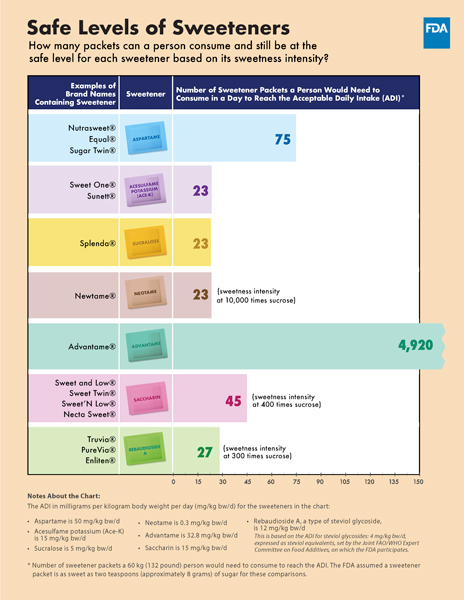
Source: FDA Aspartame and Other Sweeteners in Food (Download in PDF 2MB)
In 2023, the International Agency for Research on Cancer (IARC) classified aspartame as “possibly carcinogenic to humans” based on limited evidence. However, both the FDA and EFSA have stated that this classification does not indicate a direct cancer risk and that aspartame remains safe for consumption within recommended limits, according to Wikipedia.
Implications for Public Health
The potential association between diet soda consumption during pregnancy and autism risk, particularly in male offspring, warrants further investigation. While current evidence does not establish a causal link, the studies highlight the need for more comprehensive research to understand the effects of artificial sweeteners on fetal development.
For expectant mothers concerned about the potential risks, it may be prudent to limit the intake of diet sodas and other products containing aspartame. Opting for natural sweeteners or water as beverage choices can help mitigate any potential risks associated with artificial sweeteners.



Conclusion
While recent studies have suggested a possible link between maternal consumption of diet sodas and aspartame during pregnancy and an increased risk of autism in male offspring, the evidence remains inconclusive. Further research is needed to establish any definitive connections and to understand the underlying mechanisms involved. In the meantime, individuals concerned about potential risks may choose to limit their intake of products containing artificial sweeteners, including diet cool drinks, and consult healthcare professionals for personalised advice.
References
- Fowler, S. P., et al. (2023). Daily Early-Life Exposures to Diet Soda and Aspartame Are Associated with Autism in Males: A Case-Control Study. Nutrients, 15(17), 3772. https://doi.org/10.3390/nu15173772 (PubMed)
- Palmer, R. F. (2023). Drinking diet sodas and aspartame-sweetened beverages daily during pregnancy linked to autism in male offspring. https://news.uthscsa.edu/drinking-diet-sodas-and-aspartame-sweetened-beverages-daily-during-pregnancy-linked-to-autism-in-male-offspring/
- Ayoub-Charette, S., et al. (2024). Lack of Biological Plausibility and Major Methodological Issues Cast Doubt on the Association between Aspartame and Autism. Nutrients, 16(5), 675. https://doi.org/10.3390/nu16050675 (MDPI)
- U.S. Food and Drug Administration. (2023). Aspartame. https://www.fda.gov/search?s=aspartame
- European Food Safety Authority. (2013). Scientific Opinion on the re-evaluation of aspartame (E 951) as a food additive. https://www.efsa.europa.eu/en/efsajournal/pub/3496(Wikipedia)
- Wikipedia contributors. (2023). Aspartame. Wikipedia. https://en.wikipedia.org/wiki/Aspartame
- Wikipedia contributors. (2023). Diet soda. Wikipedia. https://en.wikipedia.org/wiki/Diet_soda
DISCLAIMER: The information provided in this article is for educational purposes only and should not be construed as medical advice. For concerns about diet soda consumption and its potential effects, consult a healthcare professional.
