







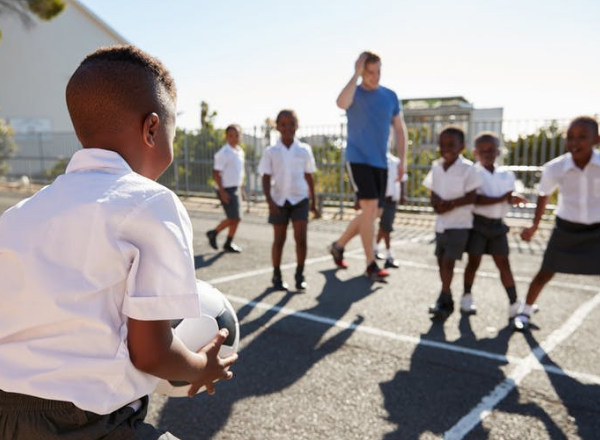
It’s important for kids to move and play.
Monkey Business Images/Shutterstock
How much kids need to move, play and sleep in their early years is one of the biggest factors shaping their physical, emotional and cognitive development. These early routines build the foundation for everything from behaviour to learning to overall wellbeing. But modern life with screens, busy schedules and overstimulation often pushes children away from the natural rhythm their bodies need. Understanding how much kids need to move, play and sleep helps parents create simple, balanced routines that support growth and confidence, writes Catherine Draper, University of the Witwatersrand.
READ THIS ARTICLE FOR FREE!
Let’s be honest! Parenting isn’t all cuddles and cupcakes. It’s also chaos, coffee and Googling “is it normal if my toddler eats crayons?” at 2AM. That’s why we built a BabyYumYum Membership Subscription – your smart, supportive sidekick for the messy, magical ride of parenting.
When you join, you unlock:
🚀 Expert advice without the boring bits
💡 Real stories, real laughs, real connection
📘 Downloads, checklists & life-saving parenting tips
💝 Exclusive discounts and benefits for you and your family
Because raising tiny humans is hard work but with the right team (that’s us!), it gets a whole lot easier.
As parents, we want to encourage children to be physically active, get enough sleep, and keep their screen time at healthy levels. But did you know that this starts from birth? And, what is enough sleep for young children? Also, given the ubiquity of screens, what is a healthy level of screen time?
South Africa has just launched 24-hour movement guidelines for children from birth to five years, integrating physical activity, sitting behaviour, screen time and sleep. These guidelines intend to answer these and other questions, providing guidance that can help put young children on the best trajectory for their growth, health and development.
The country is following the example of others that have recently updated or are busy updating their movement behaviour guidelines for the early years – Canada, Australia, and the UK. It’s the first low- and middle-income country to bring out movement behaviour guidelines for this or any age group.
These developments represent a shift towards integrated guidelines for children’s physical activity, sitting and sleep behaviours. These guidelines take into account the natural and instinctual integration of these behaviours across a 24-hour period, and are intended to provide a more cohesive message for parents, caregivers, teachers and practitioners.
Research shows that children from birth to five years who receive support to meet these movement guidelines are likely to grow up healthier, fitter and stronger. They may also have greater motor skill abilities, be more prepared for school, manage their feelings better, and enjoy life more.
The guidelines
The development of the guidelines was supported by the Laureus Sport for Good Foundation South Africa which brought together a panel of stakeholders, practitioners and academics (local and international) from the field of early childhood. The panel considered the best available scientific evidence, the South African context and how the guidelines would be received across the country’s very diverse settings.
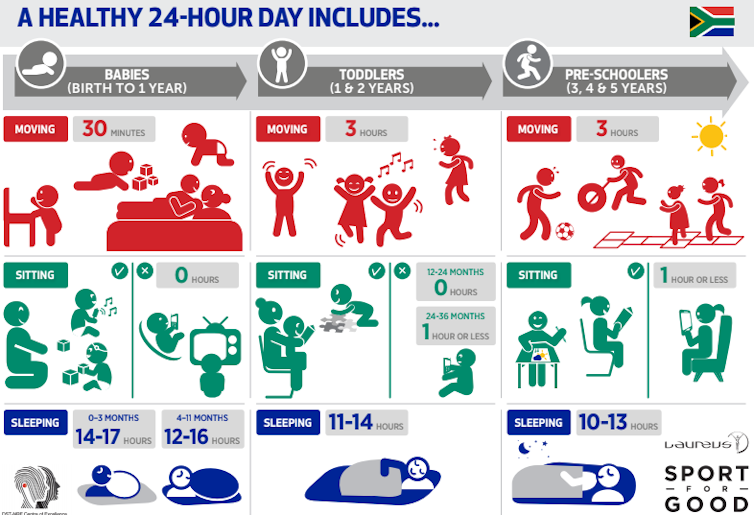
The guidelines recommend that children from birth to five years should participate in a range of play-based and structured physical activities that are appropriate for their age and ability, and which are fun and safe. Children should be encouraged to do these activities independently as well as with adults and other children. For caregivers, activities that are loving and involve play and talking with children are best.

These guidelines also emphasise that the quality of what is done when sitting matters. For children younger than two years, screen time is not recommended. Sitting activities that are screen-based should be limited among children aged two to five years. The quality of sleep in children from birth to five years is also important, and screen time should be avoided before bed.
While the educational benefits of screen time receive much attention in the media, there’s little scientific evidence to support the claims of these benefits. And the long-term, potentially negative, impacts of replacing “traditional” games and books with screen-based versions are not yet known.
The World Cancer Research Fund recently highlighted the link between childhood screen time to 12 deadly cancers and short-sightedness. There is also a trend emerging among technologists in Silicon Valley to keep their children away from screens. This should surely be causing us to think twice about the easy role that screens play in little ones’ lives.
Early childhood represents a key window of opportunity to lay down a healthy foundation for children’s movement behaviours, setting them up for a win as far as their growth, health and development are concerned.
The guidelines can help build this foundation and can be used by anyone who has an interest in the health and development of all children from birth to five years – parents and family, educators, caregivers, health professionals, and community workers.![]()
Catherine Draper, Senior Researcher, University of the Witwatersrand
This article is republished from The Conversation under a Creative Commons license. Read the original article.

FAQs: How Much Kids Need to Move, Play and Sleep (Backed by Science)
Why is movement so important for children?
Regular movement supports healthy growth, brain development, emotional regulation and stronger muscles and bones. Active kids concentrate better at school and sleep more soundly at night.
How much physical activity do young children need each day?
Guidelines recommend at least 3 hours of varied physical activity a day for children aged 1–5, including energetic play such as running or jumping. This doesn’t have to be in one go and it can be short bursts throughout the day count.
How much exercise do school-aged children need?
Children aged 5–17 need a minimum of 60 minutes of moderate to vigorous activity daily, such as cycling, sport, dancing or fast-paced play. More activity brings even greater health benefits.
Does play count as exercise?
Yes. Active play like climbing, chasing, dancing and playground games is one of the best forms of exercise. It builds confidence, creativity, social skills and motor development.
What about screen time – how much is too much?
For children under 5, screen time should be limited, and avoided entirely for those under 2 (except for video calls). Older kids should balance screen use with lots of physical activity, outdoor time, and face-to-face interaction. Take a look at Why Screen Time for Babies, Children and Adolescents Needs to Be Limited.
How much sleep do kids need?
Sleep needs vary by age:
- Toddlers (1–2 years): 11–14 hours (including naps)
- Preschoolers (3–5 years): 10–13 hours
- School-aged children (6–12 years): 9–12 hours
Good sleep improves mood, learning, and immune health.
Why is sleep linked to movement and play?
Active kids tend to fall asleep faster, sleep longer and wake less during the night. Sleep, movement, and play all support each other, helping children grow and thrive.
How can I encourage my child to be more active?
Make activity part of daily life. Walk to school when possible, plan outdoor family time, limit long periods of sitting and choose games that involve movement. Kids copy what adults do, if you’re active, they’ll follow.
Are structured sports necessary?
Sports are helpful but not essential. What matters most is daily movement. Free play, dancing at home, playground time or cycling are all excellent ways to stay active without formal sport.
How do I help my child get enough sleep?
Create consistent routines such aspredictable bedtimes, calm evenings, dim lighting and screen-free wind-down time. Avoid sugary foods close to bedtime and keep bedrooms comfortable and quiet.
Is outdoor play really that important?
Yes. Outdoor play boosts imagination, problem-solving, vitamin D levels and emotional wellbeing. It also encourages more vigorous physical activity compared to indoor play.
What if my child struggles to be active or sleep well?
Take small steps: shorter bursts of play, gentle activities like walking, or calming bedtime routines. If concerns persist especially with sleep, hyperactivity or extreme fatigue, then consult a healthcare provider.
Disclaimer: This information provides general health guidance and is not a substitute for professional medical advice. If you are concerned about your child’s sleep, activity levels or overall wellbeing, please speak to a paediatrician or healthcare provider.
Get trusted, parent-approved advice at your fingertips. Premium Membership gives you expert guidance, real-world tips and member-only downloads. Try it out for unlimited access, exclusive content and helpful parenting tools.
YOU MAY ALSO LIKE
Why the first 1000 days of a child’s life are so important & how children learn through play
Science tells us that the first 1000 days of a child’s life sets the foundation for future years. The Center on the Developing Child at …