








Parents arrive at my practice with photographs, colour descriptions and detailed timelines. I hear things like:
“My baby’s poop is bright yellow. Is that normal?”
“Why are there little seeds in it?”
“She hasn’t pooped for four days, but she seems completely happy.”
And my personal favourite: “Kath, I’m sorry to send you this photo while you’re eating lunch…”
Please do not worry. Dietitians are extremely difficult to put off their food!
For Breastfeeding Awareness Month, I want to celebrate one of the less glamorous but genuinely fascinating benefits of breastmilk: it helps create some of the best baby poop.
By “best,” I do not necessarily mean tidy, predictable or easy to contain in a nappy. Breastfed baby poop can travel up the back, into the vest and occasionally into places that seem anatomically impossible. What I mean is that breastmilk helps build a healthy environment inside a baby’s gut and the nappy often gives us a little window into that process.
Breastmilk does more than feed the baby.
We often describe breastmilk as nutrition, but it is much more than a mixture of protein, fat and carbohydrate.
Breastmilk contains antibodies, enzymes, immune cells, beneficial bacteria and special carbohydrates called human milk oligosaccharides, or HMOs. Scientists have identified a huge variety of these complex sugars in human milk.
Here is the wonderfully clever part: babies do not digest most HMOs themselves. Instead, HMOs travel into the large intestine, where they feed selected beneficial gut bacteria, particularly certain types of Bifidobacterium.
In other words, a mother is not only producing milk to feed her baby. She is also producing food for her baby’s gut microbes.



I often explain it to parents like this: breastmilk feeds the baby and fertilises the baby’s internal garden.
What is the baby microbiome?
The microbiome is the community of bacteria, fungi, viruses and other microorganisms living in and on the body. A baby’s gut microbiome begins developing rapidly during early life and is influenced by many factors, including birth, skin-to-skin contact, the environment, antibiotics and feeding.
Breastfeeding is one of the strongest influences on the developing infant gut microbiome. Human milk provides both beneficial microbes and the ingredients that help selected microbes grow. Breastfed babies commonly develop gut communities rich in bifidobacteria, although every baby’s microbiome remains individual.
These bacteria help break down components of milk and produce substances such as short-chain fatty acids and lactate. This helps create a slightly more acidic gut environment, which may make it harder for certain unwanted organisms to thrive.
The microbiome also communicates with the immune system. A baby’s gut is not simply a digestive tube; it is an important training ground where the developing immune system learns how to respond appropriately to the world.
Why does breastfed poop look like that?
Typical breastfed stools are often:
- Mustard-yellow, golden or occasionally green
- Soft, loose or almost runny
- Seedy, grainy or slightly curdled-looking
- Mildly sweet or yoghurt-like in smell
- Frequent in the early weeks
Those little “seeds” are not undigested food. They are usually normal milk fats and other milk components.
ALSO READ: Newborn Care 101: Umbilical Cord, Poop & Sleep



One mother once asked me, looking genuinely concerned, “How can there be seeds in the nappy when my baby has never eaten anything?”
It is a very reasonable question. Thankfully, nobody has secretly been feeding the baby wholegrain mustard.
Breastmilk is also highly digestible, so some babies produce relatively little waste. After the early newborn period, an exclusively breastfed baby may poop several times a day—or may go several days without a bowel movement.
The key is not only frequency. We look at the whole baby: Is the baby feeding well? Growing? Passing urine? Comfortable? Is the stool soft when it eventually arrives?
A happy, thriving breastfed baby who passes a soft stool after several days is not automatically constipated. Constipation describes hard, dry or painful stools, not simply a gap between nappies.
Green poop is not always a crisis
Another message I regularly receive is: “The poop has gone green. What have I done wrong?”
Usually, nothing.
Green stools can occur because of normal changes in milk intake, quicker movement through the bowel, illness, medication, oversupply, feeding patterns or simply normal variation. One green nappy in a well baby is rarely a reason to panic.
Persistent watery stools, blood, black stools after the meconium period, chalky white or pale stools, poor feeding, fever, repeated vomiting, dehydration or poor growth should, however, be assessed promptly.
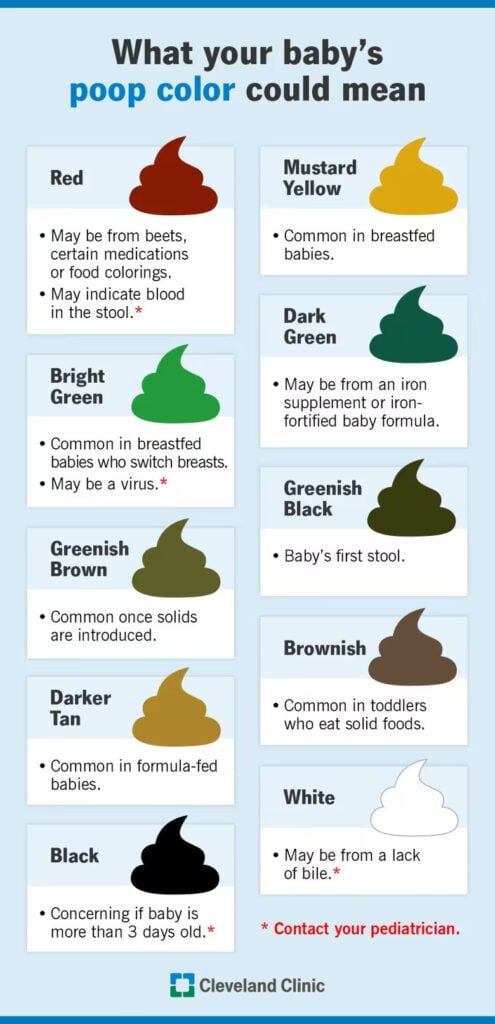
Source: Cleveland Clinic
Breastfeeding is not a purity test
Breastmilk has remarkable microbiome benefits, but breastfeeding conversations must never become a competition or a source of shame.
Some babies are exclusively breastfed. Some receive expressed milk, donor milk, combination feeding or formula. Some mothers breastfeed for years; others manage a few days or cannot breastfeed at all.
Every feed of breastmilk can provide valuable nutrition and bioactive components, but a baby’s health is never determined by one feeding decision alone. Parents deserve skilled, compassionate support, not guilt.
WHO and UNICEF recommend exclusive breastfeeding for approximately the first six months, followed by continued breastfeeding alongside complementary foods for up to two years or beyond, where this works for mother and baby.
So this Breastfeeding Awareness Month, let us celebrate breastmilk for the extraordinary living food that it is.
It nourishes the baby. It supports the immune system. It feeds beneficial bacteria. It helps shape the developing microbiome.
And yes, it makes wonderfully yellow, seedy, scientifically impressive baby poop.
Even when that poop escapes the nappy and ruins a perfectly lovely white outfit.
CHECK OUT: How Many Times Does a Newborn Poop?
