







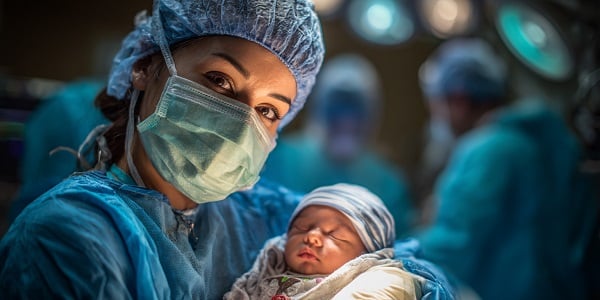
Parents often ask me one simple question before their child goes to surgery: “Doctor, will my child be okay?”
It is one of the hardest questions to answer honestly. As doctors, we want to reassure families, but the truth is that no surgeon can promise the future. Surgery, like all of medicine, carries some risk.
What I often want to say is: I don’t know.
But there are important things we do know.
We know that children’s bodies are remarkably resilient. We know that modern paediatric anaesthesia and surgical care have become extremely safe. And we know that when children are treated by teams specifically trained to care for them, their outcomes are far better.
On World Paediatric Surgery Day, it is worth sharing a little about what parents can expect if their child ever needs an operation.
For many mothers and fathers, surgery is unfamiliar territory. Many of the parents I meet have never had surgery themselves. The thought of their child undergoing an operation can feel overwhelming, almost unimaginable.
Hospitals are full of unfamiliar language and processes like bright theatre lights, machines, medical terminology, and forms that need to be signed. One of those forms is the consent form and it represents one of the most important parts of paediatric surgical care.
In theory, informed consent means that parents understand the condition, the proposed operation, the risks involved, and what recovery will look like. In reality, these conversations can be challenging. Parents are often anxious and trying to absorb complex information while worrying about their child.
Signing a consent form does not guarantee a perfect outcome. Rather, it reflects a shared understanding between parents and the medical team about why surgery is needed, what the risks are, and what we hope to achieve. Over the years, I have learned that these conversations work best when they slow down and become human.
I try to sit down at the same height as the mother, sometimes even on the hospital bed. One of my mentors, Dr Lazarus, used to do this, and I saw how it immediately changed the dynamic in the room. Instead of speaking to a family, you are speaking with them.




I often draw simple diagrams to explain what is happening in the body. Sometimes I use small props, even something as simple as a rolled piece of paper, to explain how structures develop before birth, such as when we talk about conditions like hernias.
I try to be clear about both the benefits of surgery and the possible risks or complications. Presenting the risks of surgery honestly can be one of the most delicate parts of my work. Parents are already worried, and it takes care and sensitivity to explain what could go wrong without adding to their fear. But honesty is essential in building trust.
I move on to explain what they can expect step by step, so the experience becomes less mysterious.
Children themselves are often listening very carefully during these conversations. If they seem old enough to understand, I ask them if they have any questions, too. Giving children a sense of participation can ease some fear.
Before surgery, I often show them the anaesthetic mask and breathing circuit and let them touch it. We talk about the big theatre lights and the people wearing funny hats and gowns. Sometimes we put a little numbing cream on their hands so they can feel what it is like when the skin becomes numb.
And I ask if they have a favourite soft toy. If they do, that toy becomes an essential part of the team.
These small moments may seem simple, but they are often just as important for parents as they are for the child. When families understand what is happening and feel included in the process, fear begins to give way to trust.
Often, the questions are not only about what goes well.



For some families, this level of candour can feel unsettling at first. But it is an important part of respecting parents and allowing them to make informed decisions for their children. In paediatric surgery, informed consent is not simply a signature on a form; it is a process of communication and trust.
Another part of preparing families is helping them understand what the experience around anaesthesia may look like.
In many hospitals, a parent is invited to walk with their child into the operating theatre and stay until the anaesthetic begins. This can be a reassuring moment for children, but it can also feel overwhelming for parents. The theatre environment is bright and unfamiliar, with large lights and equipment and staff dressed in gowns, masks and hats.
Children respond to this environment in different ways. Some are calm and curious. Others become frightened or cling tightly to their parent. Experienced paediatric theatre teams recognise that both children and parents react in different ways to the stress of surgery, and they learn how to respond with sensitivity and care.
As the anaesthetic begins to take effect, children sometimes experience a short stage where they may appear confused, restless or briefly combative. This can be unsettling for parents if they are not expecting it. In reality, it is simply part of the brain transitioning into anaesthesia, and it usually passes quickly.
Waiting outside the theatre may feel like an eternity.
After the procedure, parents often meet their child again in the recovery room. A small number of children may wake feeling confused or upset for a short time, and some may feel nauseous afterwards. These effects are usually temporary and the anaesthetic team takes steps to reduce and treat them. The unfamiliar environment, the lingering effects of anaesthetic medicines and the stress of the experience can all contribute to this.
However, this stage resolves and as children wake fully and recognise their parents’ voice or touch, they begin to settle.
Very often, the first thing they ask for is a drink.
That simple request can be a powerful moment of relief for parents, like a sign that their child is waking up, recovering and returning to themselves.
Paediatric surgery itself is a relatively young speciality, built on the simple but powerful idea that children deserve surgical care designed specifically for them. Children are not just small adults. Their bodies are growing, their illnesses are different, and their emotional needs in the hospital are unique.
One of the things that makes me most proud to work in this field is how much the entire team adapts to the needs of each child and family we meet.
Children do not arrive in the hospital alone. They come with parents who are worried, protective and trying to make the best decisions they can for their child. Every family unit brings its own experiences, fears and hopes into the room.
Because of this, paediatric surgical teams quickly learn that caring for the child also means caring for the family.
Sometimes this means taking extra time to explain things in different ways. Sometimes it means helping a frightened child feel brave enough to walk into the theatre. Sometimes it simply means acknowledging that the experience is difficult and sitting quietly with an anxious parent.
The goal is always the same: to help the child safely through the operation and back to the ordinary, precious rhythms of childhood, such as playing, eating, going to school and growing up.
By the time a child is sitting up in bed asking for a drink, the fear that filled the room before surgery has usually begun to lift.
Moments like that remind us why paediatric surgery exists: to care for children, and to support the families who love them.
ALSO READ: Tackling pain and fever: a solution for every generation