







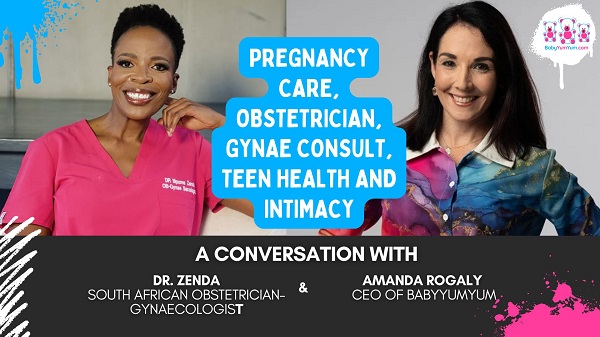
This reality is at the centre of a recent conversation between Amanda Rogaly, founder and CEO of BabyYumYum, and Dr Mpume Zenda, an obstetrician, gynaecologist, sexologist and mother. The pair did not just have a medical discussion, but a deeply human exploration of why so many women feel disconnected from their own bodies.
“I always start by saying I’m a woman. I get periods. I get period pains. I’m a mom. I’m a real person and that matters, because this work is personal,” Dr Zenda explains early in the conversation.
That personal lens is exactly what is missing from much of women’s health education in South Africa.
The Cost of Not Understanding Our Bodies
Many South African women grow up believing that discomfort is part of womanhood. Painful periods are normalised, pain during sex is rarely questioned, emotional changes are dismissed as moodiness or weakness and when something feels wrong, women often second-guess themselves.
“Women don’t actually understand their bodies,” Dr Zenda tells Amanda. “And it’s not because they’re not capable. It’s because we’ve never created spaces where it feels safe to ask.”
Unfortunately, that lack of understanding comes at a cost. Conditions like fibroids, endometriosis, hormonal imbalances and infections often go undiagnosed for years. Women learn to push through pain instead of interrogating it. By the time help is sought, the impact on quality of life is already significant.
Amanda reflects on how common this pattern is. Many women, she notes, will Google symptoms before speaking to a healthcare professional. Not because they trust the internet more, but because asking feels embarrassing.
“We end up turning to Google because it feels safer than saying things out loud, but that can be incredibly misleading,” Amanda explains.
Agreeing, Dr Zenda bluntly adds, “Google was not at medical school. TikTok was not at graduation. Information without context can do more harm than good.”
Women’s Health Education in South Africa and the Culture of Silence
Silence around women’s bodies is reinforced by culture, religion and history. In many households, menstruation is discussed in whispers, if at all. Many fathers don’t know their daughters’ cycles or why they are “suddenly” moody. It is also shameful to send the boychild to the shops to buy sanitary pads. Sexual health conversations are framed around fear rather than understanding. Pleasure is rarely part of the discussion.
This culture of silence leaves women unprepared for the realities of their bodies.



“We talk about pregnancy. We talk about relationships, but nobody talks about sexual pleasure. Nobody talks about what intimacy should feel like when things are going well, or what to do when they’re not,” Dr Zenda says.
Without comprehensive women’s health education in South Africa, women are left to fill the gaps themselves, often with misinformation or shame.
Normalising Pain is Not Empowerment
One of the most damaging myths explored in the conversation is the idea that pain is something women should simply tolerate.
“Your womanhood should never be an interruption to your life,” Dr Zenda says. “You shouldn’t have to plan your entire existence around pain, discomfort or embarrassment.”
While some discomfort can be part of normal biological processes, persistent or severe pain is not something to ignore. Pain is communication; it is the body asking for attention.
In a healthcare system already under pressure, many women delay seeking help because they assume their experience is not serious enough. Others fear being dismissed.
“When women feel seen and heard by their doctors, everything changes. Even when outcomes are not perfect, feeling cared for makes a difference,” Dr Zenda notes.
Periods, Dignity and Education
Women’s health education in South Africa cannot be discussed without addressing menstruation. Periods remain one of the most misunderstood and stigmatised aspects of women’s health.



According to Dr Zenda:
“Period poverty is not just about pads. It’s about dignity. It’s about information. It’s about whether a girl knows what’s happening to her body and whether she can manage it without shame.”
Many girls miss school because of painful or heavy periods, fear of leaks, or lack of access to sanitary products. But the emotional impact can be just as damaging.
“I will never forget a friend who started her period in class and everyone saw. That experience never leaves you,” Dr Zenda recalls.
She further argues that education must go beyond biology. It must address pain management, emotional support and normalisation.
“A vagina smells like a vagina,” she says, challenging the culture of excessive washing and shame. “We’ve convinced women that their bodies are dirty when they’re not.”
ALSO READ: BabyYumYum Ovulation Calculator & Free Period Tracker
Teen Girls and Early Education
The conversation also touched on the importance of starting women’s health education early. There is no definitive age for a first gynaecological consultation, but understanding bodily changes should not be delayed until something goes wrong.
“It doesn’t have to be that something is wrong. It’s about building a relationship with a healthcare provider – finding your person,” Dr Zenda explains.
For teenagers, that relationship can be life-changing. It teaches bodily autonomy, consent and self-advocacy.
“We’re not just talking about periods or contraception. We’re teaching girls that their bodies belong to them and that their no is a no,” she highlights.
In a country where teenage pregnancy remains a complex and often misunderstood issue, education and support matter more than judgement.
CHECK OUT: Period Poverty in South Africa: The Importance of Dignity, Education and Safety
Sexual Health Beyond Fear
Women’s health education in South Africa has historically framed sex as a risk rather than a part of wellbeing. Conversations focus on infections and unplanned pregnancy, leaving little room for pleasure or communication.
“When you say sex, most people think of HIV, STIs and pregnancy. But that’s an incomplete story,” Dr Zenda tells Amanda.
Pleasure, intimacy and connection are central to healthy relationships. When women are never taught this, they struggle to articulate their needs or recognise when something is wrong.
“There is a science behind sexual pleasure. You’re not supposed to be born knowing everything. These are things we can learn,” Dr Zenda adds.
ALSO READ: Female Sexual Pain Disorders: The different types of challenges and how to address them
Understanding Your Body is Not Indulgent
One of the most powerful threads running through the conversation was the idea that prioritising your health is often seen as selfish.
For many South African women, especially those juggling work, caregiving and economic pressure, health becomes something to deal with later. Sadly, that later often arrives with complications.
“Women put everyone else first and then their bodies become something they manage rather than understand,” Amanda notes.
Challenging the notion that self-care is selfish, Dr Zenda says: “Understanding your body is not indulgent; it’s essential. It allows you to live your life fully.”
Creating Safer Spaces for Women
At its core, women’s health education in South Africa must be about safety. This includes both emotional and physical safety. Women should be able to ask questions without fear of judgement.
“Healthcare should not be intimidating. It should feel like a partnership,” Dr Zenda adds.
That partnership begins with knowledge. When women understand their bodies, they walk into consultations with confidence, they ask better questions and advocate for themselves and their daughters.
Understanding your body does not eliminate challenges, but it changes how you face them. It replaces shame with clarity and silence with voice. As this conversation made clear, when women are given the tools to understand themselves, the ripple effects extend far beyond individual health. They shape families, communities and future generations.
