







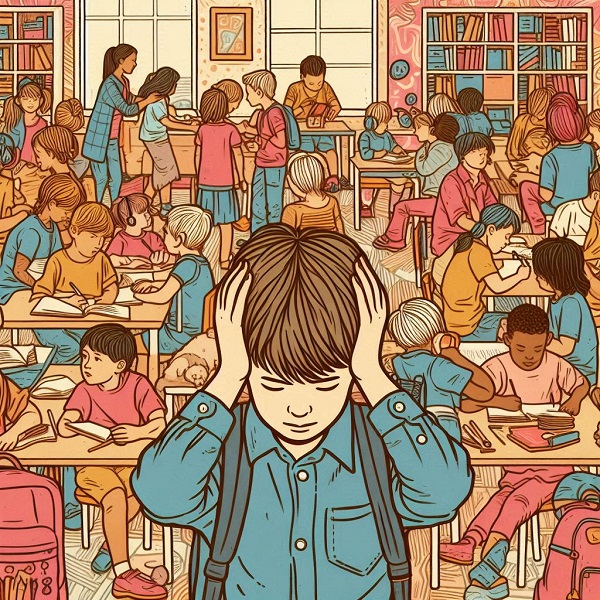

Many parents of children with learning, emotional, or behavioural challenges will notice that their child seems to experience the world more intensely or more faintly than others. Sounds may feel overwhelming, clothing unbearable, or movement constantly sought out. While sensory processing differences are widely associated with Autism Spectrum Disorder (ASD), research and clinical practice increasingly show that sensory challenges occur across a wide range of children, including those without an autism diagnosis.
Understanding sensory processing can help parents make sense of behaviours that might otherwise be misinterpreted as defiance, inattention, or emotional dysregulation.
What Is Sensory Processing Disorder (SPD)?
Sensory Processing Disorder (SPD), historically referred to as sensory integration dysfunction, describes difficulties in how the nervous system receives, organises, and responds to sensory input. In individuals with SPD, the brain struggles to interpret information coming from the senses consistently and adaptively.
This can mean that sensory input feels too much, too little, or confusing. A child might find everyday noises painful, fail to notice hunger cues, or crave intense movement. In some cases, sensory information may even feel mismatched, such as associating certain textures with tastes or colours with sounds. While these experiences can sound abstract, they reflect how deeply sensory input shapes perception and behaviour.
Importantly, SPD is not a diagnosis recognised as a standalone condition in the DSM-5, but sensory processing differences are widely acknowledged and addressed within occupational therapy and developmental frameworks.
The Eight Sensory Systems
Sensory processing is far more complex than the traditional five senses taught at school. In reality, the brain integrates information from eight sensory systems:
- Vision – processing light, colour, and movement
- Hearing – interpreting sound and background noise
- Touch (tactile) – sensing pressure, texture, and temperature
- Taste (gustatory) – detecting flavours and textures in food
- Smell (olfactory) – interpreting scents
In addition to these, there are three lesser-known but equally critical systems:
- Proprioception – awareness of body position and movement, helping a child know where their body is in space
- Vestibular system – located in the inner ear, responsible for balance, coordination, and spatial orientation
- Interoception – awareness of internal bodily signals such as hunger, thirst, fatigue, heart rate, and emotional arousal
Difficulties in any of these systems can disrupt daily functioning, emotional regulation and behaviour.
How Sensory Processing Differences Affect Daily Life
For children with sensory processing challenges, the world can feel either overwhelming or strangely muted. Busy environments may trigger anxiety or shutdown, while calm spaces may feel under-stimulating. These experiences can affect attention, emotional regulation, sleep, feeding and social participation.
It is also important to distinguish sensory processing differences from other conditions. For example, SPD and ADHD are not the same, though they frequently co-occur. A child may seek movement due to sensory needs rather than impulsivity, or struggle with attention due to sensory overload rather than inattention per se. Effective support requires understanding the underlying cause, not just the surface behaviour.
How Common Are Sensory Processing Issues?
Research suggests that approximately 1 in 6 children experience sensory symptoms significant enough to interfere with everyday life. These challenges may affect one sensory system or several simultaneously, including internal systems such as proprioception and interoception.



Sensory processing differences generally fall into two broad patterns:
- Hypersensitivity (over-responsiveness)
- Sensory input feels intense or distressing. Children may be sensitive to noise, light, textures, smells, or movement.
- Hyposensitivity (under-responsiveness)
- Sensory input feels muted or insufficient. Children may seek constant movement, pressure, or stimulation and may appear unaware of pain, hunger, or personal space.
Many children show a mixed profile, being over-responsive in some areas and under-responsive in others.
Common Signs and Behaviours
Sensory processing differences often present through behaviour rather than words. A hypersensitive child might cover their ears to everyday sounds, avoid certain clothing fabrics, resist grooming activities or feel unsafe on playground equipment. These responses are often misread as anxiety or oppositional behaviour.
Hyposensitive children may constantly move, bump into objects, seek deep pressure or take physical risks without apparent fear. They may also struggle to recognise bodily signals such as fatigue or hunger, which can affect emotional regulation.
In both cases, behaviour is best understood as communication, which is a signal that the nervous system is struggling to process sensory input effectively.
Supporting a Child with Sensory Processing Differences
Support begins with understanding a child’s individual sensory profile. What calms one child may dysregulate another. Sensory-integration-informed occupational therapy is widely regarded as a key intervention, helping children develop more adaptive responses to sensory input and improve self-regulation.
At home and school, practical strategies can make a meaningful difference:
- Creating predictable routines to reduce sensory uncertainty
- Providing quiet or low-stimulus spaces for recovery
- Gradually managing sensory exposure rather than avoiding it entirely
- Building in movement, deep pressure or calming sensory activities as needed
Importantly, reducing sensory overload is not about shielding children from the world, but about helping their nervous systems feel safe enough to engage with it.



Understanding and Managing Sensory Processing Differences
Recognising that sensory processing challenges extend beyond autism is critical for appropriate identification and support. When sensory needs are misunderstood, children are often labelled as “difficult,” “lazy,” or “attention-seeking,” which can erode self-esteem and strain relationships.
With awareness, appropriate intervention, and compassionate support, children with sensory processing differences can develop strategies that help them navigate daily life more successfully. If you suspect your child may have sensory processing challenges, seeking assessment from an occupational therapist trained in sensory integration can be a valuable first step. Early understanding and support can significantly improve a child’s ability to function, learn and thrive.
References
Ayres, A. J. (2005). Sensory integration and the child. Western Psychological Services.
Dunn, W. (1997). The impact of sensory processing abilities on the daily lives of young children and their families. Infants & Young Children, 9(4), 23–35. https://doi.org/10.1097/00001163-199704000-00005
Miller, L. J., Anzalone, M. E., Lane, S. J., Cermak, S. A., & Osten, E. T. (2007). Concept evolution in sensory integration: A proposed nosology for diagnosis. American Journal of Occupational Therapy, 61(2), 135–140.
Porges, S. W. (2011). The polyvagal theory: Neurophysiological foundations of emotions, attachment, communication, and self-regulation. W. W. Norton & Company.
van der Kolk, B. (2014). The body keeps the score. Viking.
