







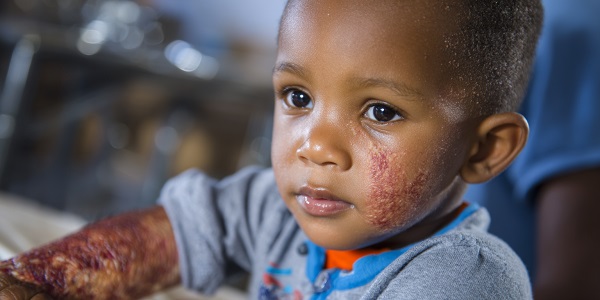
Burn injuries remain one of the most common causes of preventable injury in children under the age of five. In South Africa, hospitals continue to treat large numbers of infants and toddlers for scalds, contact burns and heat-related injuries that occur during ordinary daily routines.
What makes burn injuries in babies and toddlers particularly concerning is not simply how they happen, but how differently young bodies respond to trauma. Early childhood physiology, rapid growth and developmental behaviour all influence both risk and recovery.
Here are seven evidence-based facts that place burn injuries in babies and toddlers into clearer perspective.
Fact 1: A Burn That Looks Small Can Still Be Serious
Because babies and toddlers have much smaller bodies, even a limited area of skin damage represents a greater proportion of their total body surface. Medical teams assess burns partly by estimating the percentage of skin affected, and in very young children, that percentage rises quickly. This means that an injury which appears minor at first glance may still require careful medical monitoring, especially in infants. The scale of the child’s body changes the clinical picture. Dr Raphaela, BabyYumYum’s expert paediatrician, tells us
“In infants, even a burn covering a few adult-sized ‘fingerprints’ can represent a clinically significant percentage of body surface area. This is why we assess burns by surface area, not just by how ‘big’ they look to a parent.”
Fact 2: Burn Depth Can Worsen Over Time
Burn injuries do not always reveal their full severity immediately. Tissue damage can evolve during the first 24 to 48 hours after the initial incident. A red area may later blister or darken as deeper layers of skin respond to the heat exposure. For this reason, healthcare professionals often advise observation and, in some cases, follow-up review even when a burn initially appears superficial. Early assessment is important, but ongoing evaluation can be equally critical. Dr Raphaela says
“We know from burn physiology that tissue injury can ‘declare itself’ over 24 to 48 hours. A burn that looks superficial on day one can evolve into a deeper injury, which is why reassessment is sometimes just as important as the first exam.”
Fact 3: Babies Regulate Fluids and Temperature Differently
Infants and toddlers rely heavily on their skin to maintain hydration and regulate body temperature. When that protective barrier is compromised, fluid loss can occur more rapidly than in older children. This increased vulnerability explains why medical teams monitor hydration status closely in young burn patients. In moderate cases, intravenous fluids may be required, not because the burn looks dramatic, but because the child’s physiology demands proactive management. Age matters significantly in burn care decisions. Dr Raphaela adds
“Young children have a higher surface-area-to-body-weight ratio and immature fluid regulation. This means they can become dehydrated and temperature unstable much faster than older children after a burn, even when the injury looks modest.”
Fact 4: The Under-Five Age Group Carries the Highest Risk
Globally, children under five consistently show the highest rates of burn injury. This pattern is linked to mobility combined with limited hazard awareness. Crawling, pulling to stand and climbing create new exposure opportunities at every stage of development. The risk peaks during transitional phases, particularly when a child has just gained a new physical ability but has not yet developed caution or impulse control. Burn injuries in this age group are therefore closely tied to developmental timing rather than deliberate risk-taking.
Fact 5: Scarring Can Interfere With Growth if Not Managed Properly
Young children are still growing rapidly. When deeper burns occur, scar tissue may form that lacks the elasticity of normal skin. If these scars develop near joints such as elbows, knees or fingers, they may tighten over time and restrict movement. In more severe cases, children may require physiotherapy or specialised scar management to maintain flexibility and function. Early intervention significantly improves long-term outcomes. This growth-related consideration is unique to young children and highlights why specialised paediatric burn care is essential. Dr Raphaela includes



“Scar tissue does not grow in the same way as normal skin. In young children, scars near joints can progressively limit movement as the child grows, which is why early scar management and physiotherapy are so important in paediatric burn care.”
Fact 6: Pain Response in Toddlers Is Often Underestimated
Babies and toddlers cannot describe pain clearly. They may become irritable, withdrawn or unusually quiet rather than verbally expressing discomfort. This can lead adults to underestimate the severity of their distress. Effective pain management is a critical component of paediatric burn care. Research shows that untreated pain in early childhood can heighten stress responses and complicate recovery. Addressing pain appropriately is not simply about comfort; it supports healing.
Fact 7: Psychological Effects Can Appear Later
Even very young children can experience stress responses following a painful injury. While they may not retain a conscious memory of the event, their behaviour may shift. Some children become anxious around specific routines or environments that resemble the setting of the injury. Parents often notice changes in sleep patterns, clinginess or increased fearfulness. Gentle reassurance, calm repetition of routines and professional support help restore confidence. Recovery from a burn is both physical and emotional, particularly in early childhood.
ALSO READ: Who Is Most at Risk for Burns in South Africa?
The Bigger Picture
Burn injuries in babies and toddlers are not isolated medical events. They intersect with developmental biology, fluid regulation, growth patterns and emotional resilience. These factors explain why paediatric burn management differs from adult treatment protocols. The encouraging reality is that outcomes improve significantly with early medical care, appropriate follow-up and informed parental support. While prevention remains essential, knowledge about how burns affect young children provides deeper insight into why careful monitoring and professional assessment are often recommended.
CHECK OUT: How to Handle Burns in Kids from First Aid to Recovery
Final Thoughts
The early years are defined by exploration, growth and rapid change. These same qualities that make babies and toddlers vibrant and curious also make them uniquely vulnerable to burn injuries. Recognising how small injuries can carry larger implications in young children shifts the conversation from reaction to informed awareness. With accurate information and timely care, most children recover well and continue to grow without long-term consequences. Knowledge, in this context, becomes a powerful layer of protection.
YOU MAY ALSO LIKE
Burns: how to treat them at home & what you should NEVER do. Learn first aid tips for treating burns safely and avoiding harmful mistakes.