


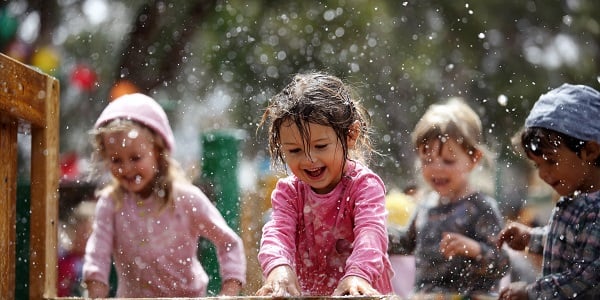
The statement “the value of outdoor play as a way to manage obesity, anxiety and behavioural issues” is being found more and more in academic papers. In fact, a United Nations Convention, in 2023, reiterated that a child’s right to play is as fundamental as the right to be cared for and to be protected from violence. Our own Children’s Act of 2005 emphasises the rights and well-being of children, including the right to play. Wow, to think that our society has reached a stage where we have to declare play as a right is concerning. I want to stress that they are referring to free play. This means that children need to be allowed and encouraged to play outside, in the sunshine, where their imaginations run wild. Their play must be initiated and directed by themselves without adult interference or excessive supervision. It is not a structured sports activity or extramural.
Why has this concept of play become such an issue?
- In the early 1980s, only 7% of children met the criteria for obesity. In 2025, 33% of children in the United States will be obese. In South Africa, 13% of children under 5 years old are obese, and this number jumps to 22% by the time our children are between the ages of 10 and 14 years old. Obesity leads to many long-term, irreversible health issues like diabetes, heart disease and asthma.
- Children are spending up to 7 hours a day staring at screens. This can be in the form of a cell phone, laptop, television or tablet. The recommendation from the American Academy of Paediatrics is that children between the ages of 2 and 5 years should have no more than 1 hour of screentime, and children aged 6 to 12 years should have a maximum of 2 hours. Excessive screentime is associated with disturbed sleep patterns, eye strain, obesity, behavioural issues, as well as anxiety and depression.
- We know that anxiety and depression are caused by a combination of factors ranging from a genetic predisposition, traumatic events, social pressures and family disruptions. What is of concern is the rise in “toxic” stress. This is where a child is exposed to stress over a prolonged period. In South Africa, this may be as a result of our high crime rates, unemployment, broken homes, excessive academic expectations and a lack of freedom. Children naturally begin to feel unsafe, insecure, overwhelmed and caged in. In fact, the rate of anxiety, depression and suicidality has increased dramatically over the last 10 years. The amount of free play shows a trend in the opposite direction of anxiety and depression. Free play is becoming less and less common, and this awful affliction of anxiety, depression and suicidality has spiked.
All of this is starting to sound a lot like the title of this article. Instead, what is being proposed is something so simple. Provide opportunities for children to play freely outside, and you will be providing the antidote to obesity, anxiety and behavioural issues.
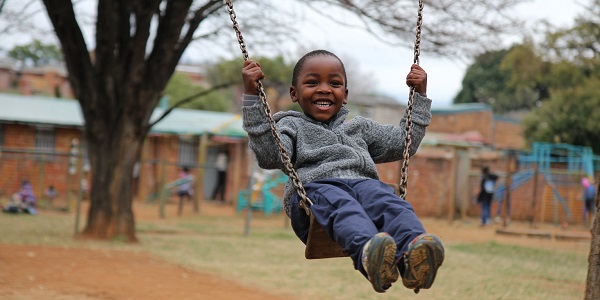
How does free play provide such wonderful benefits to our children?
In our crazy, busy world, where both parents usually work, schools are demanding, and competition gets tougher, it may seem daunting to have yet another thing to do. The beauty of free play, however, is just the opposite. It is providing parents with the opportunity to let go, allowing children to do what they are wired to do and thereby achieving incredible results in their children’s overall well-being. We have discussed obesity, anxiety, depression and behavioural issues. These words were not part of the vocabulary used to describe children 50 years ago. The difference is that childhood used to mean playing outside until you were called in for dinner. Society has changed. Screens are a reality, and urban spaces have made access to green spaces more difficult.
So, how do we get children playing more?
- Make it a priority that your child has daily opportunities to play freely outdoors.
- The play doesn’t have to be big and elaborate. If your child isn’t used to playing outdoors, then allow for short opportunities where you are close enough to create a sense of safety but not interfere.
- Get excited about being outdoors. This doesn’t mean you have to become a triathlete, but you do need to show enthusiasm for getting out into the sunshine. Put your phone away and lead by example.
- Plan activities that ensure success. A game or activity that involves little movement and a definite outcome won’t keep a child busy for long. Let the child build an obstacle course with the garden chairs or practise balancing on a beam. It is all unpredictable, and the skill can improve with each try.
- Outdoor play without adult supervision encourages risky play. It is all about chance and fate. This risky play does not mean that we ignore safety measures like bicycle helmets, life jackets and gum guards. It means allowing a child to assess an activity within their comfort level and ability. The child may decide how high he wants to climb or how fast he wants to ride that little black motorbike down the driveway. Such risky play increases physical abilities. It also has positive effects on mental and socio-emotional health. Allowing children to rough and tumble, race one another and compete informally builds resilience and conflict resolution. It is good for them to push the boundaries and to test their capabilities.
- Boredom is healthy! It encourages imagination and is the master of creation. Leave the child to explore and invent activities. Make sure that you don’t interrupt the play or try to supervise.
- Encourage friendships, then set the children free to play. The children will inspire and challenge each other to try harder, climb higher and run faster. Generally, they have way more fun outside if they have someone to play with.
- Get the cooperation of your child’s school. Discuss the amount of homework versus free time. Assist in building playgrounds. Limit the number of formal extra-murals but ensure that the child then uses the time to play and not to sit in front of the television.
ALSO READ: Encouraging Independence Without Anxiety




Conclusion
In 2014, Dr S Brown sounded the alarm bells on the negative effects that play deficit was having on children. Now, more than a decade later, the situation is getting worse. Three-year-olds are attending maths lessons, pre-schoolers are expected to sit in desks, and children are spending so much time on the couch with devices that they have poor eyesight, posture issues and low tone.
Adults are key to changing all of this. Let the children play. If we do not, then the classic quote from developmental psychologist Brian Sutton-Smith will become synonymous with this generation: “The opposite of play is not work, it is depression”
References
- (UNICEF Innocenti Research Centre, UNICEF Canada. Not There Yet: Canada’s Implementation of the General Measures of the Convention on the Rights of the Child. Florence, Italy; 2009 (Accessed September 7, 2023).)
- https://www.pnas.org/doi/10.1073/pnas.1807504116
- https://pmc.ncbi.nlm.nih.gov/articles/PMC5458530/
- https://www.communityplaythings.com/resources/articles/play-deprivation-is-a-serious-problem
- https://cps.ca/en/documents/position/outdoor-risky-play
- https://www.unicef.org/eca/stories/importance-outdoor-play-and-how-support-it
- https://nifplay.org/books/play-for-life-play-theory-and-play-as-emotional-survival/
