

Ahead of International Childhood Cancer Day, on the 15th of February, Palesa Mokomele, Head of Community Engagement and Communications at DKMS Africa, explains that with the childhood cancer survival rate as low as 20%, a diagnosis is often a devastating blow for families.
“One thousand four hundred South African children are diagnosed with blood cancer annually,” she continues. “While the diagnosis is traumatic for the child, caregivers experience immense psychological distress which can severely impact their quality of life.”
A Mother’s Story
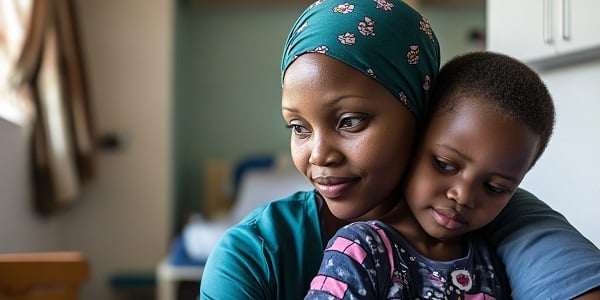
Elizabeth, whose son Ntsako was diagnosed with blood cancer in August 2024, describes the experience as “a bolt of lightning” that turned her world upside down. “I try not to cry in front of my son, even when I feel like I am falling apart. The treatment phase has been brutal. I want to stay strong for him but knowing there’s only so much I can do is heartbreaking.”
Mokomele notes that Elizabeth’s experience is shared by many. “Prolonged treatment, high stress, sleep deprivation, and financial strain take a heavy toll. Many caregivers struggle with anxiety, depression, and burnout, affecting their well-being, family dynamics, and social lives.”
Coping With the Emotional Impact
While every parent handles these challenges differently, there are ways to manage the emotional burden:
- Fear and anxiety: The unknown can be debilitating. Engaging with doctors and learning about the treatment and outcomes, which, while still stressful, can remove much of the uncertainty. Your child’s care team is not only there for your child but also to help you; enlist their support and lean on them.
- Denial and anger: In the short term, denial may help you adjust to the reality of your child’s diagnosis, but staying in denial for too long can cause isolation and delay treatment. Once this wears off, it can give way to anger, and without a proper outlet, it may build up inside. This can lead to you misdirecting it toward other loved ones, co-workers, and even doctors. Look for support from other parents who are going through the same process. Communicate your feelings with those close to you and explore ways to help you cope, like exercise, journaling, mindful meditation, or even just giving yourself private time to vent your feelings.
- Guilt and blame: It is natural to look for someone or something to blame. You may look inward to find something you think you did wrong; maybe you feel you didn’t act soon enough, or you’re angry that you didn’t get to the doctor earlier. Acknowledging these feelings and allowing yourself to process them is important. If these feelings become too overwhelming, seek support from a professional or even from your child’s care team.
- Sadness and loss: Give yourself the space to acknowledge grief and adapt to your new reality. If these feelings start to impact your ability to function, get support to work through them because they will affect your ability to help your child and other family members cope.
A Life-Saving Solution
More than 500 South African children die from blood cancer annually -a number that can be reduced with early detection and timely intervention.
“Blood cancer patients can often overcome the disease with the help of a stem cell transplant from a suitable donor,” highlights Mokomele. “DKMS provides a second chance at life for more than 22 patients every day, but doctors still struggle to find matches. Registering as a donor takes just five minutes but could save a child’s life and offer some much-needed relief for those caregivers who are doing their best to hold their families together.”
Register at https://www.dkms-africa.org/register-now.
For further information, get in touch with DKMS Africa at 0800 12 10 82.
____________________________________________________________
About DKMS
DKMS is an international non-profit organization dedicated to the fight against blood cancer. Founded in Germany in 1991 by Dr. Peter Harf, DKMS and the organization’s over 1,200 employees have since relentlessly pursued the aim of giving as many patients as possible a second chance at life. With over 12 million registered donors, DKMS has succeeded in doing this more than 110,000 times to date by providing blood stem cell donations to those in need. This accomplishment has led to DKMS becoming the global leader in the facilitation of unrelated blood stem cell transplants. The organization has offices in Germany, the US, Poland, the UK, Chile, and South Africa. In India, DKMS has founded the joint venture DKMS-BMST together with the Bangalore Medical Services Trust. International expansion and collaboration is key to helping patients worldwide because like the organization itself, blood cancer knows no borders.




DKMS is also heavily involved in the fields of medicine and science, with its own research unit focused on continually improving the survival and recovery rate of patients. In its high-performance laboratory, the DKMS Life Science Lab, the organization sets worldwide standards in the typing of potential blood stem cell donors.
ALSO READ: Childhood cancer and financial preparedness – the crucial role of life insurance
BabyYumYum Frequently Asked Questions (FAQs) – Blood Cancer in Children
What is blood cancer?
Blood cancer refers to a group of malignant diseases affecting the bone marrow and blood-forming system. It disrupts the normal production of blood cells, leading to serious health complications.
What are the most common types of blood cancer in children?
The most common types of blood cancer in children include:
- Leukaemia – Cancer of the bone marrow and blood, affecting white blood cells.
- Lymphoma – Cancer of the lymphatic system, affecting immune function.
- Multiple Myeloma (rare in children) – Affects plasma cells in the bone marrow.
What are the early symptoms of blood cancer in children?
Symptoms can vary but often include:
- Persistent fatigue and weakness
- Unexplained fever or night sweats
- Frequent infections
- Unexplained bruising or bleeding
- Swollen lymph nodes
- Bone or joint pain
- Loss of appetite and weight loss
What causes blood cancer in children?
The exact cause is not always known, but factors like genetic mutations, environmental exposures, and weakened immune systems may contribute. Unlike many adult cancers, childhood blood cancers are rarely linked to lifestyle factors.
How is blood cancer diagnosed?
Diagnosis typically involves:
- Blood tests to check for abnormal blood cell levels
- Bone marrow biopsy to assess cancerous cells
- Imaging tests (X-rays, MRI, CT scans) to detect cancer spread
- Genetic testing to identify specific mutations
What treatment options are available?
Treatment depends on the type and stage of cancer but may include:
- Chemotherapy – The primary treatment for most childhood blood cancers
- Radiation therapy – Used in some cases
- Bone marrow transplant – To replace diseased bone marrow with healthy cells
- Targeted therapy – Medicines that target specific cancer cells
*** Disclaimer: This information is provided for general educational purposes and does not replace personalised medical advice. If you have concerns about your child, please consult a qualified healthcare professional.
