


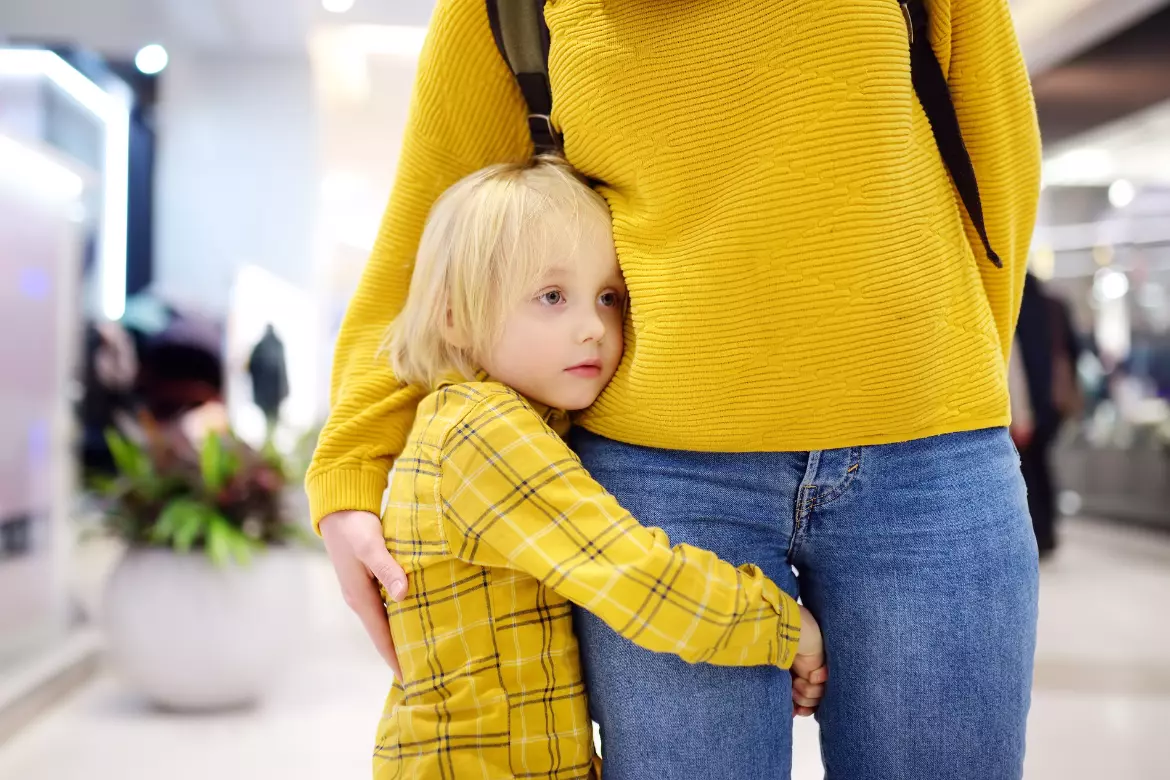
My child is a selective mute, or is it just shyness? As parents, it can be difficult to determine whether your child’s quietness in certain situations is simply a matter of shyness or if they are experiencing selective mutism. Selective mutism is a complex anxiety disorder that affects a child’s ability to speak in specific social situations, even though they can speak freely in others. Understanding the difference between selective mutism and normal shyness is crucial to knowing how best to support your child. Jessica Baxter, Real Home Truths explores the signs of selective mutism and how to approach helping your child navigate their feelings and communication challenges.
I’ve just been told my son is a selective mute. This is the opinion of one of the teachers at his school – and one that I find quite amusing given I am such a loudmouth.
She’s not far off the mark though. Matt tends not to talk at all around new people or in big groups – not a bad thing given all of his sentences these days are peppered with the F-bomb (while I am secretly amused by it, I’m grateful his teacher isn’t privy to his growing vocabulary – rather the mother of a mute than a foul-mouthed two-year-old).
But now we’re in the second term of school and he’s still not talking in class – or on the playground for that matter – so I’m wondering if I should be doing more to help him settle. I don’t think it’s any cause for real concern. In fact, it’s probably a good thing that he is more of a listener than a talker, unlike Mom. My husband always tells me “you have two ears and one mouth, use them in that order” – a not-so-subtle hint that perhaps I talk more than I listen.
But, being an extrovert, I find myself feeling strangely uncomfortable with my son’s introverted nature. I can’t identify with it. I also find myself questioning whether this is simply a case of being little and needing to gain confidence or a sign that he is, in fact, shy by nature. And, given my tendency to catastrophise everything, his not talking now has me projecting into the future and panicking that he will struggle to socialise later in life, will be picked on at school and will end up a loner.
I know. I sound crazy. But the truth is, my first instinct is always to panic. Like how I was convinced my daughter had internal bleeding when she fell off her bike and grazed her chin – yes, her chin, not her head. Or the time I panicked that my son had contracted listeriosis because he was complaining of a sore tummy and I recalled how he had eaten a salami stick earlier that day. Turns out he was constipated.
While experience has taught me that most of the time my fears are unfounded, I am still plagued by worry. Let’s face it, raising kids can be hair-raising. Little people are accident prone. I’m constantly shouting profanities or blaspheming as a knee-jerk emotional reaction to some crazy things my kids have done or are about to do. I think they must have thought their names were Jesus and Christ for the first few years of their lives. It’s no coincidence my son has discovered the F-word, I guess.
“… in the spirit of worrying less about the little things, I am going to relax about my son’s ‘selective muteness’ and give him the time and space he needs to get comfortable and come out of his shell.”
Now, don’t get me wrong, I’m fully aware of how irresponsible it is to curse in front of your kids and I have been more conscious not to do it. So much so that I’m riddled with guilt every time a bad word slips out my mouth. Clearly, there is a theme here – guilt and panic. Since I can’t seem to escape either – they are part of the parenting package after all – I need to learn to manage my feelings (and expectations) around motherhood a little better. The fact is I’m going to make mistakes, I’m going to worry and I’m going to experience a whirlwind of emotions.
I’ve decided that the secret to surviving parenthood with my sanity intact is to try to worry less about the small things (a good life strategy too) and not beat myself up at every wrong turn. This is not going to be an easy feat given I convince myself daily I am doing irreversible emotional and psychological damage to my children (clearly, I need to take my anxiety levels down a notch).
So, in the spirit of worrying less about the little things, I am going to relax about my son’s “selective muteness” and give him the time and space he needs to get comfortable and come out of his shell. After all, he’s talking the hind leg off a donkey at home so I know he has no trouble with words. Perhaps he just needs to find his place in the world outside of the home. And if it turns out he is the shy guy, well, I can live with that…
Also read:
Feeling guilty as a parent? Here’s what you need to know
Moms, reclaim your confidence!
FAQs: My Child is a Selective Mute or Is It Just Shyness?
What is selective mutism?
Selective mutism is an anxiety disorder where a child is able to speak comfortably in some situations (like at home), but consistently struggles to speak in others, such as at school or in public, even though they want to.




How is selective mutism different from shyness?
Shy children may take time to warm up, but they eventually speak in new situations. Children with selective mutism often remain silent over long periods in specific settings, despite being talkative elsewhere.
At what age does selective mutism usually appear?
It typically becomes noticeable when children start preschool or primary school, around ages 3 to 6, when social demands increase.
Could my child just be going through a phase?
Possibly but if your child consistently does not speak in certain environments for over a month (not including the first few weeks of school), it may be more than typical shyness.
What causes selective mutism?
It’s believed to stem from severe social anxiety. It’s not caused by trauma, poor parenting or defiance. In some cases, it may also co-occur with speech and language difficulties.
Is selective mutism linked to autism?
Selective mutism and autism are separate conditions, but in some cases, they may overlap. A thorough assessment by a speech therapist or psychologist is needed to identify the cause of communication challenges.
What should I do if I suspect my child has selective mutism?
Speak to your GP, teacher, or clinic nurse. A referral to a speech and language therapist, child psychologist or occupational therapist trained in anxiety or communication disorders may be appropriate.
Can selective mutism be treated?
Yes. Early intervention is most effective. Treatment may include:
- Gradual exposure therapy
- Behavioural strategies
- Speech therapy
- Family and school-based support
In most cases, children can learn to manage anxiety and begin speaking confidently in all environments.
Should I pressure my child to speak?
No. Avoid putting pressure on them to talk, especially in front of others. Instead, create safe, low-pressure opportunities for them to communicate in their own way, such as with gestures, drawings or whispering.
How can teachers support a child with selective mutism?
Teachers can:
- Allow non-verbal participation
- Pair the child with a trusted peer
- Avoid drawing attention to their silence
- Create predictable routines and one-on-one support
Collaboration between home and school is key.
Will my child outgrow selective mutism?
Not without support. While some children improve naturally, many require targeted help to overcome the anxiety and build confidence. With early and consistent support, long-term outcomes are very positive.
TAKE A LOOK AT Otrovert Children: Not Introvert, Not Extrovert…In-Between and Both
Disclaimer: This information is for general support and does not replace a diagnosis or treatment from a qualified professional. If you suspect your child may have selective mutism, consult a speech therapist, psychologist, or your GP for a full assessment and tailored guidance.
YOU MAY ALSO LIKE
Understanding the effects of chronic illnesses on a child’s emotional, social and physical development is key to supporting them every step of the way.
