








The toddler seat is the next stage after the infant seat, but timing matters. Toddler seats are designed for children from 9 kg to 18 kg, or up to around 4 years old or 105 cm in height. But parents need to understand something important: 9 kg does not mean your chubby 6-month-old is ready.
That starting weight is meant for a tall, slim 15-month-old. Age, development, and body proportions matter just as much as weight. This is why keeping your child in their infant seat until at least 6 months is strongly recommended. The infant seat is specifically designed around the body of a newborn, giving better protection during those early, fragile months.
At around 6 months, your baby starts to sit up more strongly, interact more with the world, and become curious about what is happening around them. This is often when parents begin considering the next stage. But choosing the next seat should always be based on your child’s development and growth, not simply convenience.
Bigger Seats Bring Bigger Support
A toddler seat is noticeably bulkier than an infant seat, and for good reason. As your child grows, their body needs more support and stronger restraint systems.
Toddler seats still offer important side-impact protection, especially around the head, and they use a five-point harness to keep your child securely in place. This harness spreads crash forces across the strongest parts of your child’s body, reducing the risk of serious injury.
Unlike infant seats, many toddler seats also offer multiple recline positions. This is a great feature as your little one grows and becomes more curious about the world around them. They often want to sit more upright so they can see what is happening around them, and a toddler seat allows for that.
The recline feature is also a valuable comfort option when your child falls asleep, especially on longer trips. It gives better support and allows them to rest more comfortably while travelling.
Many toddler seats are also multi-stage seats, meaning they can convert into booster seats later on. This makes them a practical long-term investment, but it also means parents need to understand exactly how to use them at each stage.
Rear-Facing Still Comes First
One of the biggest mistakes parents make is turning their child forward-facing too early.
Rear-facing is not optional before 15 months; it is essential. Your child’s neck, spine and skull are still developing and they need time to become strong enough to handle crash forces.
Some toddler seats allow you to continue rear-facing as your child grows, and many seats can rear-face well beyond 15 months. If your seat, your vehicle, and your budget allow it, keeping your child rear-facing longer offers even greater protection.
When using the rear-facing mode, always follow the blue markings on the seat. Blue stands for rear-facing and indicates the rear-facing installation points.



Forward-Facing, the next step
Once your child has reached the minimum age of 15 months and meets the seat’s requirements, you can consider turning them forward-facing. But this should never happen before then.
Forward-facing too early places too much pressure on a child’s neck and spine during a crash. By waiting until at least 15 months, you give their body more time to develop the strength needed to cope with these forces.
When your child is ready, always follow the red markers on the car seat. Red stands for forward-facing and shows you the correct belt paths and installation points for this stage.
A good toddler seat will also have recline options in forward-facing mode. This gives your child the flexibility to sit upright when they are awake and curious, but also the comfort of reclining when they need to rest.
 Correct Harnessing Is Everything
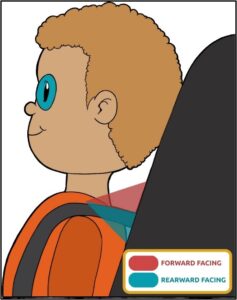 Correct Harnessing Is Everything
Just like with the infant seat, proper harnessing in a toddler seat can make all the difference.
The harness must be at or below the shoulder for rear-facing and at or above the shoulder for forward-facing.
The harness must fit tightly enough that you cannot pinch or fold the straps, but you should still be able to slide your hand underneath. It should always feel snug, like a hug.
Bulky winter jackets should never be worn under the harness. They create dangerous gaps that can prevent the harness from doing its job in a crash. Instead, buckle your child in first and place the jacket or blanket over them afterwards.



This small adjustment can make a massive difference in how well the harness protects your child in an impact.
Growing Safely Through Every Stage
Toddler seats are built to grow with your child, but that only works if parents understand the limits of their specific seat. Read the manual carefully. Follow the stickers. Know the weight and height limits.
If your child is above average on their growth chart, they may outgrow an 18 kg harness sooner than expected. In that case, it is important to look for a seat that can harness to 25 kg to ensure they stay protected for as long as they need.
Your child should remain harnessed until at least 4 years old, or until they outgrow the seat by height or weight. Their bones, spine, and neck are still developing, and they need that protection for as long as possible.
Every stage of car seat safety matters. Moving to the next stage is not about age alone. It is about readiness, proper fit and making the safest choice for your child every step of the way.
