







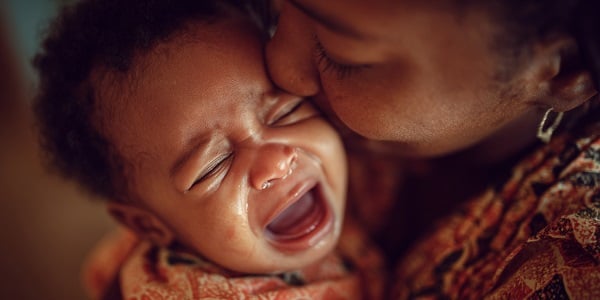
The sound slices through the quiet of the night: a muffled sob, then a hiccup, quickly escalating into a high-pitched, frantic wail. For any parent or caregiver, this is a familiar, urgent call to action. But what is it a call for? Is the baby hungry? In pain? Lonely? Or simply uncomfortable? For generations, we’ve been told that understanding this primal language is a matter of intuition, a “maternal instinct” that allows a mother to divine her child’s needs. Society often reinforces this idea, creating an elite class of quasi-psychic super-parents who seem to know everything, and leaving many others feeling inadequate and guilty when they can’t immediately decipher the message.
As a bioacoustics researcher, I have spent years studying the communication of animals – from the soft calls of crocodile nestlings synchronizing their hatching and pushing the parent to dig the nest, to the calls of zebra finches allowing mate recognition. I was surprised to discover, upon turning my attention to our own species, that the cries of human babies hold as much, if not more, mystery. My colleagues and I have spent over a decade applying the tools of acoustic analysis, psycho-acoustic experiments and neuro-imagery to this intimate world. Our findings, detailed in my book, The intimate world of babies’ cries, challenge many of our most cherished beliefs and offer a new, evidence-based framework for understanding this fundamental form of human communication.
The first and perhaps most important thing to know is this: you cannot tell why your baby is crying just from the sound of the cry alone.
Busting the ‘language of cries’ myth
Many parents feel immense pressure to become “cry experts”, and an entire industry has sprung up to capitalise on this anxiety. There are apps, devices, and expensive training programmes all promising to translate cries into specific needs: “I’m hungry,” “change my diaper,” “I’m tired.” Our research, however, shows these claims are baseless.
To test this scientifically, we undertook a large-scale study. We placed automatic recorders in the rooms of 24 babies, recording them continuously for two days at a time at several ages during their first four months of life. This resulted in an enormous dataset of 3,600 hours of recordings containing nearly 40,000 cry “syllables”. The dedicated parents carefully logged the action that successfully soothed the baby, giving us a “cause” for each cry: hunger (soothed by a bottle), discomfort (soothed by a diaper change), or isolation (soothed by being held). We then used machine learning algorithms, training an artificial intelligence on the acoustic properties of these thousands of cries to see if it could learn to identify the cause. If there was a distinct “hunger cry” or “discomfort cry”, the AI should have been able to detect it.
The result was a resounding failure. The AI’s success rate was only 36% – barely above the 33% it would get by pure chance. To ensure this wasn’t just a limitation of technology, we repeated the experiment with human listeners. We had parents and nonparents first “train” on the cries of a specific baby, just as a parent would in real life, and then asked them to identify the cause of new cries from that same baby. They fared no better, scoring just 35%. The acoustic signature of a cry for food is not reliably different from a cry of discomfort.
This doesn’t mean parents can’t figure out what their baby needs. It simply means the cry itself is not an entry in a dictionary. The cry is the alarm bell. It is your knowledge of the essential context that allows you to decode it. “It’s been three hours since the last feeding, so they are probably hungry.” “That diaper felt full.” “They’ve been alone in the crib for a while.” You are the detective; the cry is simply the initial, undifferentiated alert.
What cries actually tell us
If cries don’t signal their cause, what information do they reliably convey? Our research shows they transmit two crucial pieces of information.
The first is static information: the baby’s unique vocal identity. Just as every adult has a distinct voice, every baby has a unique cry signature, primarily determined by the fundamental frequency (pitch) of their cry. This is a product of their individual anatomy – the size of their larynx and vocal cords. It’s why you can recognise your baby’s cry in a nursery. Interestingly, while babies have an individual signature, they do not have a sex signature. The larynxes of baby boys and girls are the same size. Yet, adults consistently attribute high-pitched cries to girls and low-pitched cries to boys, projecting their knowledge of adult voices onto infants.




The second, and more urgent, piece of information is dynamic: the baby’s level of distress. This is the most important message encoded in a cry, and it is conveyed not so much by pitch or loudness, but by a quality we call “acoustic roughness”. A cry of simple discomfort, from being a little cold after a bath, for instance, is relatively harmonious and melodic. The vocal cords vibrate in a regular, stable way. But a cry of real pain, as we recorded during routine vaccinations, is dramatically different. It becomes chaotic, rough, and grating. This is because the stress of pain causes the baby to force more air through their vocal cords, making the cords vibrate in a disorganised, non-linear way. Think of the difference between a clean note from a flute and the harsh, chaotic sound it makes when you blow too hard. This roughness, a collection of acoustic phenomena including chaos and sudden frequency jumps, is a universal and unmistakable signal of high distress. A melodious “wah-wah” means “I’m a bit unhappy,” while a rough, harsh “IIiiRRRRhh” means “This is serious!”.
It’s learning, not instinct
So, who is best at decoding these complex signals? The pervasive myth of “maternal instinct” suggests that mothers are biologically hard-wired for the task. Our work comprehensively debunks this. An instinct, like a goose’s fixed behaviour of rolling an egg back to its nest, is innate and automatic. Understanding cries is not like this at all.
In one of our key studies we tested mothers and fathers on their ability to identify their own baby’s cry from a selection of others. We found absolutely no difference in performance between the two. The single most important factor was the amount of time spent with the baby. Fathers who spent as much time with their infants were just as adept as mothers. The ability to decode cries is not innate; it is learned through exposure. We confirmed this in studies with non-parents. We found that childless adults could learn to recognise a specific baby’s voice after hearing it for less than 60 seconds. And those with prior childcare experience, like babysitting or raising younger siblings, were significantly better at identifying a baby’s pain cries than those with no experience.
This all makes perfect evolutionary sense. Humans are “cooperative breeders”. Unlike in many primates where the mother has a near-exclusive relationship with her infant, human babies have historically been cared for by a network of individuals: fathers, grandparents, siblings, and other members of the community. In some hunter-gatherer societies like the!Kung, a baby may have up to 14 different caregivers. A hard-wired, mother-only “instinct” would be a profound disadvantage for a species that relies on a team.
The brain on cries: experience rewires everything
Our neuroscientific research reveals how this learning process works. When we hear a baby cry, a whole network of brain regions, called the “baby-cry brain connectome”, springs into action. Using MRI scans, we’ve observed that cries activate auditory centres, the empathy network (allowing us to feel another’s emotion), the mirror network (helping us put ourselves in another’s shoes), and areas involved in emotion regulation and decision-making.
Crucially, this response is not the same for everyone. When we compared the brain activity of parents and nonparents, we found that while everyone’s brain responds, the “parental brain” is different. Experience with a baby strengthens and specialises these neural networks. For example, parents’ brains show greater activation in regions associated with planning and executing a response, while nonparents show a more raw, untempered emotional and empathetic reaction. Parents shift from simply feeling the distress to actively problem-solving. Furthermore, we found that individual levels of empathy – not gender – were the strongest predictor of how intensely the brain’s “parental vigilance” network activated. Caring is a skill that is honed through practice, and it physically reshapes the brain of any dedicated caregiver, male or female.

Why this matters: from coping to cooperation
Understanding the science of crying is not just an academic exercise; it has profound real-world implications. Incessant crying, especially from colic (which affects up to a quarter of infants), is a primary source of parental stress, sleep deprivation, and exhaustion. This exhaustion can lead to feelings of failure and, in the worst cases, can be a trigger for shaken baby syndrome, a tragic and preventable form of abuse.



The knowledge that you are not supposed to “just know” what a cry means can be incredibly liberating. It removes the burden of guilt and allows you to focus on the practical task: check the context, assess the level of distress (is the cry rough or melodic?), and try solutions. Most importantly, the science points to our species’ greatest strength: cooperation. The fact that any human can become an expert caregiver through experience means you are not meant to do this alone. The unbearable cries become bearable when they can be passed to a partner, a grandparent, or a friend for a much-needed break.
So, the next time you hear that piercing cry in the night, remember what it truly is: not a test of your innate abilities or a judgement on your parenting skills, but a simple, powerful alarm. It’s a signal designed to be answered not by a mystical instinct, but by a caring, attentive and experienced human brain. And if you’re feeling overwhelmed, the most scientifically sound and evolutionarily appropriate response is to ask for help.
Nicolas Mathevon is the author of The intimate world of babies’ cries: The best ways to understand and calm your baby.
Created in 2007 to help accelerate and share scientific knowledge on key societal issues, the AXA Research Fund – now part of the AXA Foundation for Human progress – has supported over 750 projects around the world on key environment, health & socioeconomic risks. To learn more, visit the website of the Axa Research Fund or follow @AXAResearchFund on Linked In.
Nicolas Mathevon, Professeur (Neurosciences & bioacoustique – Université de Saint-Etienne, Ecole Pratique des Hautes Etudes – PSL & Institut universitaire de France), Université Jean Monnet, Saint-Étienne
This article is republished from The Conversation under a Creative Commons license. Read the original article.
ALSO READ: Why Do Some Babies Cry More Than Others?