


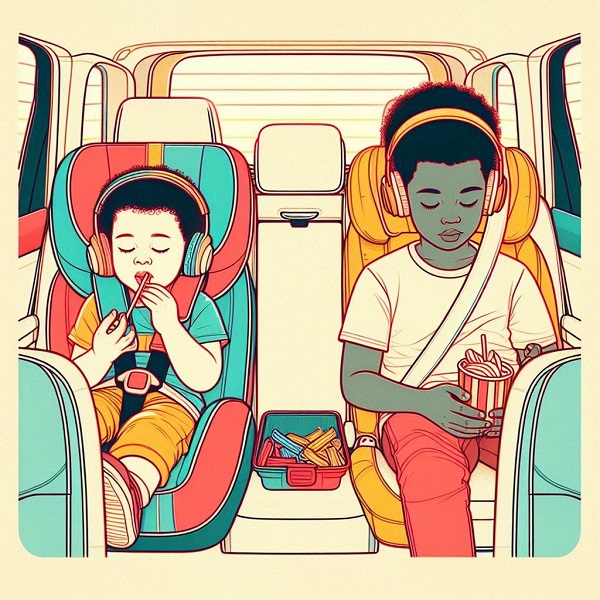

It’s holiday time and that means many of us are getting ready to hit the road! Whether you’re visiting family or friends or hoping for a bit of well-deserved rest, long car trips often come with a fair amount of preparation and planning. For families with neurodivergent children, those road trips can bring extra layers of challenge, from sensory overload and anxiety to struggles with sitting still for long periods.
However, with a bit of thoughtful planning and understanding, car journeys can become far less stressful for everyone. Below are seven practical, evidence-based tips to help make your family road trips smoother, calmer, and more inclusive.
Plan and set expectations
Let your child know well in advance about the journey: how long it will take, what kind of stops you’ll make, what you’ll do when you get there, and what the expectations are in the car. Minimising surprises helps ease anxiety and supports children who may struggle with change or unpredictability.
Use a visual schedule or countdown calendar if that works for your child, for example: leaving home → 2-hour drive → stop for a stretch → 1 hour to destination. Visual supports like these help children map out what is coming and reduce the “unknown”. If possible, preview the route and stops together. That builds familiarity and gives your child some sense of control and predictability.
Frequent breaks and movement opportunities
Sitting for long periods is hard for many children, especially if they have sensory, attention or motor needs. Build in regular rest stops (for example, every 60–90 minutes) where your child can get out, stretch legs, run around a bit and release energy. At the rest stop, allow your child to engage in a preferred movement-based activity. That helps reduce the build-up of stress or meltdowns later in the car.
Support communication and reassurance during the trip
Once you’re on the road, ongoing communication makes a huge difference. Children often find comfort in knowing what’s happening right now and what’s coming next. Try giving short, clear updates like “We’ll stop for lunch in 10 minutes” or “After this town, there’s just one more hour to go.”
If your child responds well to visual cues, use a small whiteboard, laminated schedule, or app to show progress, for example, move a marker along a line that represents the trip. This visual reassurance helps reduce anxiety about time and transitions.
For children who use alternative communication (AAC devices, sign language, or picture cards), ensure these tools are accessible in the car. Being able to express discomfort or make simple choices (like choosing music or a snack) can greatly reduce frustration.
Comfort items and sensory considerations
Familiar items can bring a sense of security. Bring along your child’s favourite blanket, stuffed toy or sensory-friendly object from home.




Sensory factors in the car are often underestimated. Loud traffic, engine noise, sudden acceleration/braking or strong sunlight, glare can trigger discomfort, stress or meltdown for neurodivergent children.
Consider:
- Noise-reducing headphones or ear defenders if your child is noise sensitive.
- Sunglasses, window shades and a hat to reduce glare.
- Comfortable clothing (avoid scratchy tags or seatbelt irritation).
- A small sensory kit in the car: fidget toy, chewy object, weighted lap pad, sunglasses, headphones.
If your child experiences strong sensory responses, you might even plan a “sensory warm-up” before the drive: for example, allow them to run around, jump, or engage in heavy-work (deep pressure) activity to regulate their system before sitting in the car.
Snacks, drinks and entertainment – planned smartly
Food and hydration often make a big difference in behaviour and mood. Pack a variety of snacks your child enjoys and consider giving them individual portions (to limit mess or overwhelm).In terms of entertainment: Pre-load a tablet with favourite shows/games, bring audiobooks, music playlists, books or interactive games. Changing activity every so often helps maintain interest. However, ensure activities are safe in the car: soft items, things that won’t become projectiles in a sudden stop. Choose toys with minimal risk if the child tends to move a lot.
Car-seat safety and clear behavioural expectations
Safety is non-negotiable, especially when your child may resist seatbelts, harnesses or car seats. The bigger challenge often lies in how to support safety when the child is unable or unwilling to become seated easily.
Some practical steps:
- Establish a consistent pre-car routine: e.g., “bathroom → comfort item → walk to car → buckle up → ride”. Consistency helps reduce behaviour driven by unpredictability.
- Use positive reinforcement for staying buckled and seated — e.g., stickers, extra choice or preferred item after a successful ride.
- If unbuckling or climbing out is an issue, work with an occupational therapist or behaviour specialist to understand the why (sensory input? escape demand?) and build a plan with behaviour supports.
- Ensure the correct seat type, harnessing and installation for your child’s age, size and needs. Without proper installation, safety is compromised.
Flexibility, patience and celebrating progress
Even with the best planning, things may not go perfectly, and that’s okay. Your child is unique, and the goal is to make journeys better over time, not “perfect”. If things go off plan (traffic jam, long delay, tired child), allow for flexibility, maybe stop for a different snack, shorten the drive time, or let your child choose the music. Giving them some autonomy supports co-regulation and co-operation!
Celebrate the wins: buckling up smoothly, staying engaged in an activity for 20 minutes, making it through a rest stop – these are all steps forward. Recognising those builds confidence for both the child and your family.
Remember…
Every journey is also an opportunity: to strengthen your child’s understanding of change and transitions, to practice safety skills, to build their confidence in new environments and to share memorable family time.
References
- Research Autism. “Keeping Your Child Happy on Road Trips.” Oaracle Newsletter. July 2019. researchautism.org+1
- Action Behaviour Centres. “Car Ride Safety Tips for Children with Autism: Advice from BCBAs.” Sept 2025. actionbehavior.com
- Fraser Institute. “11 Tips to Soothe People Who Struggle with Car Rides.” July 9 2020. fraser.org
