

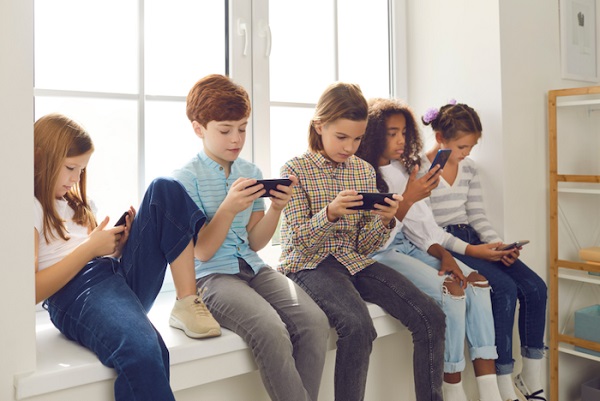
South Africa now tops the global charts for child screen time, with kids averaging 9 hours and 24 minutes of screen time each day, nearly 3 hours more than the global norm of 6 hours and 40 minutes.[1] Experts link this digital overload to increased anxiety, disrupted sleep and lower academic performance.
Recent shifts in schools and homes point to a focused effort to reclaim screen-free interactions. Phone bans in some schools are being paired with analogue entertainment, which educators say has reignited social buzz and improved academic focus.
UNICEF’s Growing Up in a Connected World report cautions that when children spend excessive time on devices, they lose vital opportunities for imaginative play, social interaction, and physical activity. For families, this imbalance is fueling concerns about attention, resilience, and emotional development, making the case for reclaiming screen-free play stronger than ever.
“Parents tell us they feel stuck in a constant battle with screens,” says Christiane Schwarz, Senior Marketing Executive at ZURU. “Kids want to be online, but moms and dads are looking for healthier, more balanced ways to keep them engaged.”
Amid this digital fatigue, Schwarz notes something surprising is happening.
“Hands-on, screen-free play is making a big comeback, from schools banning phones to increased toy purchases, kids are rediscovering the joy of structured play,” Schwarz explains.

She adds that the resurgence is being driven by toys that invite both creativity and social connection.
“By way of an example, when a child sits down with the MAX Build More playset, they can bring anything to life, from building a bouquet of flowers for their mom to designing a retro computer for their desk, or even a dream house with moving parts. It’s creative engineering disguised as play, and kids love showing off their creations,” Schwarz adds.
“Parents are telling us loud and clear that they want toys that pull kids off screen, and that’s why we’re seeing the rise of categories like blasters, building toys, plush companions and collectable minis,” she says. “Every one of our ranges is designed with a simple principle: make play as engaging offline as scrolling is online, but with real-world benefits. Whether it’s the adrenaline rush of an XSHOT battle, the joy of building with MAX Build More, or the laughter sparked by Mini Brands Create, where kids can design their own Krispy Kreme treats or customise tiny, branded worlds, we’re giving kids reasons to put their screens down.”





“Toy sales data points to the fact that families are investing in toys; the figures are reflecting a growing cultural shift with families reclaiming playtime from screens, and the market is responding with real measurable growth,” she says. “The current figures show a compound annual growth of 6.4% (CAGR) from 2025 to 2033, indicating a shift toward interactive, meaningful play.”
“Screen-free play is becoming the new luxury,” Schwarz continues.
“Parents love that it’s not only healthier for kids, but it also brings families back together in ways a screen never can. Imagine your child proudly handing you a flower they built with Max Build More or staging a playdate around who can design the wildest mini doughnut shop with Mini Brands Create, those are shared moments that screens can’t replicate.”
The appetite for toys that fuel imagination is no longer niche; it’s a global movement. Blind-box collectables like Mini Brands are driving over one billion capsules sold worldwide, while plush categories such as Fugglers and Hug-a-Lumps thrive thanks to their “ugly-cute” personality and comfort factor.
Research shows that just 60 minutes of active, imaginative play per day boosts children’s emotional well-being, resilience, and social skills. For South African parents, who are navigating rising levels of childhood anxiety and attention issues, these benefits are becoming impossible to ignore.
“It’s not about vilifying screens, they’re part of modern life,” Schwarz adds. “Kids need balance, and toys remain one of the most effective tools for healthy, unplugged development.”
“Children are leading the way, but we’re also seeing parents light up when they recognise the brands in our Mini Brands or share a laugh over a Fuggler’s cheeky grin,” says Schwarz. “It’s proof that nostalgia and screen-free play can go hand in hand, creating joy across generations.”

“A simple toy can spark more joy, laughter and connection than being online,” she says. “Kids don’t need screens to feel connected or inspired, they simply need to play, because those are the moments children remember long after the screen goes dark,” Schwarz concludes.
