

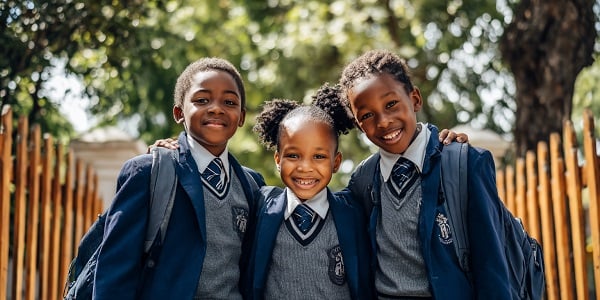
Choosing the right school for your child is one of the most important decisions you’ll make as a parent. In South Africa, the education system offers a wide range of primary school options from public no-fee schools to elite private institutions, Montessori classrooms and homeschooling. With so many choices, how do you know what’s best for your child and family?
This guide breaks down the different types of primary schools in South Africa, what they offer, how they’re funded and what parents should consider before enrolling their little ones.
The Structure of Primary Schooling in South Africa
South African primary education covers Grade R (reception year) through Grade 7. Children usually start Grade R at age five, turning six, and by the end of primary school, they are 12 or 13 years old.
- Foundation Phase (Grade R–3): Focus on literacy, numeracy, and life skills.
- Intermediate Phase (Grade 4–6): Expands to include natural sciences, social sciences, and technology.
- Senior Phase (Grade 7): Prepares children for the transition to high school.
Public Primary Schools
Public schools are funded primarily by the Department of Basic Education (DBE). However, not all public schools are the same, as there are no-fee schools and fee-paying schools.
No-Fee Public Schools
- Found mainly in under-resourced communities.
- Funded by government grants.
- Parents do not pay school fees, but may still need to cover uniforms, stationery, and transport.
- Classes often have large learner-to-teacher ratios, which can affect individual attention.
Fee-Paying Public Schools (including former Model C)
- These schools charge tuition fees to supplement government funding.
- Found in more affluent suburbs, often with better facilities and extracurricular options.
- Managed by a School Governing Body (SGB), which influences fees, staffing and policies.
For many parents, the difference between no-fee and fee-paying schools is striking, making school location a major factor.
Private Primary Schools
Private schools are independent of government control and rely on tuition fees, donations, and sponsorships. They tend to have smaller class sizes, more extracurricular opportunities, and advanced facilities.
Types of Private Schools
- Independent Schools: Run by private entities, offering the CAPS curriculum (like public schools) or alternative programmes.
- International Schools: Follow international syllabi such as Cambridge or the International Baccalaureate (IB).
- Religious Schools: Often faith-based, blending academics with religious values.
Private schools are popular with parents who want lower learner-to-teacher ratios, access to extracurriculars, and more personalised learning.
Specialised Schooling Approaches
Not all children thrive in traditional settings, which is why alternative education options exist.
Montessori
- Encourages self-directed learning through practical, hands-on methods.
- Focuses on independence, creativity, and problem-solving.
- Popular in early grades, though not always continued into high school.
Waldorf
- Emphasises arts, imagination, and holistic development.
- Strong focus on creativity over testing.
- Parents who value a less pressured environment often choose Waldorf.
Homeschooling
- Legal in South Africa, provided parents register with the DBE.
- Allows for tailored learning based on the child’s pace and needs.
- Growing in popularity due to concerns about safety, class sizes, and flexibility.
ALSO READ: How to Avoid Bogus Schools in South Africa: A Guide for Parents and Guardians
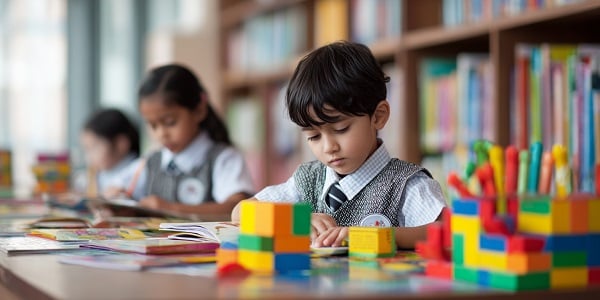
Primary Schools in South Africa – Quick Parent Guide
Covers Grade R to 7 | Compare school types, fees, size, and questions to ask
| Type | Grades Ages |
Curriculum | Class Size | Fees | What to Check |
|---|---|---|---|---|---|
| No-fee Public Quintile 1–3 |
R–7 5–13 yrs |
CAPS Home Lang, FAL, Maths, Life Skills |
35–50 learners | Free tuition Budget for uniform, stationery |
Reading support, class size, safety, toilets, teacher turnover |
| Fee-paying Public Quintile 4–5 |
R–7 | CAPS + extras | 25–35 | R2k–R30k p.a. Ask about exemptions |
Aftercare, language of learning, sport, parental involvement |
| Private | R–7 | CAPS or IEB + clubs | 18–28 | Fees vary Ask about extras |
Accreditation, support services, values fit |
| International | R–7 | IB PYP or Cambridge | 15–25 | High fees Levies possible |
Curriculum transitions, SA re-entry options |
| Montessori | Pre–7 | Montessori + CAPS outcomes | Mixed-age, small | Private fees | Tracking, transition plans, holistic focus |
| Waldorf | R–7 | Waldorf + national goals | Medium | Varies | Assessment style, arts integration, language |
| Special Needs | R–7 | Adapted CAPS | Very small | Public low-fee Private varies |
Therapies, staff, facilities, waitlists |
| Homeschooling | R–7 | CAPS/Cambridge (via providers) | 1-on-1 | Provider + exam costs | DBE registration, social support, future pathways |
Challenges in Primary Education
While South Africa has made progress in education, challenges remain, especially in public no-fee schools.
- Overcrowding: Some classrooms hold more than 50 learners.
- Infrastructure issues: Lack of libraries, labs and sanitation facilities in underfunded schools.
- Literacy concerns: The Progress in International Reading Literacy Study (PIRLS 2021) showed that 81% of Grade 4 learners in South Africa struggle with reading comprehension.
- Inequality: Wealthier communities often have access to better-resourced schools.
What Parents Should Consider
When choosing a primary school for your child, consider:
- Location: Proximity to home can ease transport and improve safety.
- Class Size: Smaller ratios allow more individual attention.
- Curriculum: Whether CAPS or an international curriculum suits your child.
- Values: If a religious or alternative approach aligns with your family.
- Costs: Beyond tuition fees, factor in uniforms, transport and extracurricular activities.
- Extracurriculars: Sports, arts and cultural activities can enrich a child’s development.
Conclusion
Primary school is the foundation for your child’s future learning and development. Whether you choose a no-fee public school, a fee-paying institution, or an alternative system like Montessori or homeschooling, the most important factor is finding an environment where your child feels safe, supported, and inspired to learn.
South Africa’s education system offers variety, but it also requires parents to carefully navigate differences in quality, access, and resources. Taking time to research schools, visit campuses, and talk to other parents can help you make the best decision for your child’s unique needs.
References
- Department of Basic Education (South Africa): https://www.education.gov.za
- ISASA (Independent Schools Association of Southern Africa): https://www.isasa.org
- Cambridge International Schools South Africa: https://www.cambridgeinternational.org
- PIRLS 2021 South Africa Summary Report: https://pirls2021.org/wp-content/uploads/2022/10/South-Africa.pdf
- Gauteng Department of Education (School Admissions): https://www.gdeadmissions.gov.za
- Western Cape Education Department: https://wcedonline.westerncape.gov.za
- South African Schools Act (No. 84 of 1996): https://www.gov.za/documents/south-african-schools-act
