







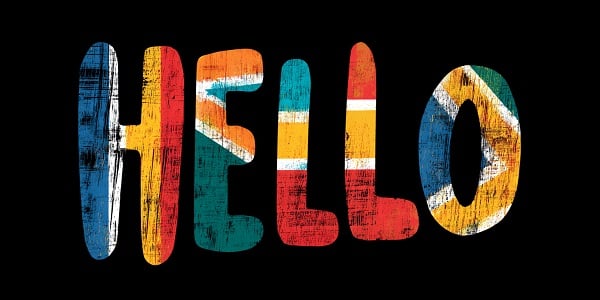
South Africa is known as the Rainbow Nation for a reason. With 11 official languages, our diversity is woven into the way we speak, greet and connect. Something as simple as saying hello carries cultural meaning, warmth and recognition of one another’s heritage. It’s not just a word; it’s an invitation, a sign of respect and, in many cases, a reflection of deeply rooted traditions that have been passed down for generations.
Think about it: greetings are often the very first words we learn as children. They set the tone for every interaction and can bridge divides between people who might otherwise feel worlds apart. In South Africa, our greetings are rich with symbolism. They carry more than a simple “hi” or “hello”, they carry our history, our values, and our sense of ubuntu, the idea that I am because we are.
From bustling city streets where strangers exchange quick but meaningful nods, to rural villages where greetings can turn into heartfelt conversations, the way we acknowledge each other shapes the rhythm of daily life. A single greeting can open doors, spark friendships, and remind us that we are part of something much bigger than ourselves. When you greet someone in their mother tongue, it’s more than politeness; it’s a gesture of respect and belonging. It’s a way of saying: I see you. I honour you. I value where you come from.
Whether you’re travelling across provinces, reconnecting with your roots, or simply wanting to embrace the spirit of Heritage Month, learning how to greet people in their language is a powerful step towards unity. It’s a celebration of who we are as a nation, and a reminder that our diversity is not something that separates us; it’s what makes us extraordinary.
Your guide to saying hello in all 11 South African languages
- IsiZulu – Sawubona
IsiZulu is the most widely spoken language in South Africa, especially in KwaZulu-Natal and Gauteng.
- Hello (to one person): Sawubona
- Hello (to many people): Sanibonani
The meaning goes deeper than just “hello.” Sawubona literally means “I see you”. This is a recognition of the other person’s humanity. The response is Yebo, sawubona (Yes, I see you too).
- IsiXhosa – Molo
The second most spoken home language, isiXhosa, is dominant in the Eastern Cape and Western Cape.
- Hello (to one person): Molo
- Hello (to many people): Molweni
This greeting is simple, melodic and often paired with respect gestures such as a nod or handshake. The reply is Ndiyaphila, enkosi (I’m well, thank you).
- Afrikaans – Hallo
Afrikaans, rooted in Dutch, is spoken widely across the Western Cape, Northern Cape, and Gauteng.
- Hello: Hallo
- Hi: Haai
Afrikaans greetings are often informal and straightforward. Other common variants include Goeie môre (Good morning), Goeie naand (Good evening).
- English – Hello
English is widely spoken as a second or third language across South Africa and serves as a lingua franca.
- Hello: Hello
- Hi / Hey: Casual alternatives
While English is globally recognised, in South Africa it often blends with local slang, such as Howzit (short for “How is it?”).




- Sepedi (Northern Sotho) – Dumêlang
Sepedi, also called Northern Sotho, is widely spoken in Limpopo and parts of Gauteng.
- Hello (to one person): Dumêla
- Hello (to many people): Dumêlang
This greeting carries warmth and respect. It’s often followed by Le kae? (How are you?).
- Sesotho (Southern Sotho) – Dumêla
Spoken in the Free State and Lesotho, Sesotho shares similarities with Sepedi but has its own rich culture.
- Hello (to one person): Dumêla
- Hello (to many people): Dumêlang
Responses are usually Ke teng, wena o kae? (I’m here, how are you?).
- Setswana – Dumêla
Setswana is spoken in North West province and Botswana.
- Hello (to one person): Dumêla
- Hello (to many people): Dumêlang
Although it looks and sounds similar to Sesotho, pronunciation differs slightly. Setswana greetings often extend into polite exchanges about health and family.
- Tshivenda – Ndaa / Aa
Tshivenda, mainly spoken in Limpopo, has unique greetings depending on gender.
- Men say: Ndaa
- Women say: Aa
This is a respectful greeting, often accompanied by a bow of the head. It reflects the Tshivenda culture’s emphasis on respect and tradition.



- Xitsonga – Avuxeni
Xitsonga is also spoken in Limpopo and Mpumalanga.
- Hello (general): Avuxeni (literally “Good morning”)
- Hi: Ahee (informal)
In practice, greetings in Xitsonga often go beyond one word. People may ask about health, family, and well-being in the same breath.
- IsiNdebele – Lotjhani
IsiNdebele is spoken mainly in Mpumalanga and Gauteng.
- Hello: Lotjhani (plural) / Unjani (singular, meaning “How are you?”)
The language is closely related to isiZulu, and greetings carry the same emphasis on recognition and respect.
- Siswati – Sawubona
Siswati is spoken in Mpumalanga and Eswatini (formerly Swaziland).
- Hello (to one person): Sawubona
- Hello (to many people): Sanibonani
Like isiZulu, the greeting acknowledges the person’s presence and worth. The response is Yebo (Yes).
TAKE A LOOK AT: 10 Life-Changing Benefits of Learning a New Language

Why Greetings Matter in South Africa
In South Africa, greetings are more than polite words; they are an important part of culture. Starting a conversation without a greeting can be seen as disrespectful.
- They show respect: Using someone’s language honours their identity.
- They build connections: Even a simple Molo or Dumêla can break the ice.
- They carry heritage: Greetings often carry deeper meanings rooted in philosophy, spirituality, or tradition.
Tips for Learning South African Greetings
- Practice pronunciation: Some greetings are tonal or have unique sounds (like the “x” click in isiXhosa).
- Use plural forms respectfully: In many African languages, plural greetings (Sanibonani, Molweni, Dumêlang) are a sign of respect even for one person. They often go deeper as one acknowledges more than that person’s presence, but that of their ancestors, too.
- Pair words with gestures: A handshake, nod, or bow can make the greeting more authentic.
- Don’t be shy: Most South Africans appreciate the effort, even if you get it slightly wrong.
A Celebration of Diversity
Saying hello in South Africa isn’t just about words; it’s about recognising the person in front of you, their culture, and their heritage. From Sawubona to Lotjhani, every greeting tells a story of who we are as a people.
So next time you meet someone new, try greeting them in their mother tongue. It’s a small step, but one that builds bridges in a nation as beautifully diverse as ours.
ALSO READ: How Talking in Another Language Builds Confidence in Shy Kids
