

6 ways to get your kids to do their chores! As parents, we all know the struggle of getting kids to pitch in around the house. Whether it’s avoiding chores altogether or dragging their feet, it can feel like a constant battle. But the truth is, with a little creativity and consistency, you can encourage your kids to take responsibility and actually enjoy doing their chores. Let’s explore six effective ways to motivate your kids and make chores a part of their routine. Written by Lauren Matthews.
Do your kids help out around the house? Enlisting your kids to help with some household chores not only encourages a sense of responsibility, but also a sense of pride in their living space. At some point in our lives, we are going to have to wash a dish and vacuum a rug, so why not start young?
These tricks will help encourage your kids to perform these household chores.
1. Chores are non-negotiable
Nobody looks forward to chores but they are one of those mundane must-do of life. Allowing your children to forfeit doing their chores will not do them any favours in the long run. There may be some whining but the chores must be done. Stand your ground on this and make sure that your expectations are age-appropriate.
2. Do chores together
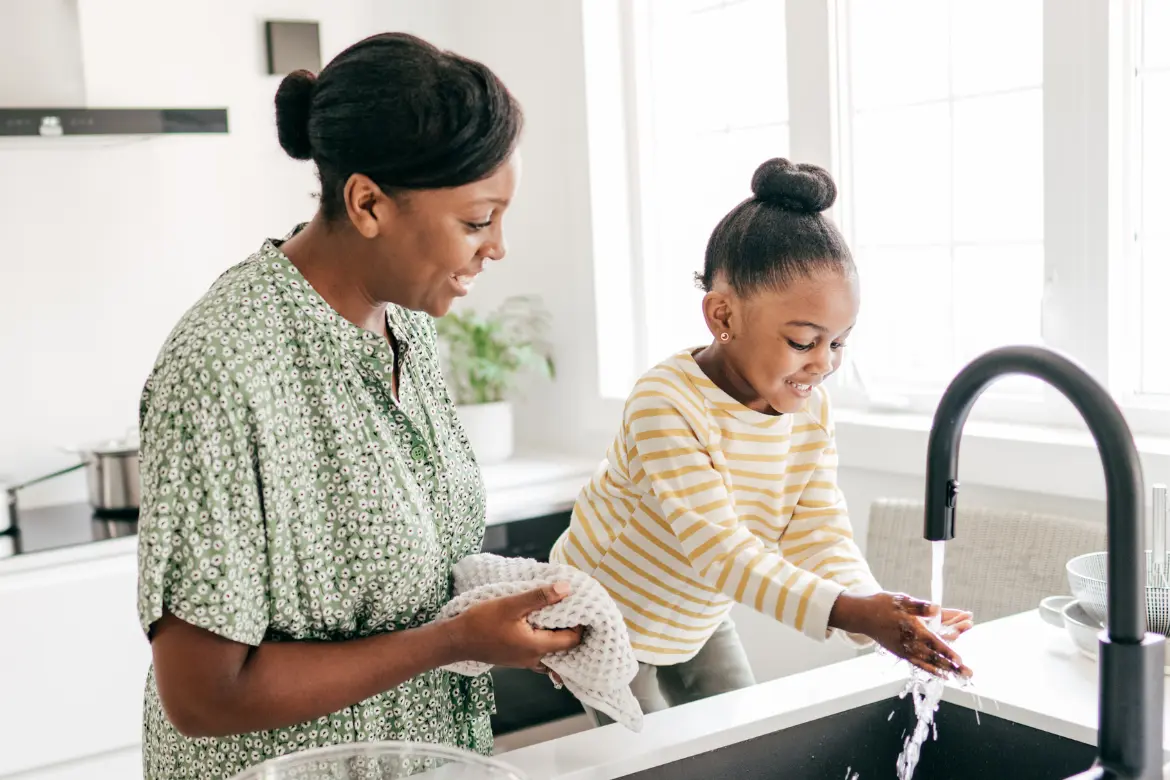
Chores can be used as bonding time with your kids. Instead of parking in front of the television while your child does the dishes, do some housework yourself during this time to bring across the feeling of a team effort.
3. Make chores pleasant
Always maintain a positive attitude when completing chores with your children. You can enhance this pleasant atmosphere by playing your child’s favourite songs when going about housework.
“Chores should be seen as a positive contribution to a happy household.”
4. Do not make chores a punishment
Using chores as a means of punishment will only fuel any negative attitude toward them. Instead, chores should be seen as a positive contribution to a happy household.
5. Reward cards and star charts
You could use a star chart and give your child a gold star each time they complete a chore. Once they reach a certain number of stars, they could get a small reward, such as a bowl of ice-cream (don’t make these rewards too extravagant. Life doesn’t reward us for housekeeping). Similarly, you could use a punch card system whereby you punch a hole in a card to mark a chore as complete. Once the card is full, they receive a reward.
6. Let them make mistakes
Remember, your kids are still learning. They will make mistakes as they go along and this is okay. The key is to gently guide them rather than make them feel like they cannot complete the task. Be tactful with feedback and continue to encourage them.
Getting your children to complete their chores may bring on the grey hairs, but perseverance and a positive attitude will go a long way in getting children to help around the house and empower them to run their own households one day.
Also read:
14 small, easy ways I’m being more environmentally active
When your family pet becomes a threat
BabyYumYum FAQs: Ways to Get Your Kids to Do Their Chores
Why is it important for kids to do chores?
Chores teach children responsibility, independence and teamwork. They help build life skills and a sense of contribution to the household from a young age.

At what age can children start doing chores?
Even toddlers can help with simple tasks like putting toys away or wiping up spills. As children grow, you can introduce more age-appropriate chores with gentle guidance.
How can I make chores more appealing?
Turn them into a game, play music or use reward charts to make chores fun. Children respond better when they feel involved and praised for their efforts.
Should I pay my child to do chores?
That depends on your family values. Some parents offer a small allowance for extra chores, while others feel daily tasks should be part of contributing to the family without financial reward.
What if my child refuses to do chores?
Stay calm and consistent. Use natural consequences (e.g. no screen time until the chore is done) and involve them in creating the family routine so they feel some control.
How can I make chores part of the daily routine?
Create a simple chore schedule and stick to it. Visual charts or checklists can help children remember their tasks and build healthy habits.
Should I redo the chore if they do it poorly?
If safety or hygiene is an issue, yes—but try to teach, not criticise. Show them how to do it properly, praise the effort, and encourage improvement over time.
How do I manage chores with multiple children?
Assign age-appropriate tasks, rotate chores weekly, or work together as a team. Avoid comparisons and focus on fairness, not perfection.
What if my child is too busy with school or activities?
Keep chores realistic and brief. Even 5–10 minutes a day can help children develop responsibility without overwhelming them.
Can I use screen time or treats as motivation?
Yes, if used sparingly. Instead of bribes, offer natural rewards like screen time after chores or earning a family treat when everyone contributes.
How do I explain why chores are necessary?
Be honest and explain that families work best when everyone helps. Children are more willing when they understand the why, not just the what.
What’s the most important thing to remember?
Be patient and consistent. It takes time to build habits, and praise goes a long way. Celebrate small wins and remind your child that their contribution matters.
Disclaimer: This content is for general parenting support and does not replace advice from an educational or behavioural specialist. If you have concerns about your child’s behaviour or development, consult your GP, teacher, or family counsellor.
YOU MAY ALSO LIKE
Sleepless nights, constant feeds and never-ending worry – the emotional load of early motherhood runs far deeper than dirty nappies and baby milestones. Beneath the …